
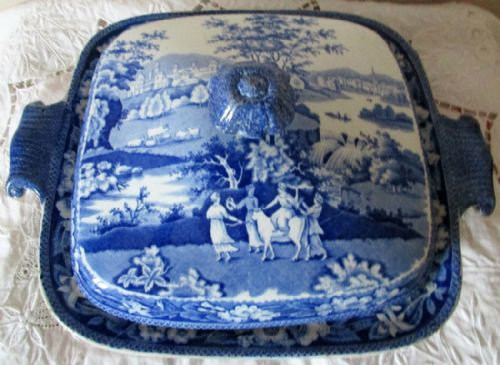


English Transferware Tureen
An English transferware tureen brings nineteenth-century dining tables to life with rich blue and white printed scenes.
English Transferware Tureen
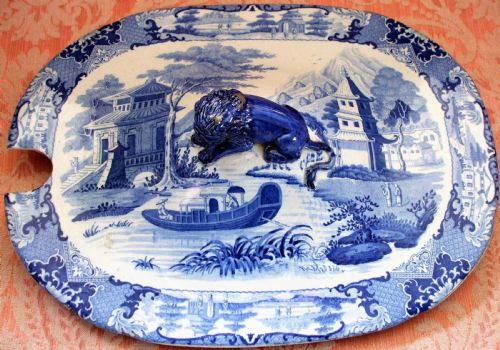
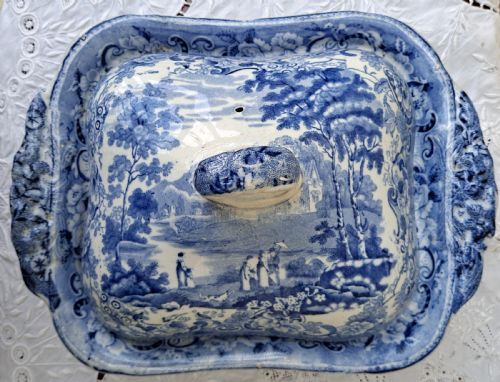
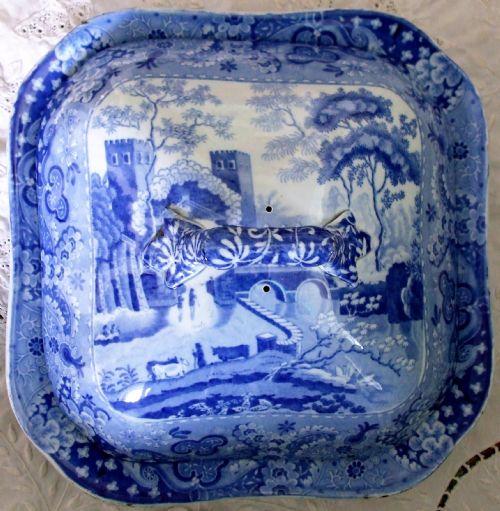
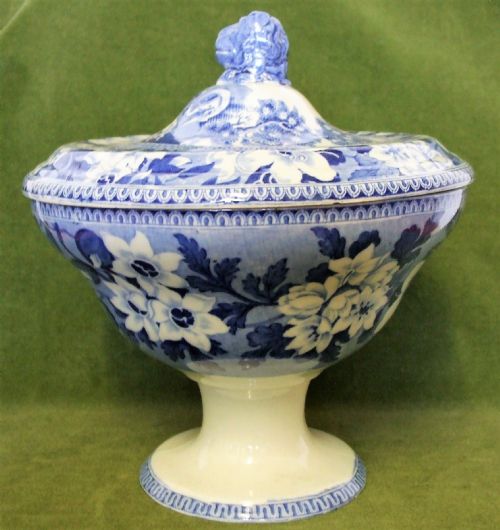
An English transferware tureen is a covered ceramic vessel designed for serving soups, vegetables, or sauces at the dining table. These pieces date primarily from the nineteenth century, spanning the Georgian and Victorian periods, and frequently feature romantic or topographical printed motifs.
The most common examples encountered on this page are vegetable tureens and sauce tureens complete with their original covers and stands. Potters produced these functional serving dishes in earthenware bodies such as pearlware and creamware, decorated with cobalt blue designs transferred from engraved copper plates.
How they were made
Potters shaped these vessels from refined earthenware bodies, including creamware and pearlware, before applying a transparent lead glaze to seal the porous clay. The distinctive decoration relied on printing copperplate engravings onto thin tissue paper, which transferred the ink directly onto the bisqued ceramic surface.
Makers fired the printed earthenware in kilns to fix the cobalt blue pigment beneath the glaze, ensuring a permanent and glossy finish. Covers, handles, and stands required separate moulding and careful attachment before the final glazing and firing process.
Common object forms represented in these records include vegetable tureens, sauce tureen stands, and complete lidded serving dishes.
What varies in quality
The refinement of the earthenware body sets individual pieces apart, with smooth pearlware bases and crisp glaze application representing superior potworks. Early nineteenth-century bodies tend to be lighter and more carefully potted than later Victorian utility wares.
The clarity and depth of the blue transfer print dictate the visual appeal of a tureen, depending on the wear of the original copper plate. Well-rendered pictorial scenes with deep cobalt tones and matching covers demonstrate greater skill from the Staffordshire potteries.
Robert Hamilton·James Wallace & Co.·J. & R. Clews·John Rogers & Son·John and Richard Riley·Spode·Copeland & Garrett
The English Transferware Tureen Glossary
- Transferware
- Earthenware decorated by printing a design from an engraved copper plate onto paper and transferring it to the ceramic surface. This technique allowed intricate pictorial scenes to be produced consistently on domestic tablewares.
- Pearlware
- A refined earthenware developed in the late eighteenth century with a bluish-white glaze that gave the ceramic body a paler appearance. Potters utilised this material extensively for blue and white printed table services.
- Creamware
- A fine light-coloured earthenware perfected by Staffordshire potters, possessing a warm yellowish tone beneath a transparent lead glaze. It served as a primary body for tablewares before pearlware gained widespread popularity.
- Vegetable tureen
- A large covered serving dish specifically shaped for holding vegetables at the dining table. These pieces often include matching stands to protect table surfaces from heat.
English Transferware Tureen: Frequently Asked Questions
What is an English transferware tureen?
An English transferware tureen is a nineteenth-century ceramic serving vessel decorated with printed blue and white scenes. Potters designed these covered dishes for presenting soups, vegetables, or sauces during formal meals.
These serving pieces combine practical dining utility with detailed pictorial decoration characteristic of Staffordshire potteries. Most examples feature matching lids and occasionally separate underplates or stands.
How do I date an antique tureen?
Dating relies upon the ceramic body, the shade of the glaze, and the style of the printed transfer pattern. Georgian pieces often utilise pearlware bodies with deep cobalt blue landscapes, while Victorian examples show heavier utility forms.
Potters' marks stamped or printed on the underside also help identify specific makers active during the nineteenth century. Stylistic clues in the floral borders and romantic scenes further narrow down the period of production.
Were these tureens used for soup or vegetables?
Tureens served various dining purposes depending on their size and overall shape. Large oval vessels held soups or stews, while smaller vegetable tureens accommodated side dishes at the table.
Sauce tureens formed part of larger dinner services for gravies and liquid condiments. Each type came with a fitted cover to retain heat during the meal.
How should I display a tureen at home?
A tureen makes a striking centrepiece on a dining table, sideboard, or open dresser shelf. Displaying the vessel with its cover slightly offset highlights the fitted design and internal depth.
Placing the tureen on its original stand creates a balanced presentation that showcases the printed border patterns. Adequate shelf depth is necessary to accommodate the width of handles and matching underplates.