


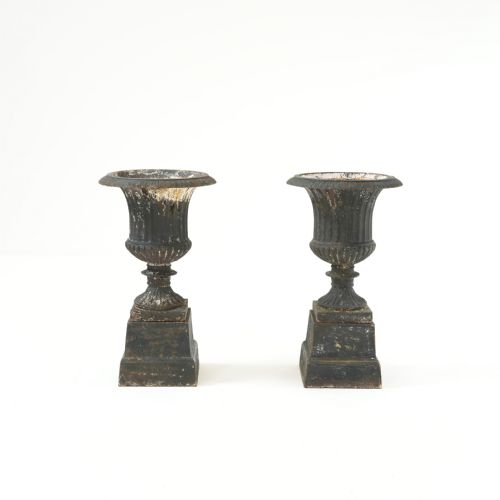


Victorian Urn on Plinth
A victorian urn on plinth brings classical sculpture into the garden or interior with enduring presence.
Victorian Urn on Plinth
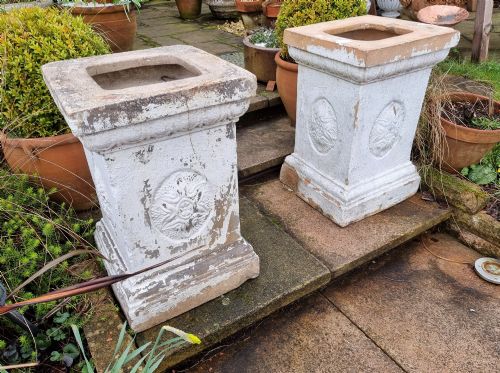
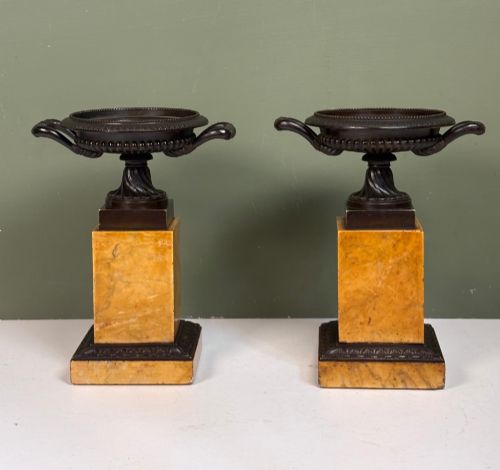
A victorian urn on plinth combines a classical vessel with a matching elevated base, drawing on ancient architectural forms. These combinations appear in sturdy cast iron for gardens as well as refined bronze, marble, and terracotta for interior display.
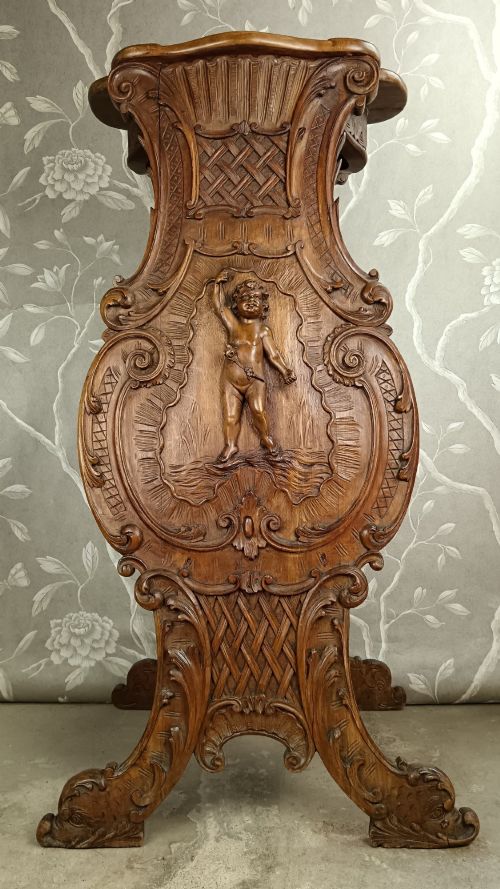
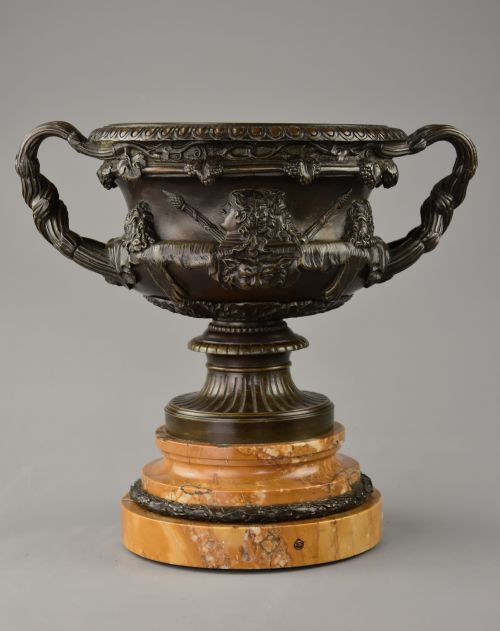
The selections here span garden campana shapes and interior Grand Tour bronze reductions, alongside stone, stoneware, and timber pedestals. Most examples originate from the nineteenth century, reflecting deep nineteenth century revival interests in classical antiquity.
Buyers encounter both matched pairs designed for grand entrances and single decorative stands intended for sculpture or plant display. The forms range from heavy iron garden planters to carved walnut, mahogany, rosewood, and marble columns.
How they were made
Foundries cast heavy iron and bronze vessels in sections, often finishing the metal with painted surfaces or patination. Stoneware and terracotta pieces rely on fired clay, whilst salt glazing provides a durable finish for exterior garden examples.
Cabinetmakers constructed interior stands and pedestals from dense timbers such as mahogany, walnut, oak, and rosewood, frequently incorporating carved details like acanthus leaves and gadrooning. Marble and Ashford marble items involve precise stone cutting and polishing to reveal natural grain and colour.
Listings feature nineteen-century materials ranging from cast iron and bronze to carved walnut, mahogany, rosewood, marble, and salt-glazed terracotta.
What varies in quality
The distinction lies in the crispness of the casting and carving, where sharp acanthus foliage and deep relief decoration separate finer items from softer utilitarian production. Material selection also dictates standard, moving from simple cast iron or pine to rich gilt bronze, figured rosewood, and carved Carrara marble.
Historical provenance and maker attribution elevate certain works, particularly signed or documented pieces from known foundries and workshops. The integrity of matching pairs and the survival of original painted or patinated surfaces further define the upper tier of the range.
Dunfermline Clay Company·Andrew Handyside·Selim Bright
The Victorian Urn on Plinth Glossary
- Campana urn
- A bell-shaped vessel with a flared rim and a tapering lower body, commonly mounted on a pedestal. This classic shape derives directly from Roman garden ornaments.
- Grand Tour
- A cultural journey undertaken by wealthy Europeans in the eighteenth and nineteenth centuries to study classical art. Travellers frequently purchased small bronze reductions of famous antiquities like the Warwick Vase.
- Gadrooning
- A decorative carved or cast band of convex curves or fluting applied to the rim or base of an urn. This ornamental motif appears frequently on classical revival metalwork and woodwork.
- Torchere
- A tall ornamental stand or column originally designed to support a torch or candle. In later periods, these stands held figures, vases, or plants.
- Salt glaze
- A vitreous glaze formed by throwing common salt into the kiln during high-temperature firing of stoneware. This process creates a distinctive textured surface resembling orange peel.
Victorian Urn on Plinth: Frequently Asked Questions
Where should I place a heavy garden urn?
Cast iron and stone urns require a solid, level foundation such as stone paving or reinforced concrete to support their substantial weight.
Position them along primary garden axes or flanking a doorway to create a formal architectural focal point.
Can bronze and marble urns live outdoors?
Bronze withstands external weather well, developing a stable natural patina over decades of exposure to the elements.
Marble and carved stone are more vulnerable to frost damage and moisture ingress, making sheltered terraces or interior placement safer for porous varieties.
How do I secure an urn to its plinth?
Many historical pairs were designed to sit firmly under their own heavy weight without mechanical fixings.
Larger garden installations sometimes utilise hidden metal dowels or structural adhesive to prevent movement during high winds.
How do I distinguish nineteenth century cast iron?
Nineteenth century castings often exhibit heavier wall thicknesses, visible mould seams, and tactile surface textures from sand casting methods.
Surface layers typically show multiple historic coats of paint or stable iron oxidation rather than modern synthetic finishes.