

Victorian Upholstered Desk Chair
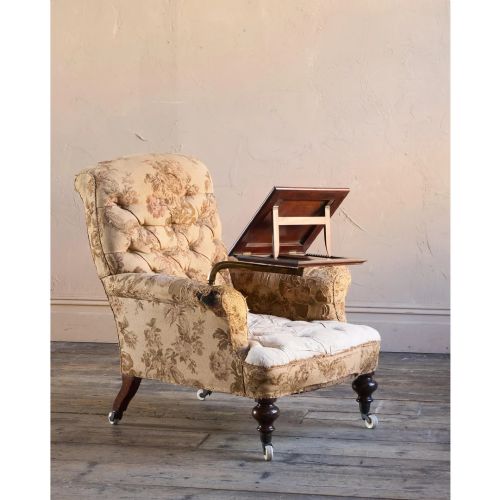
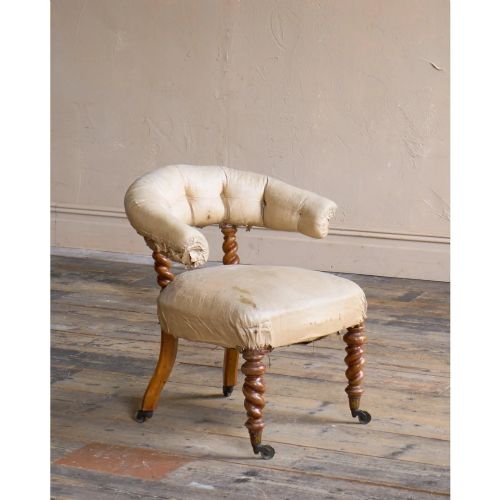
A victorian upholstered desk chair brings solid nineteenth-century timber and deep padding together to make working hours pass in proper comfort.
Victorian Upholstered Desk Chair
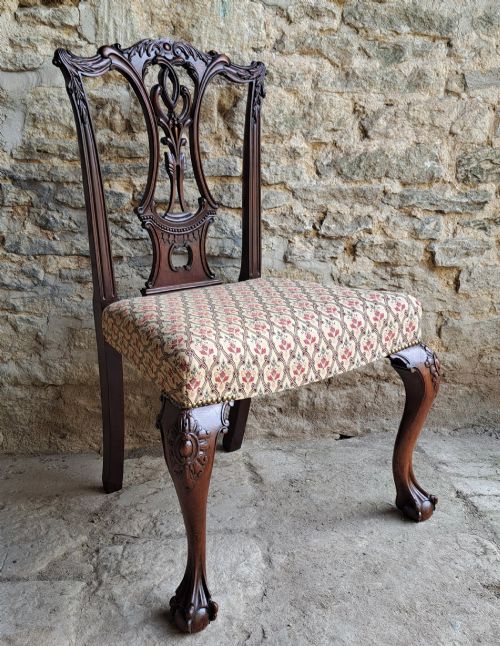
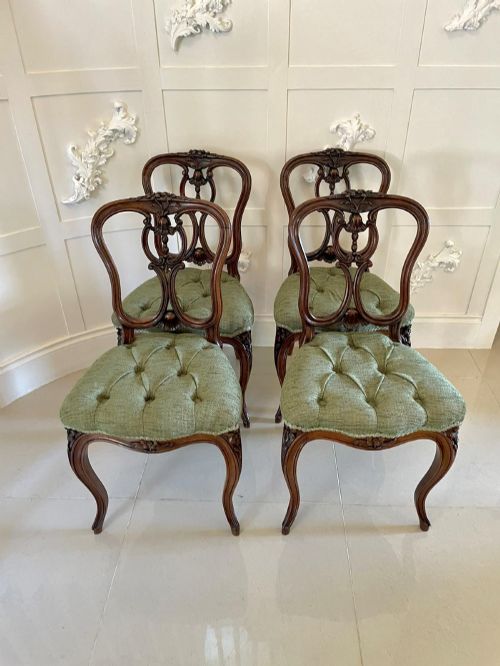
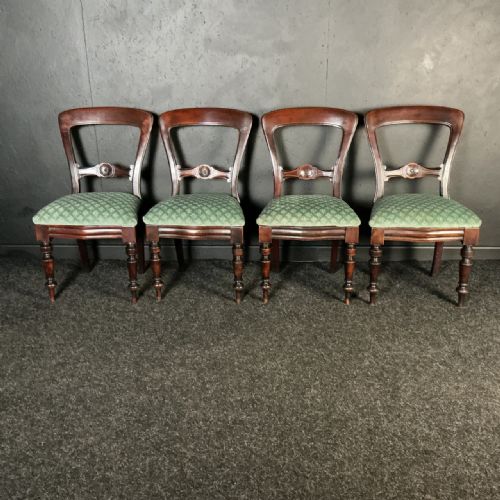
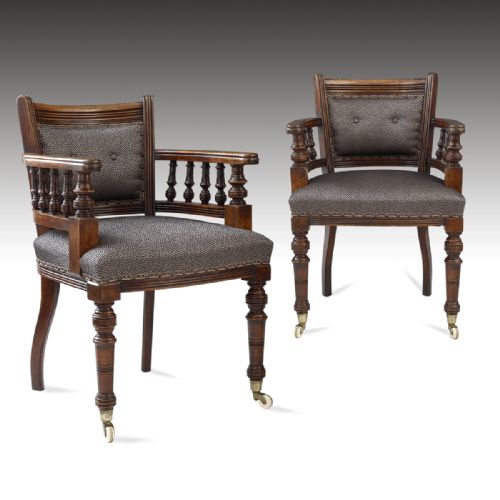
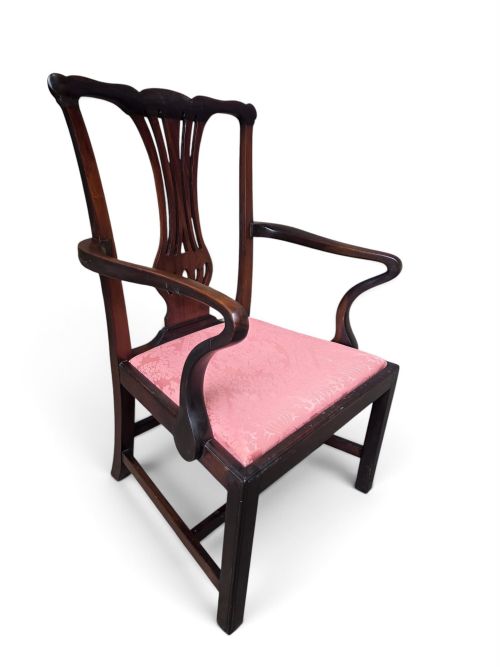
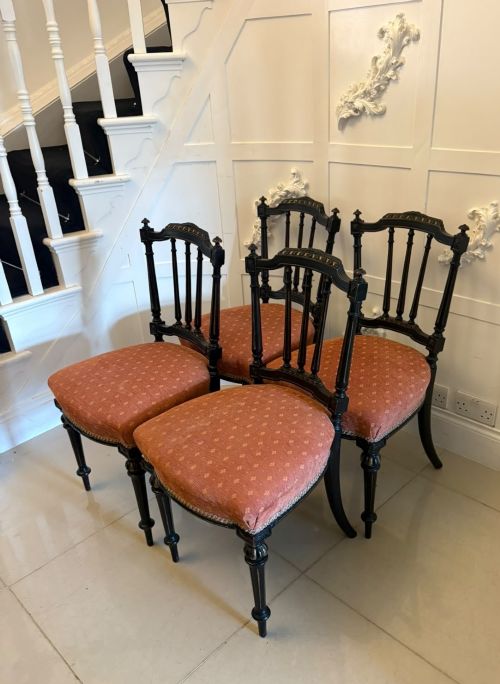
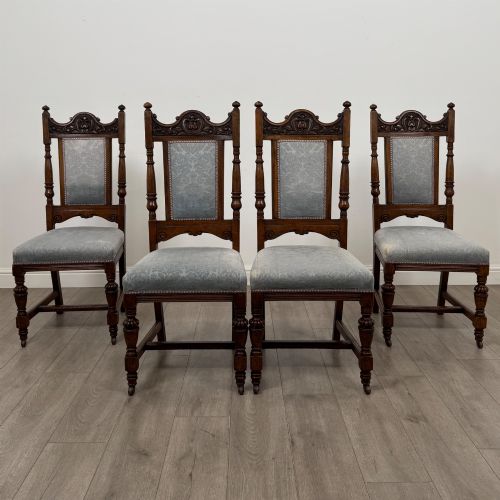
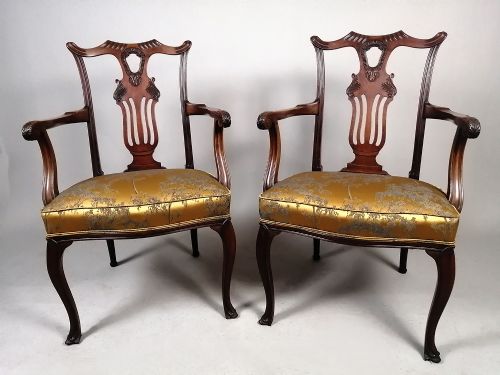
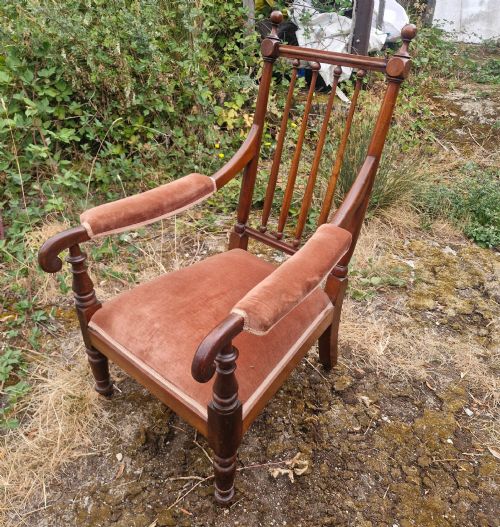
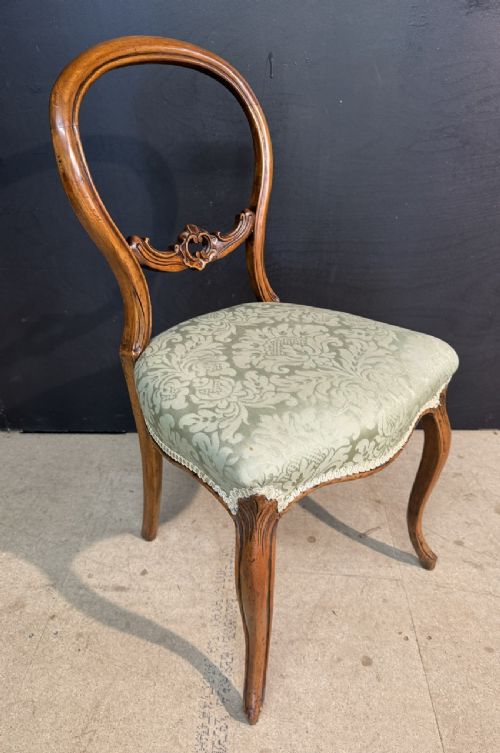
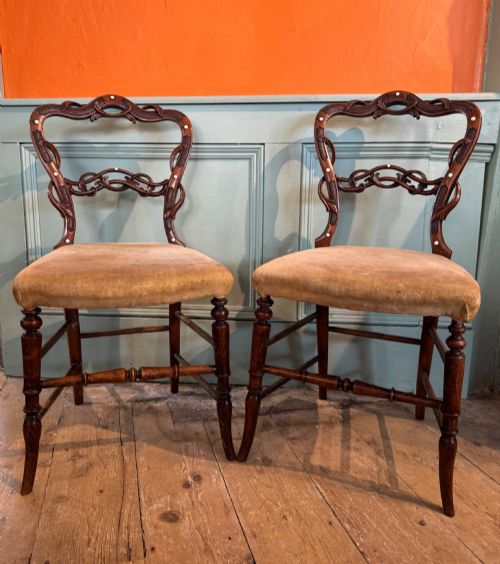
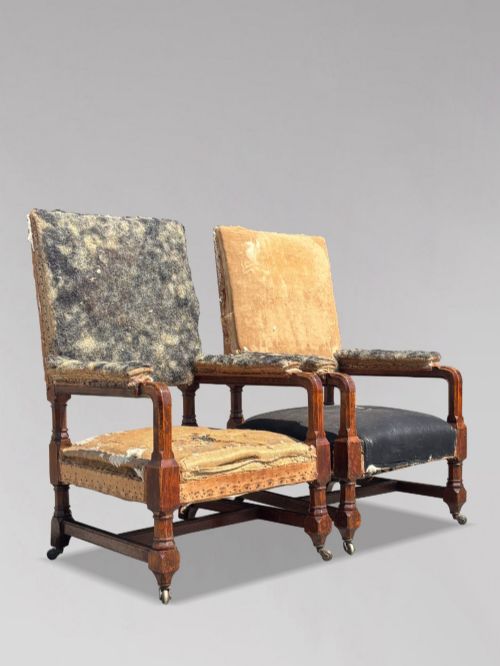
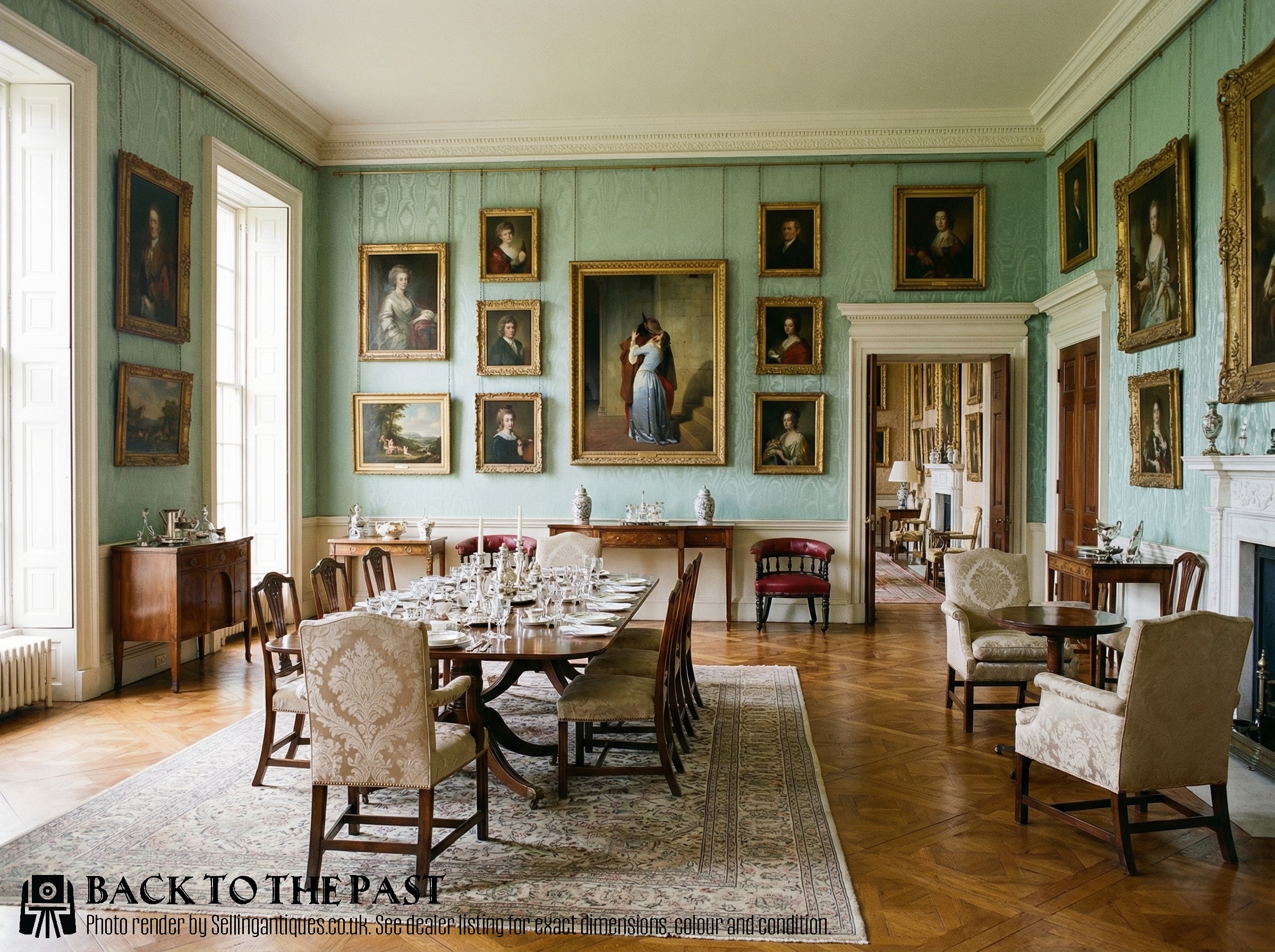
A victorian upholstered desk chair combines nineteenth-century seating utility with solid timber frames and padded surfaces. The pieces seen here span periods from the mid nineteenth century into the early twentieth century, showing revival styles alongside plain functional seating.
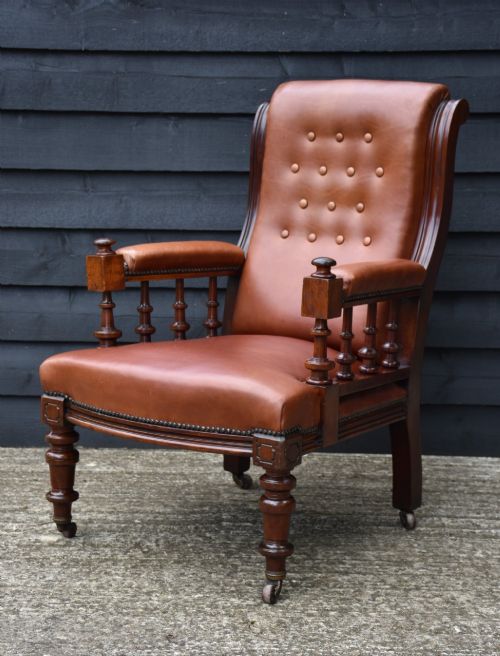
Most examples you encounter take the form of armchairs, library chairs, or swivel desk chairs designed for study and office spaces. They appear in mahogany, walnut, and oak, often paired with leather, velvet, or woven upholstery fabrics.
How They Were Made
Makers built the structural frames of a victornian upholstered desk chair using durable hardwoods such as mahogany, oak, walnut, and rosewood. These timbers were often turned, carved, or shaped into styles ranging from Gothic Revival to Chippendale influences.
The seats and backs received substantial padding covered in leather, velvet, or traditional upholstery fabric, sometimes incorporating swivel mechanisms, revolving bases, or reading stands into the design.
Several examples include built-in reading stands or folding frames intended for nineteenth-century travellers.
What Varies in Quality
The distinction between standard utility seating and exceptional library chairs rests upon the selection of timber, the depth of the carving, and the sophistication of any mechanical revolving or swivel apparatus. Finer pieces employ dense mahogany or walnut with carefully detailed scrollwork, spider web backs, or ebonised and gilt finishes.
Upholstery execution and the retention of original materials such as specific leathers, tapestry fabrics, or brass accents also separate mass-produced workshop items from individually commissioned pieces.
C. Hindley & Sons
The Victorian Upholstered Desk Chair Glossary
- Revolving
- A seating mechanism allowing the chair to rotate fully on its base. This feature appears frequently on nineteenth-century office and library chairs designed for easy movement.
- Gothic Revival
- An architectural and decorative style drawing on medieval pointed arches and heavy ornament. Pieces in this manner often feature substantial oak frames and carved tracery.
- Carver
- A term for an open armchair, typically sharing a design with a set of smaller dining chairs. They provide wider seating often utilised at the head of a table or desk.
- Ebonised
- Timber treated to resemble ebony through a staining and polishing process. It creates a dark, uniform surface seen on various nineteenth-century decorative chairs.
Victorian Upholstered Desk Chair: Frequently Asked Questions
How do I identify a genuine period desk chair?
Look closely at the timber construction, joinery methods, and the type of secondary woods used beneath the seat. Nineteenth-century examples display hand-cut joints and material ageing consistent with the eighteen-fifties to nineteen-hundreds.
Examine the upholstery technique and hardware such as brass castors or swivel mechanisms. Period pieces often feature traditional stuffing and hand-tacked leather or fabric work rather than modern staples.
Were all of these chairs originally made for offices?
Many were built for private home libraries, studies, and drawing rooms rather than commercial office environments. The inclusion of reading stands or luxurious velvet and tapestry points to domestic use.
Sturdier oak and mahogany revolving designs with leather pads served administrative and clerical duties. Both domestic and workspace variants fall under the broad category of nineteenth-century seating.
What woods were commonly used for these chairs?
Mahogany and oak appear most frequently in the surviving record, offering sturdy support for daily seating. Walnut and rosewood also feature in more decorative or high-status examples.
Alternative timbers such as birds-eye maple and ebonised woods occasionally appear on specific revival pieces or campaign furniture. Each wood type dictates the natural colour and grain pattern of the frame.
How should I care for the leather upholstery?
Keep nineteenth-century leather conditioned with appropriate balms to prevent drying and cracking over time. Avoid placing the chair in direct sunlight or near strong heat sources.
Dust the carved wooden frames regularly with a dry cloth and check structural joints periodically. Gentle maintenance preserves both the leather surface and the underlying padding.