


Victorian Leather Library Chair
A victorian leather library chair brings solid timber frames and aged hides together for daily study or fireside sitting.
Victorian Leather Library Chair
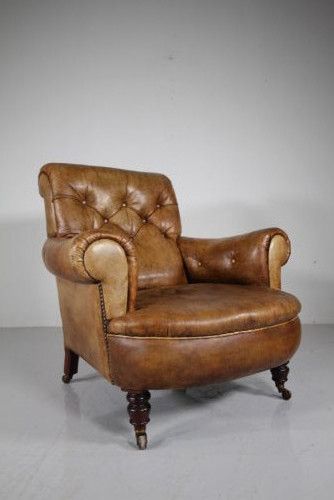
A victorian leather library chair is a sturdy seat designed for reading rooms, studies, and offices during the nineteenth century. These pieces combine substantial wood framing with durable hide upholstery to withstand long hours of use.
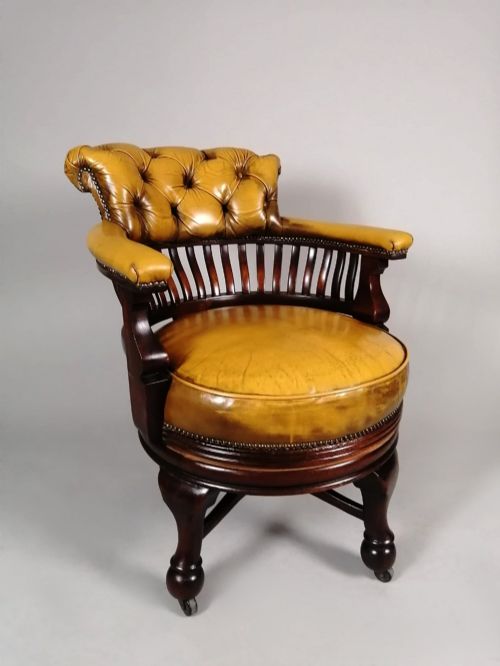
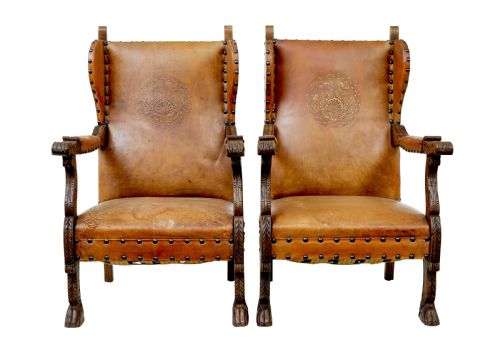
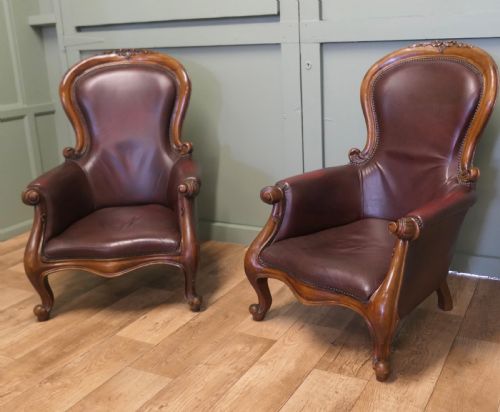
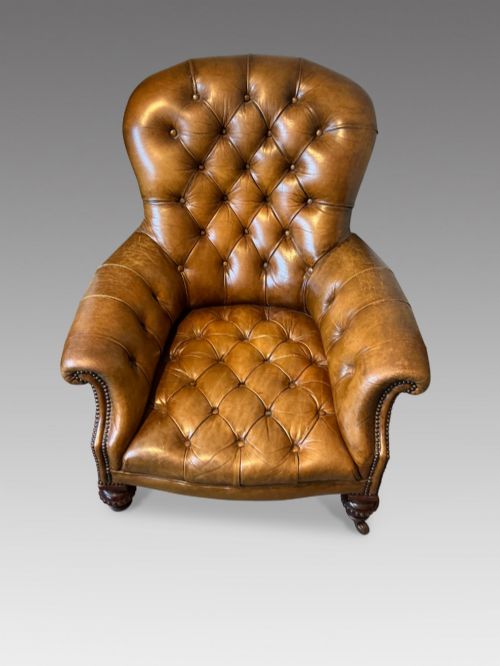
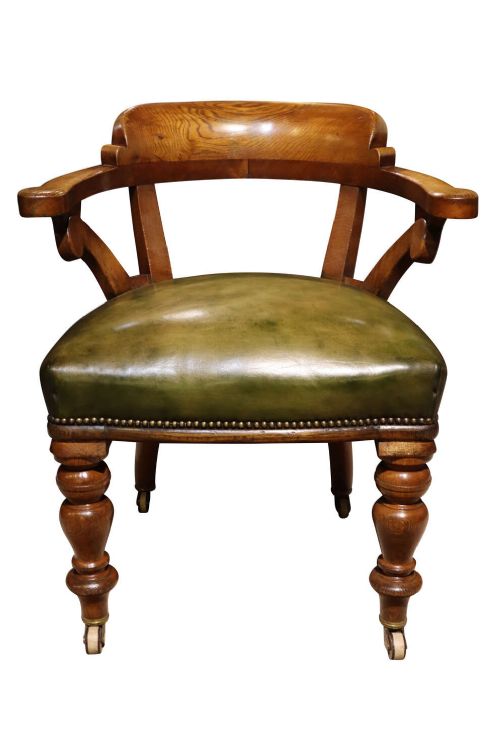
The most common examples on this page are mahogany and oak armchairs or desk chairs featuring buttoned leather panels. Many incorporate revolving mechanisms, castors, or deep wingbacks suited for sedentary work.
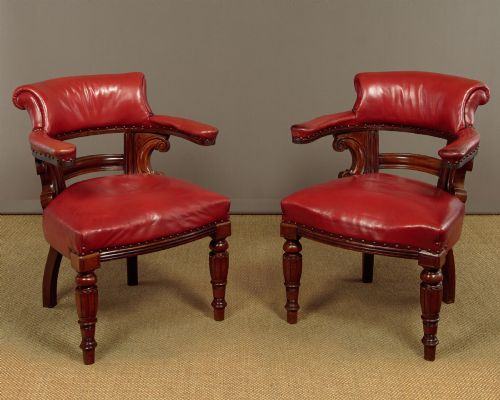
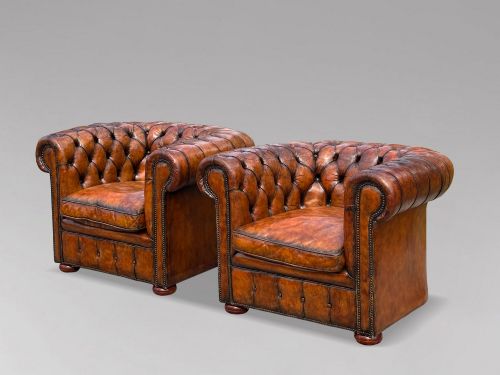
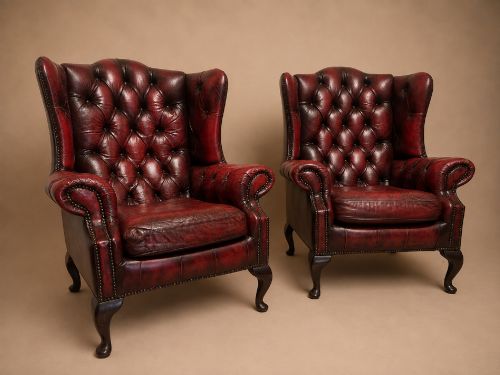
Makers produced varied seating formats, from compact tub chairs to large Chesterfield club designs. Regional workshops and larger firms adapted Regency and William IV templates into heavier Victorian forms.
How They Were Made
Carpenters constructed the structural frames using dense hardwoods like mahogany, oak, and walnut. These timbers provided the load-bearing strength required for heavy daily employment.
Upholsterers stretched leather over stuffed padding, frequently securing the edges with brass tacks or deep buttoning. Metal components such as brass castors and swivel mechanisms completed the movable desk variants.
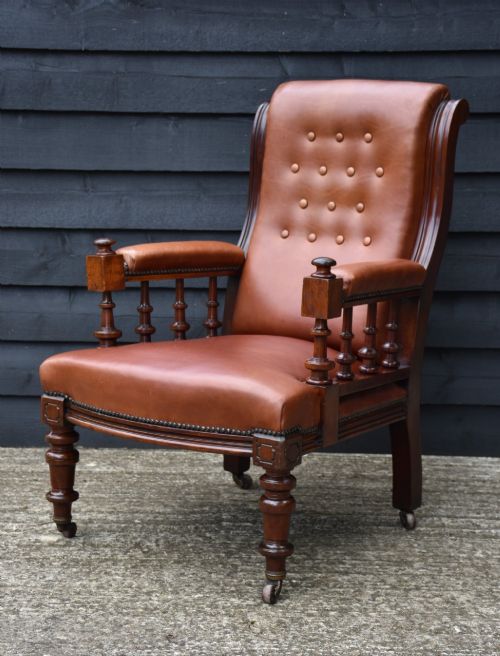
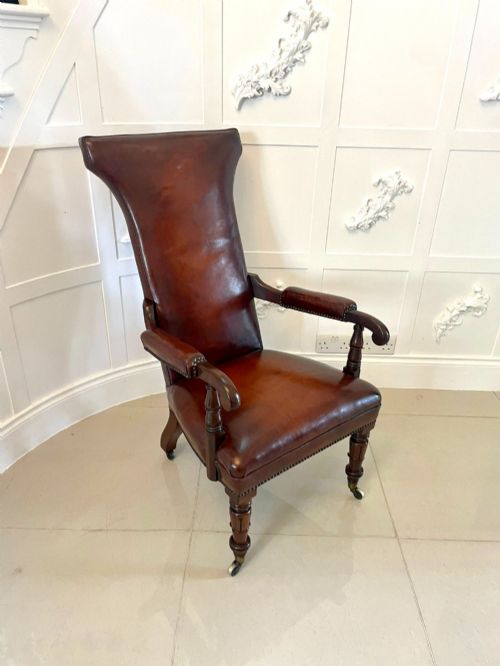
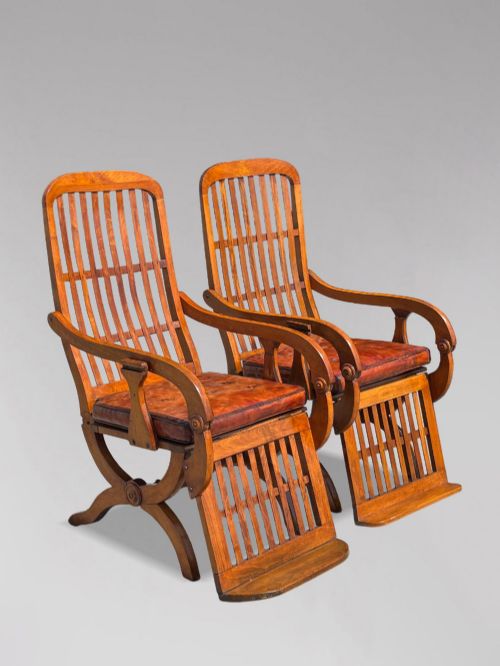
Spindle-back reading chairs offered nineteenth-century scholars a lightweight perch for brief visits to the home bookshelf.
What Varies in Quality
The grade of timber and the depth of the frame carving distinguish standard workshop production from finer studio output. Selected mahogany and figured oak demonstrate superior joinery and longevity.
The thickness and tanning of the leather influence tactile durability over generations. Finely grained hides retain suppleness and character better than thin replacements applied during later restorations.
Gillows·Bruce James Talbert·Cope and Collinson
The Victorian Leather Library Chair Glossary
- Buttoned leather
- Upholstery pulled into depressions by tight stitches or tacks to form a geometric grid of padded diamonds. This technique kept internal stuffing distributed evenly across the seat back.
- Castor
- Small wheel fitted to the base of chair legs to ease movement across heavy carpets. Brass sockets frequently held these metal or ceramic rollers.
- Revolving desk chair
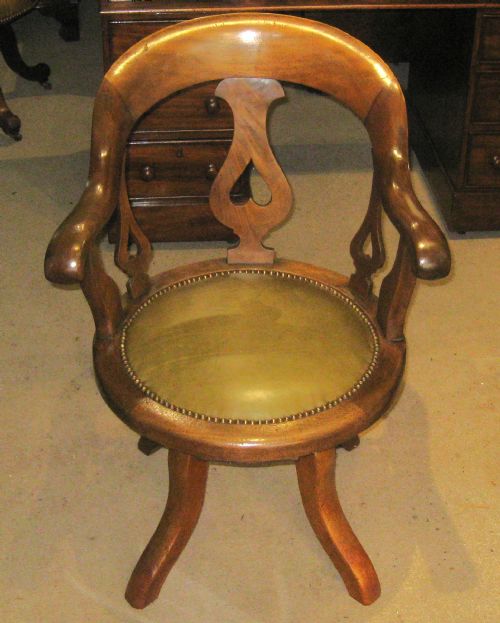
- Swivel seat mounted on a central wooden or iron spindle above a four- or five-legged base. These allowed users to turn between writing surfaces and bookshelves.
- Wingback
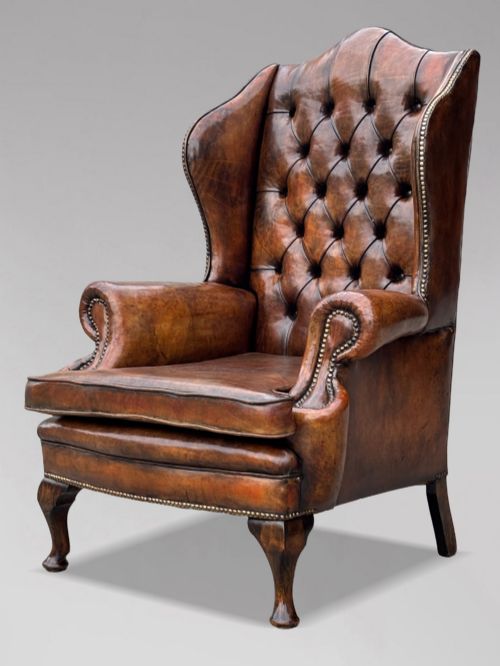
- High-backed armchair with protective side panels designed to shield the occupant from drafts. Early versions appeared in various nineteenth-century reading spaces.
Victorian Leather Library Chair: Frequently Asked Questions
How do I identify a Victorian library chair?
Look for heavy timber frames constructed from mahogany or oak combined with button-tufted leather upholstery. These chairs typically display nineteenth-century joinery methods and heavier proportions than earlier Regency models.
Check the underside and internal webbing for age indicators such as hand-forged tacks or period castors. Many examples also feature turned wooden legs and defined arm supports characteristic of the era.
Were these chairs used at desks?
Many library chairs served dual purposes as study seats and reading chairs. Revolving variants with castors were specifically built for shifting positions around large partner desks.
Fixed-frame armchairs provided stationary seating near bookshelves or firesides. The sturdy wood construction supported long periods of administrative or literary work.
What woods were used in framing?
Mahogany remained the preferred timber for formal library seating through much of the nineteenth century. Oak and walnut also appeared frequently, particularly in Gothic Revival and heavier club chair designs.
Selected pieces utilised exotic veneers or secondary timbers like elm and chestnut for internal components. These dense hardwoods ensured the structural integrity needed for daily use.
How should I care for old leather?
Maintain the hide by applying appropriate leather conditioners to prevent the material from drying out. Avoid placing the chair near direct heat sources or strong sunlight that causes fading.
Dust the buttoned crevices regularly with a soft brush to prevent grit accumulation. Gentle cleaning preserves the natural patina developed over generations of handling.