





Traditional Oak Study Chair
These traditional oak study chair examples bring solid timber construction and period character straight to the home office or library.
Traditional Oak Study Chair
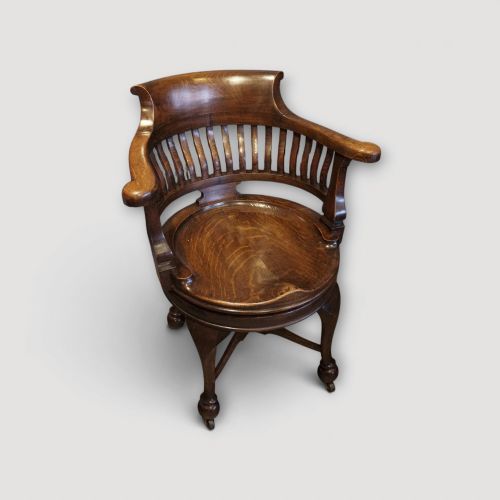
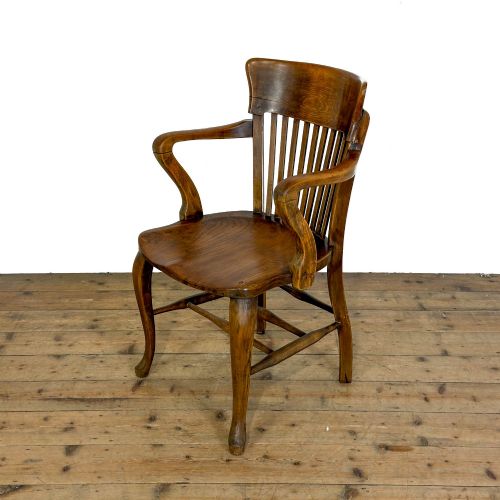
A traditional oak study chair is a robust seating choice designed for desks, libraries, and studies, drawing on Victorian, Edwardian, and early twentieth-century origins. These pieces frequently take the form of desk chairs, armchairs, club elbow chairs, and smokers bows, offering sturdy support for daily use.
Buyers browsing this selection will most commonly encounter Edwardian and Victorian iterations alongside pieces from the nineteenth century and the opening decades of the twentieth. Styles span from plain English country vernacular to Jacobean Revival, Aesthetic Movement, and Arts and Crafts designs.
The typical traditional oak study chair balances functional utility with period aesthetic appeal, whether featuring a swivel mechanism for office tasks or fixed legs for a library reading nook. These forms emerge from periods that valued honest construction and durable timbers in domestic and working interiors.
How they were made
Makers built these pieces primarily using solid oak frames, sometimes pairing the principal timber with beech for turned components or internal supports. This solid wood construction provides the inherent weight and structural rigidity required for daily sitting and movement.
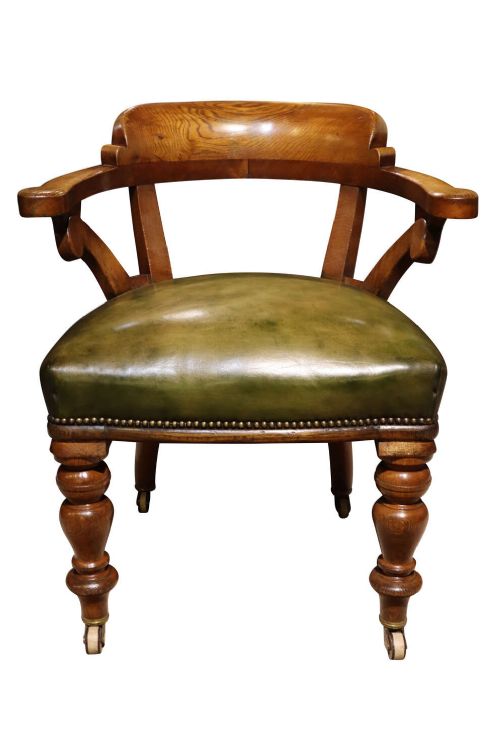
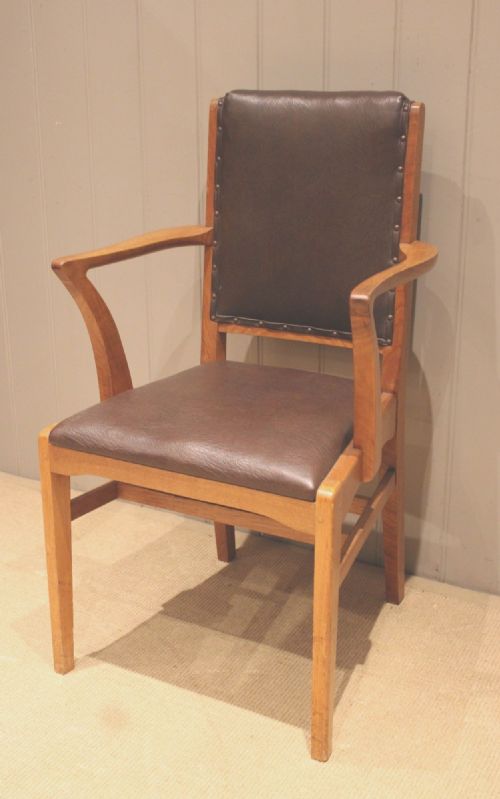
Upholstery materials recorded in the construction include leather, tan hide, velvet, and various traditional fabrics for seat pads and backrests. Brass and metal hardware, including cast iron swivel mechanisms, appear on revolving desk chair variants to allow rotation and adjustment.
Traditional Oak Study Chair Retail Price Guide 2026
Typical asking prices for traditional oak study chair among the pieces listed under this phrase on Sellingantiques today, from the lower quarter to the upper quarter. They describe what is for sale here now, not the wider market.
The listings on this site span multiple eras, encompassing Victorian, Edwardian, and early twentieth-century production up to 1920.
What varies in quality
The distinction between standard examples and finer pieces often lies in the choice of timber figure, such as the warm depth seen in golden oak, and the sophistication of carved details on the frame. Aesthetic Movement and Arts and Crafts pieces tend to show deliberate design intent in their joinery and silhouette.
Hardware execution also defines the upper tier, particularly smooth-operating swivel mechanisms built from brass and cast iron rather than purely utilitarian ironwork. Original upholstery materials like tan hide or well-chosen leather elevate a piece above later replacements.
Edward William Godwin
The Traditional Oak Study Chair Glossary
- Smokers Bow
- A sturdy low-backed wooden armchair with a rounded continuous arm and back rail, often used in offices and smoking rooms. This form provides robust support through heavy turned spindles.
- Aesthetic Movement
- A late nineteenth-century design current emphasising visual beauty over narrative function, associated with simplified forms and artistic craftsmanship. Pieces from this style often display refined geometric or Japanned influences.
- Jacobean Revival
- A nineteenth-century style replicating or reinterpreting seventeenth-century English furniture, characterised by dark finishes, geometric paneling, and heavy turned legs. This aesthetic suits formal study and library interiors.
- Club Elbow Chair
- A comfortable upholstered armchair with low arms, designed for relaxed seating in studies and clubs. The oak frame provides rigid structural support beneath padded leather or fabric.
Traditional Oak Study Chair: Frequently Asked Questions
What is a traditional oak study chair?
A traditional oak study chair is a wooden desk or library seat produced during the Victorian, Edwardian, or early twentieth-century periods. These chairs use solid oak frames and often incorporate leather or hide upholstery for comfort during work.
Such seating ranges from simple country armchairs to sophisticated revolving office chairs with brass and cast iron mechanisms. They serve as functional furniture that retains historical character.
How do I care for leather on a desk chair?
Leather and hide seats benefit from regular dusting and occasional treatment with appropriate leather conditioners to prevent drying and cracking. Keeping the timber frame polished with beeswax maintains the finish of the oak.
Placing these chairs away from direct heat sources and strong sunlight preserves both the wood and the upholstery over years of daily use.
Are these chairs suitable for modern desks?
Many of these chairs fit standard modern desk heights, though fixed-leg armchairs may have lower arm clearances than contemporary office seating. Swivel desk chair variants offer adjustable height and rotation suited to active workspace use.
Checking the specific seat height and arm clearance dimensions ensures compatibility with your particular desk setup before purchase.
How do I tell Victorian from Edwardian chairs?
Victorian oak chairs often feature darker finishes, heavier carving, and robust proportions aligned with revival styles like Jacobean or Aesthetic Movement designs. Edwardian pieces generally display lighter golden oak tones, simplified Edwardian lines, and Arts and Crafts influence.
Construction details and hardware also offer clues, with late nineteenth-century pieces showing distinct hand-tool marks compared to early twentieth-century manufacturing methods.