



Victorian Turquoise Porcelain
Victorian turquoise porcelain brings together rich blue glazes and ornate nineteenth-century forms to brighten any room.
Victorian Turquoise Porcelain
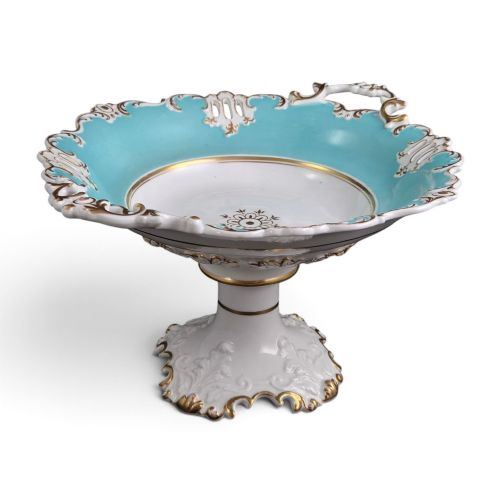
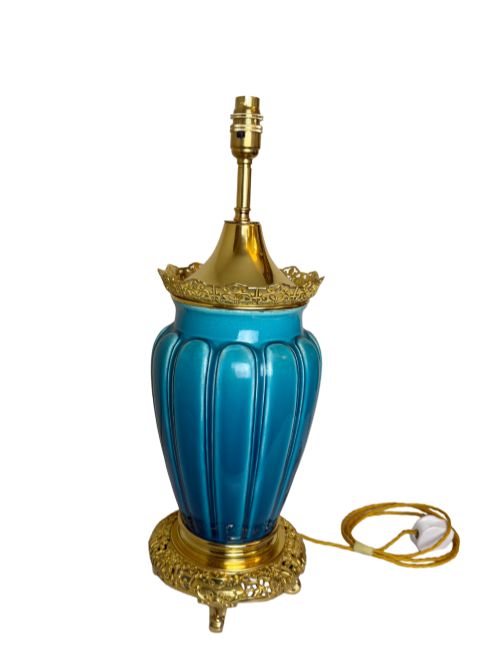
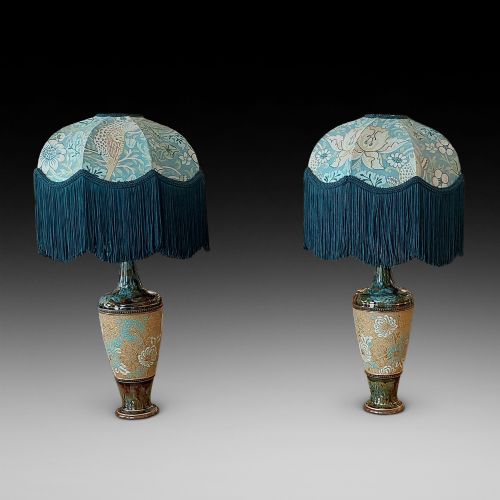
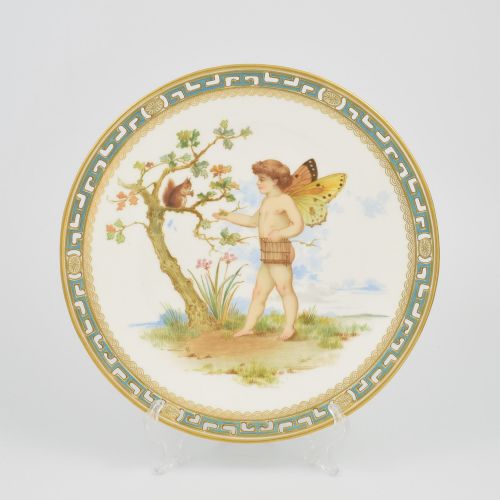
Victorian turquoise porcelain covers a range of decorative and functional objects produced during the nineteenth century, characterised by bright blue glazes. Buyers seeking victorian turquoise porcelain will encounter diverse forms including vases, mantel clocks, cabinet plates, tazza, table lamps, and cassolettes.
The selection reflects both English and continental factories working in various historical revival and aesthetic styles. Pieces span the decades from mid-century productions through to the turn of the twentieth century, showing influences from Rococo to Louis XVI and Oriental designs.
Materials and Manufacture
Makers utilised ceramic and porcelain bodies coated in vibrant turquoise enamel, frequently combining the glazed surfaces with gilt bronze, ormolu, or silver plate mounts. Gilding and gold leaf accentuate the moulded details, whilst brass and ceramic serve as foundational elements for lighting and clocks.
Techniques range from hand-painted figurative scenes and armorial decoration to pierced openwork and applied enamel details. Factories shaped these pieces using traditional moulding and throwing methods before firing and applying metallic trim.
Victorian Turquoise Porcelain Retail Price Guide 2026
Typical asking prices for victorian turquoise porcelain among the pieces listed under this phrase on Sellingantiques today, from the lower quarter to the upper quarter. They describe what is for sale here now, not the wider market.
Among the vases and clocks, a ceramic garden seat brings oriental inspiration straight into the Victorian parlour.
Assessing Quality
Quality rests in the crispness of the porcelain modelling and the delicacy of any hand-painted or enamelled decoration. Finer examples display meticulous brushwork in figurative scenes and precise integration of metal mounts.
The weight and finish of the gilt bronze or ormolu trim distinguish superior pieces from standard production. A harmonious balance between the vibrant turquoise glaze and the gilded highlights marks the work of premier factories.
Coalport·Minton·Royal Doulton·Helena Wolfsohn Dresden·Kerr & Binns·KPM Berlin·Samson
The Victorian Turquoise Porcelain Glossary
- Tazza
- A shallow saucer-like dish supported on a stem and foot, often used for display or serving. These decorative vessels appear frequently in nineteenth-century ceramic collections.
- Cassolette
- A decorative vase or urn featuring a reversible lid that allows it to function as a perfume burner or a solid-lidded vessel. They are typically mounted with gilt bronze or ormolu.
- Ormolu
- Finely ground high-carat gold applied to a bronze base using a mercury amalgamation process, or simply gilded brass. This mount enhances nineteenth-century porcelain clocks and vases.
- Armorial
- Bearing a coat of arms or heraldic crest hand-painted onto the ceramic surface. Cabinet plates often feature such bespoke family insignia.
Victorian Turquoise Porcelain: Frequently Asked Questions
What are these turquoise porcelain pieces?
They are nineteenth-century ceramic decorative objects, including vases, plates, and clocks, defined by their distinctive bright blue glaze.
Many incorporate gilded mounts and hand-painted details typical of Victorian and continental design.
How were cassolettes used?
Cassolettes functioned as ornamental vessels that could emit fragrance through a pierced lid or serve as standard covered urns.
In Victorian interiors, they sat on mantelpieces as part of matched garniture sets.
How do I care for gilt porcelain?
Clean surfaces gently with a soft, dry cloth to protect delicate gold leaf and enamel work from abrasion.
Avoid moisture and harsh cleaning agents, particularly around metal mounts and painted glaze.
How can I tell the period?
Examine the base for factory marks, stilt marks, and registration numbers that indicate nineteenth-century production dates.
Stylistic cues like Rococo revival moulding or Aesthetic movement motifs also help narrow the decade.