
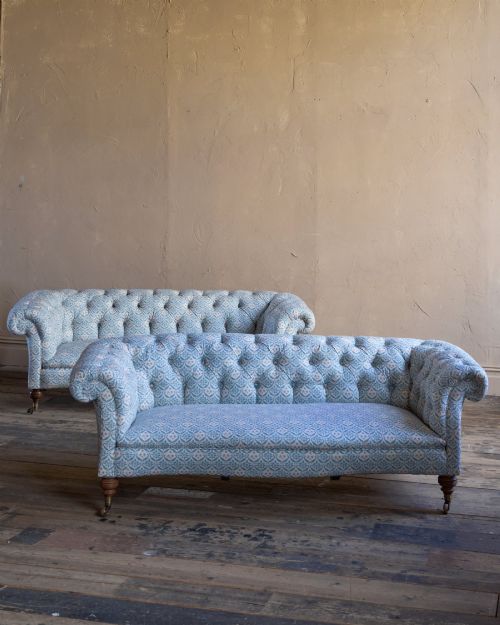
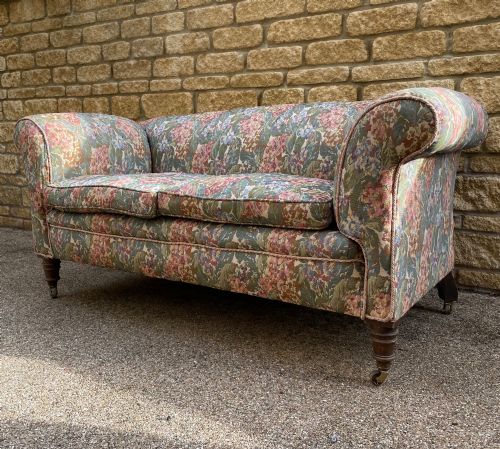
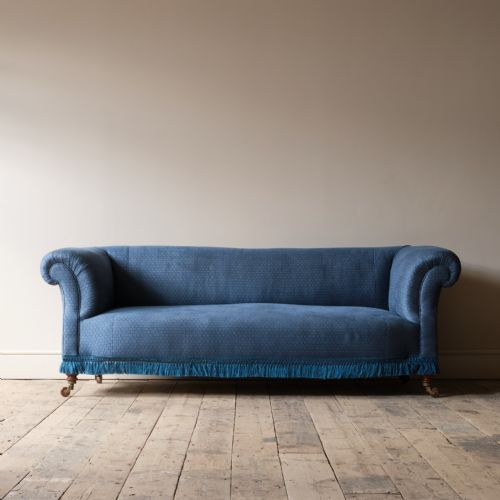
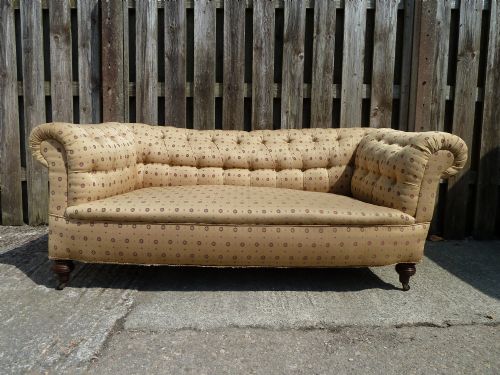
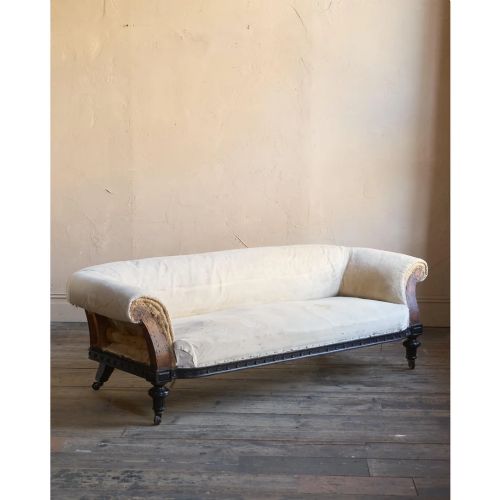
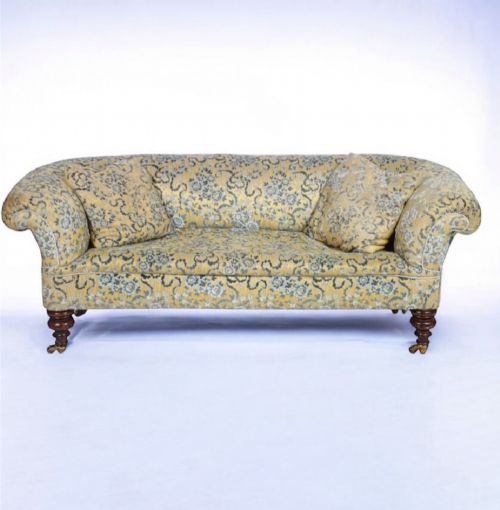
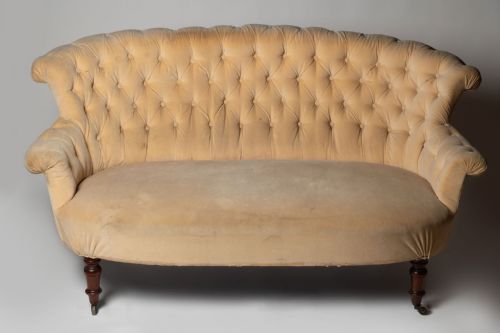
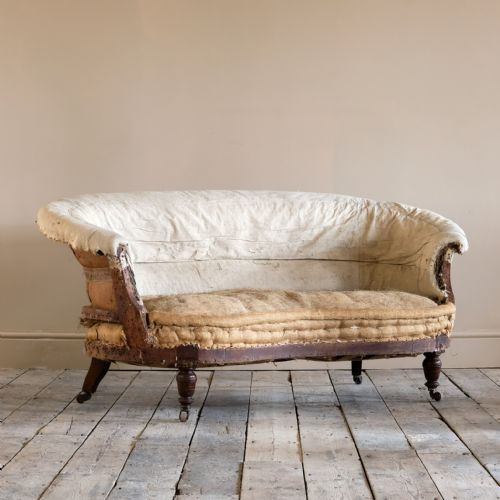


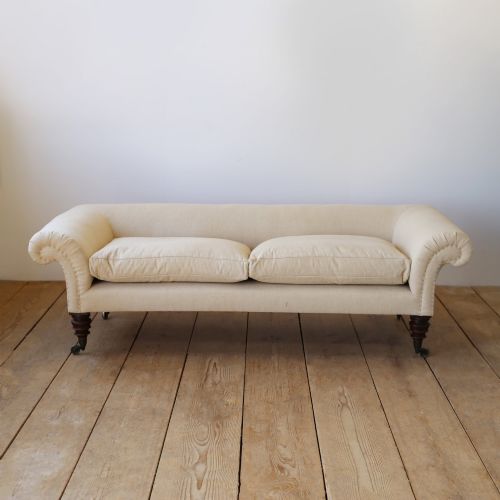
Victorian Turned Leg Settee
These Victorian turned leg settee pieces are sturdy seating options designed for comfort, and buyers choose them for their robust timber frames.
Victorian Turned Leg Settee
When you search for a Victorian turned leg settee, you are looking at nineteenth-century seating that includes various forms such as Chesterfields, drop arm sofas, and chaise longues. The listings here show pieces spanning the nineteenth century, including specific years like 1850, 1870, 1890, and 1900, reflecting traditional English and English country house styles alongside Napoleon III and Aesthetic Movement examples.
The most common configurations on this page are two-seater sofas and larger settees featuring distinctive turned wooden legs, often supported on castors. Makers such as Howard and Sons, Hampton and Sons, and Holland and Sons appear frequently alongside general Victorian and country house pieces.
Materials and construction methods
The frames utilise solid timbers such as mahogany, walnut, and general wood, paired with brass components like castors on the legs. Upholstery materials recorded in the evidence include fabric, velvet, cotton, and leather, often requiring specific restoration or re-covering.
Turned leg supports are shaped on a lathe, providing structural stability to the base while offering a decorative finish that distinguishes these nineteenth-century items from plainer seating.
The listings span the nineteenth century, utilising materials such as mahogany, walnut, brass, velvet, and leather across various settee and sofa forms.
Quality variations in the range
The distinction between items at different points in the range lies in the origin of the maker, with pieces carrying stamps or attribution to established London firms commanding greater interest. The integrity of the underlying timber frame and the originality of the turned supports also influence the standing of each piece.
Upholstery condition varies from examples ready for complete recovering to fully restored pieces in hand-dyed leathers or designer fabrics, which affects how immediately the furniture can be placed into a room.
Howard and Sons·Hampton and Sons·Holland and Sons
The Victorian Turned Leg Settee Glossary
- Turned leg
- A wooden support shaped on a lathe to create cylindrical or curved decorative profiles. These are typical of nineteenth-century seating bases.
- Chesterfield
- A deep-buttoned upholstered sofa with arms and back of the same height. This form is prominent among the nineteenth-century listings.
- Chaise longue
- An upholstered sofa shaped like a chair with a long seat for reclining. Several French and Victorian examples appear in the archive.
- Drop arm
- A sofa mechanism allowing one arm to be lowered flat. This offers adjustable positioning for resting.
Victorian Turned Leg Settee: Frequently Asked Questions
How do I identify a Victorian settee?
Look for nineteenth-century construction details, traditional timber frames in mahogany or walnut, and characteristic turned leg supports.
Many pieces also feature maker stamps or specific upholstery styles associated with the period.
Are these settees comfortable for daily use?
Most of these pieces are built with deep seating and sturdy frames designed for substantial everyday utility.
Comfort levels often depend on the condition of the internal webbing and the quality of the current padding or upholstery.
What fabric options should I choose?
Original listings feature cotton, velvet, and hand-dyed leathers, alongside pieces sold specifically for re-upholstery.
Selecting a fabric depends on whether you prefer a traditional country house aesthetic or a restored leather finish.
How do I care for turned wooden legs?
Wipe the timber surfaces gently with a dry cloth to remove dust and maintain the polish of the wood.
Avoid placing the furniture in direct sunlight or near heat sources to prevent the timber from drying out.