





Victorian Tripod Stool
A victorian tripod stool brings reliable utility and varied timber character to an interior, whether configured for the piano or the farmhouse kitchen.
Victorian Tripod Stool
When you search for a victorian tripod stool, you encounter nineteenth-century seating supported by three legs, spanning vernacular country workshops and urban music rooms alike. These pieces serve multiple domestic functions, appearing frequently as piano stools, music seats, or low occasional tables.
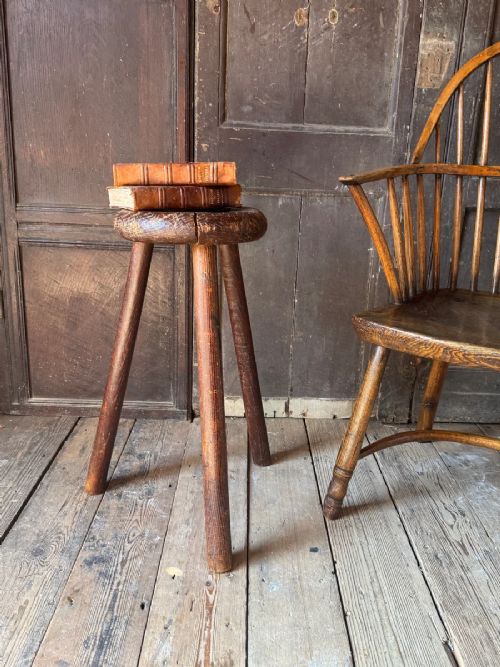
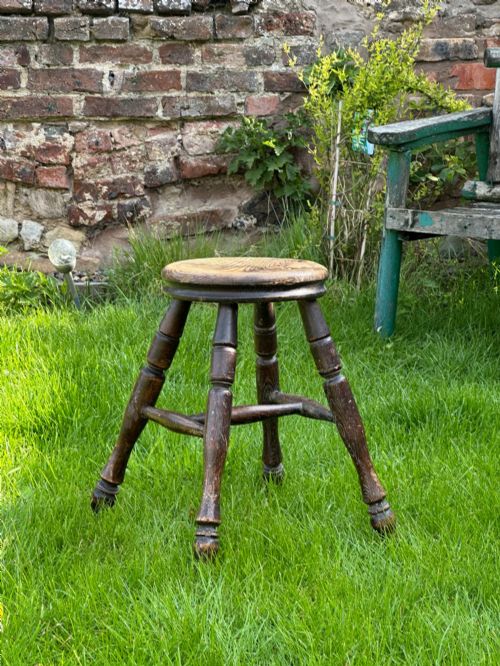
Regional variations encompass English oak country pieces, Birmingham jeweller's designs, and carved walnut pedestal forms. The three-legged format ensures stability on uneven floors, a practical characteristic that explains their enduring survival across generations.
How they were made
Joinery methods rely on traditional pegged mortise and tenon joints to secure the legs into the underside of the seat. Adjustable models incorporate wooden or metal screw mechanisms to allow height variation for musicians and artisans.
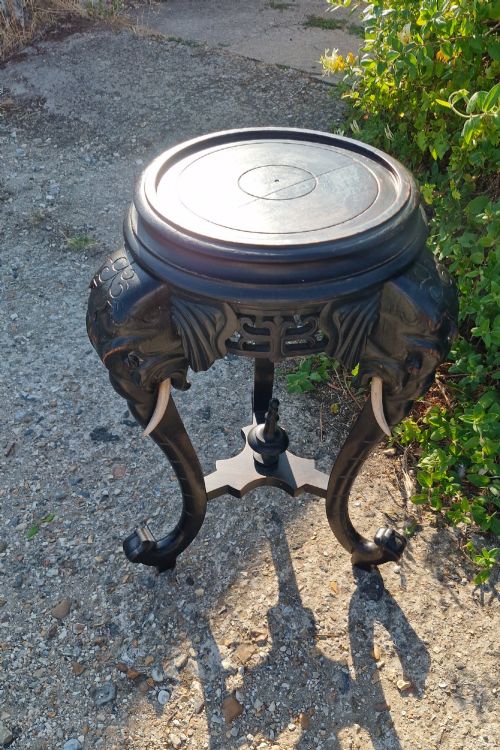
Elephant tables bring painted wooden tusks to the nineteenth-century parlour.
What varies in quality
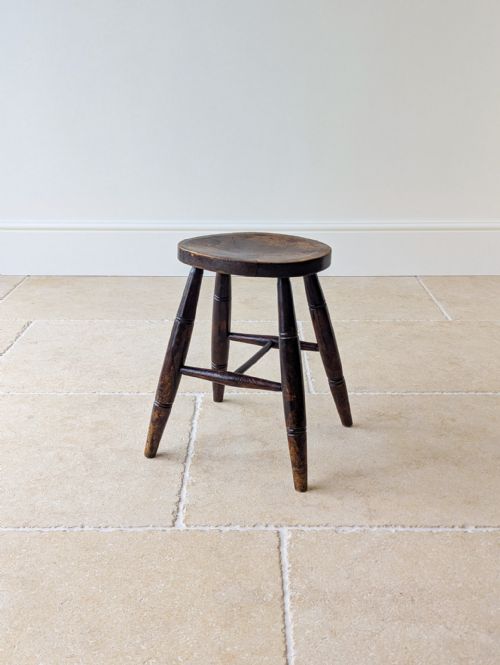
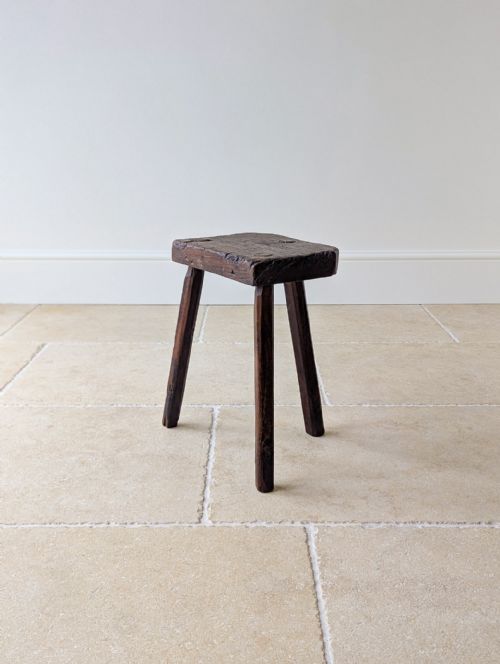
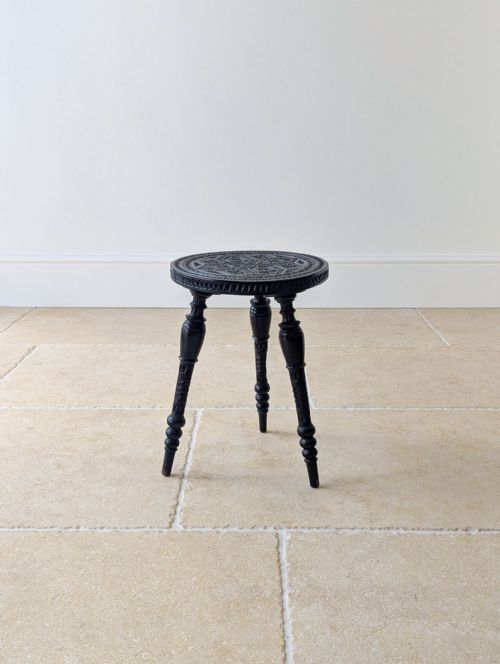
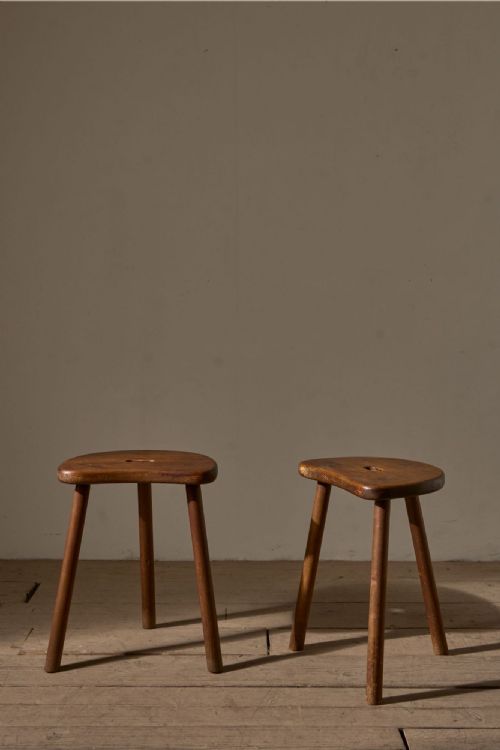
The distinction between standard utility seating and finer workshop production lies in timber selection and decorative carving. Walnut and rosewood piano stools often display intricate chip-carving, parcel gilt details, or bobbin-turned supports, whereas vernacular dairy stools rely on honest utilitarian form.
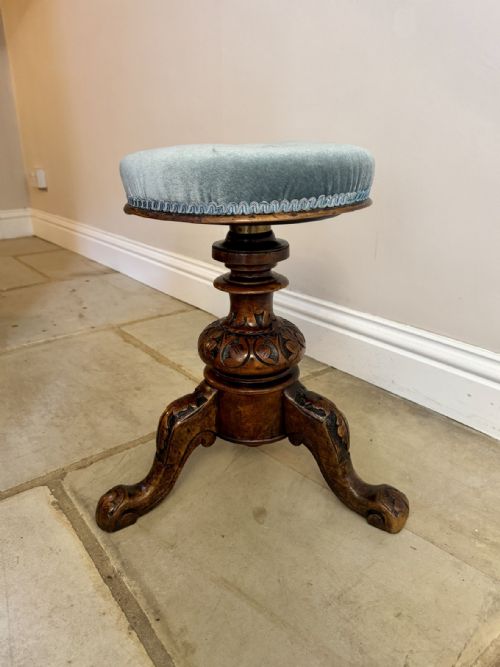
Mechanism precision dictates the worth of revolving and adjustable examples, where smooth operation of the rising seat screw separates superior domestic furniture from simpler workshop survivors.
J. Shoolbred·James Shoolbred
The Victorian Tripod Stool Glossary
- Tripod
- A piece of furniture supported by three legs, which guarantees stability on uneven historic flooring. This configuration is common in small tables and piano seating.
- Revolving stool
- A seat featuring a threaded spindle or screw mechanism that allows the top to spin and adjust in height. These are frequently found associated with nineteenth-century pianos and dressing tables.
- Vernacular
- Everyday domestic objects made by regional craftsmen without high-style academic design pretensions. These pieces prioritise functional utility over fashionable ornament.
- Pollard oak
- Timber taken from trees that have been pollarded, producing dense wood with a clustered, knotted grain pattern. Cabinetmakers utilised this material for decorative table and stool tops.
- Ebonised
- Wood treated with a chemical stain or finish to imitate expensive ebony. This technique was popular for nineteenth-century occasional furniture.
Victorian Tripod Stool: Frequently Asked Questions
How do I adjust the height?
Most adjustable examples operate via a central wooden or metal screw thread beneath the seat. Turning the top clockwise or anti-clockwise raises or lowers the seating surface.
Ensure the mechanism is free from debris and lightly lubricated if movement feels stiff before attempting regular adjustment.
Were these used exclusively for pianos?
While many revolving and pedestal examples served musicians, the broader category includes dairy stools, jeweller's seats, and occasional tables. Workshop and farmhouse pieces fulfilled varied seating and perching tasks around the home.
Domestic inventories from the nineteenth century often moved small three-legged seating between parlours, kitchens, and music rooms as needed.
What woods were commonly used?
Native British hardwoods dominate construction, with elm and ash chosen for robust country seats. Finer parlour and music room pieces utilise walnut, mahogany, and rosewood.
Industrial variants occasionally incorporate cast iron frames paired with wooden tops to withstand heavier workshop environments.
How do I date a three-legged stool?
Dating relies on timber choice, tool marks, and turning styles relative to nineteenth-century production periods. Earlier vernacular pieces display hand-adzed undersides and pegged joinery.
Later Victorian iterations often feature machine-turned spindles, iron screw mechanisms, and factory stamps associated with firms like Shoolbred.