





Victorian Triple Armoire
A victorian triple armoire is a grand timber wardrobe providing substantial bedroom storage across three bays.
Victorian Triple Armoire
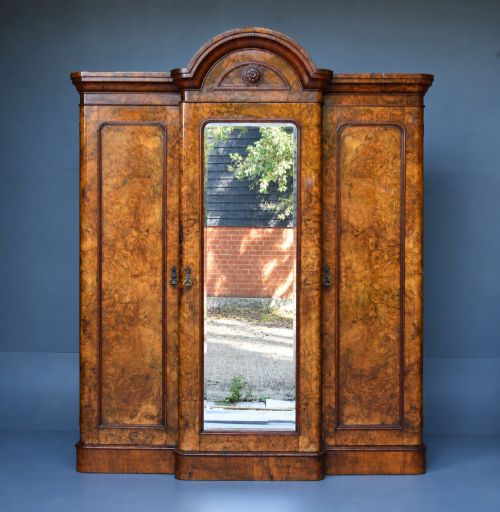
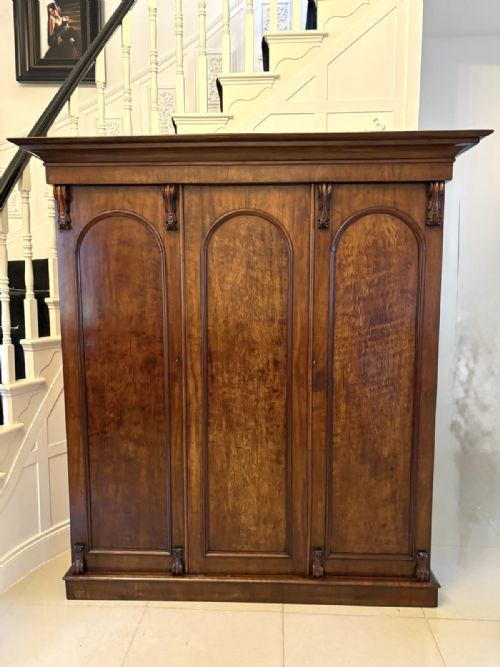
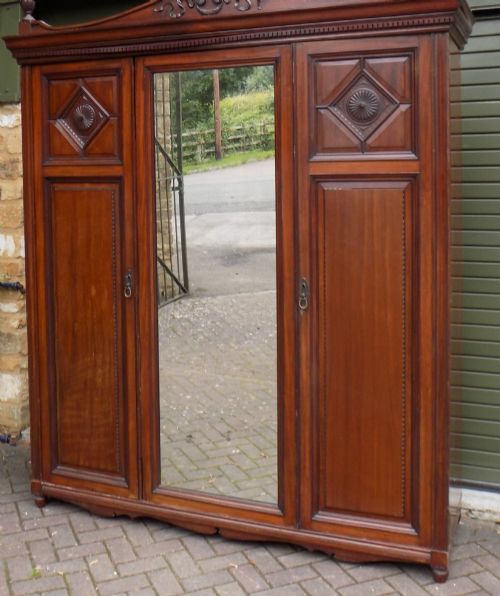
A victorian triple armoire is a large bedroom wardrobe comprising three vertical sections, designed to house extensive clothing collections. These substantial pieces typically date from the nineteenth century, appearing in forms ranging from mid-nineteenth-century mahogany to late-century burr walnut.
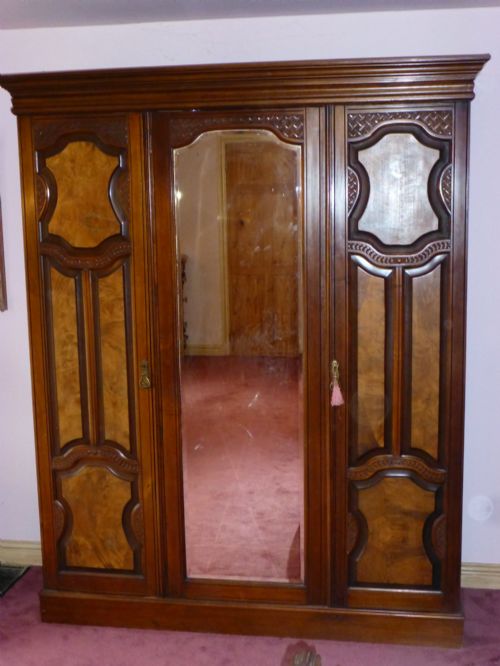
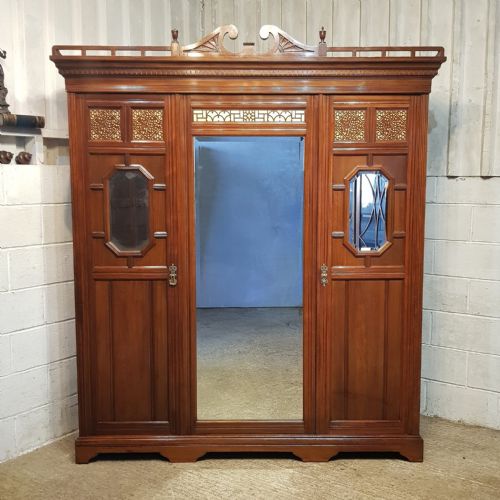
Many examples incorporate a central mirrored door flanked by hanging space or interior drawers. The format frequently includes compactum arrangements containing specialised compartments, shoe trays, and sliding linen shelves.
What varies in quality
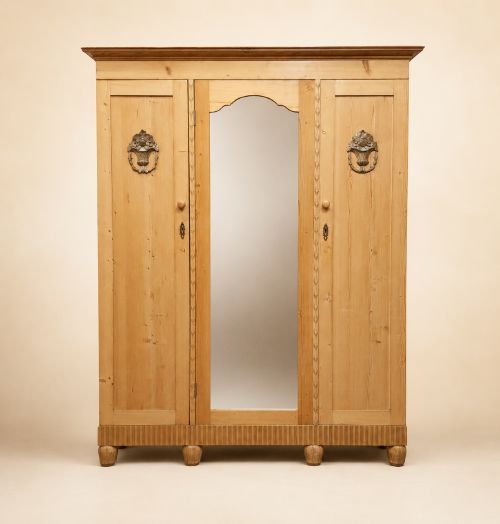
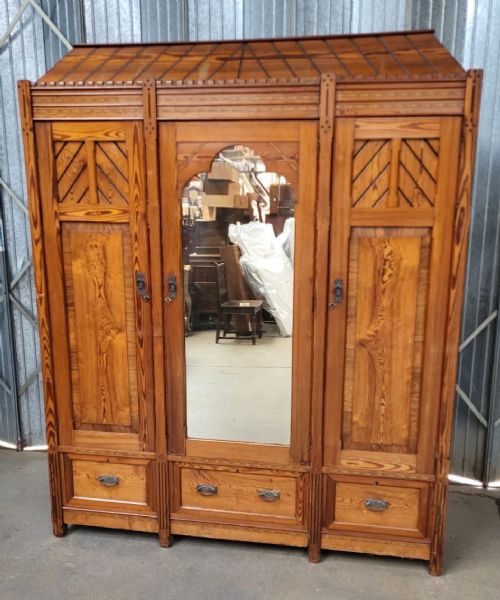
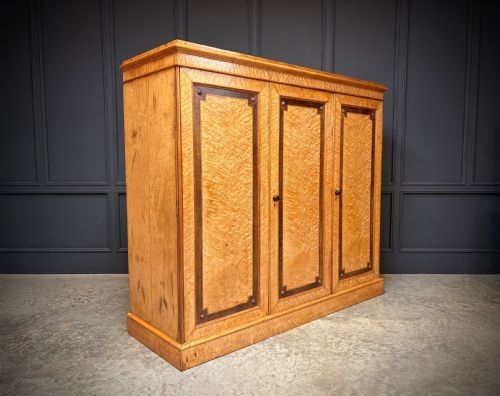
The choice of timber veneer dictates much of the visual hierarchy, with heavily figured burr walnut or flame mahogany commanding higher regard than plain pine or secondary hardwoods. Finer pieces demonstrate careful grain matching across the three doors and symmetrical arrangement of decorative carvings.
Internal configuration and joinery complexity separate basic hanging wardrobes from elaborate compactum models fitted with numerous interior drawers, sliding shelves, and brass hardware. The presence of breakfront shaping and original mirrored glass further distinguishes superior examples.
Design styles span early Victorian, Arts and Crafts, Gothic Revival, and the Aesthetic Movement.
Holland and Sons
The Victorian Triple Armoire Glossary
- Armoire
- A large freestanding wardrobe used for storing clothing. In nineteenth-century British cabinet-making, the term frequently describes substantial multi-door bedroom pieces.
- Compactum
- A fitted wardrobe containing multiple internal configurations such as drawers, sliding trays, and hanging space within a single unit. These functional interiors maximised bedroom storage efficiency.
- Breakfront
- A piece of furniture where the central section projects forward from the flanking bays. This architectural arrangement creates depth and visual rhythm on large wardrobes.
- Veneer
- A thin layer of figured wood applied over a stable secondary timber carcase. Cabinetmakers utilised burr walnut and mahogany veneers to create decorative surface patterns.
Victorian Triple Armoire: Frequently Asked Questions
Do these large wardrobes dismantle for moving?
Many nineteenth-century triple wardrobes were constructed with knockdown carcases, allowing the cornices, plinths, and individual bays to separate into manageable sections.
This modular design enabled the furniture to be transported through narrow corridors and assembled securely within bedroom spaces.
What is the difference between a wardrobe and a compactum?
A standard wardrobe primarily provides vertical hanging space behind large doors, occasionally supplemented by a single base drawer.
A compactum incorporates a dense arrangement of internal compartments, including linen slides, rows of small drawers, and specialised hanging sections.
How do I identify the period of the timber?
Mid-nineteenth-century examples frequently employ dense solid mahogany or rich flame mahogany veneers with hand-cut dovetails on internal drawers.
Later Victorian pieces often incorporate burr walnut, ash, pitch pine, or satin walnut, sometimes reflecting Arts and Crafts or Aesthetic Movement design principles.
How should I care for the mirrored glass?
Original nineteenth-century mirror plates often exhibit minor foxing or oxidation around the edges, which serves as an indicator of age.
Cleaning should be performed with soft cloths and mild solutions, avoiding excessive moisture near the silvered backing and wooden rebate.