


Victorian Tilting Mirror
These pieces for a victorian tilting mirror offer floor-standing and table versions in mahogany, oak and pitch pine.
Victorian Tilting Mirror
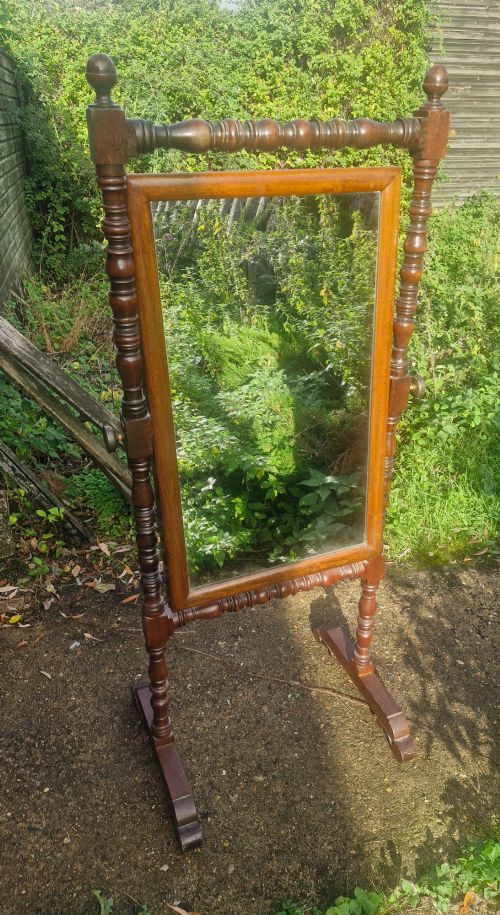
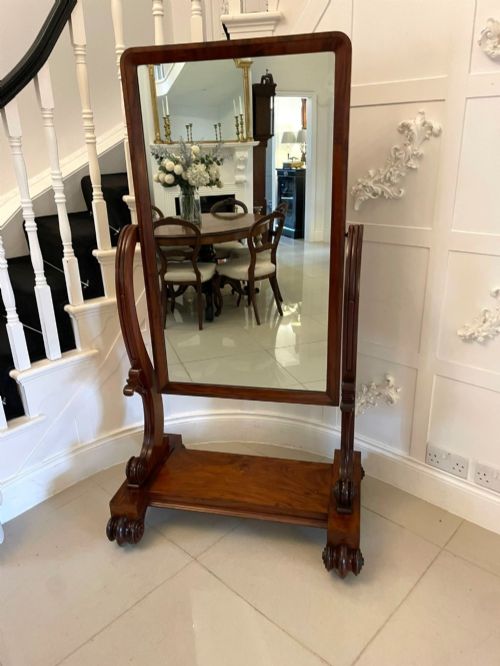
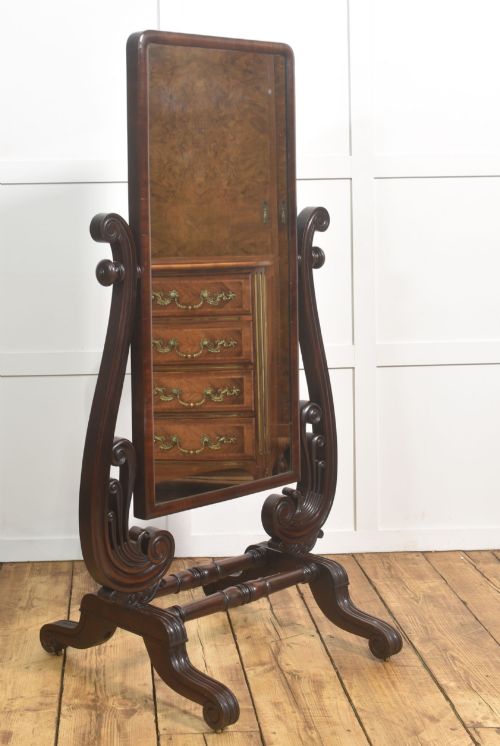
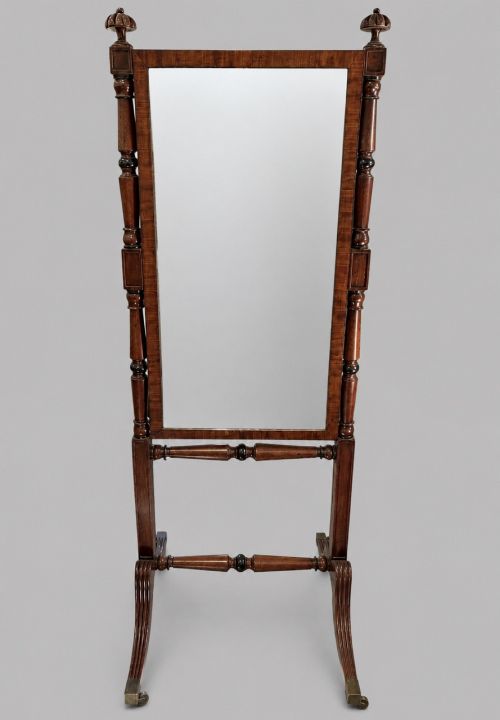
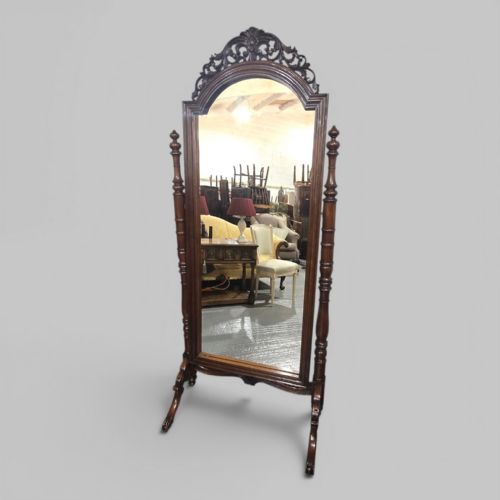
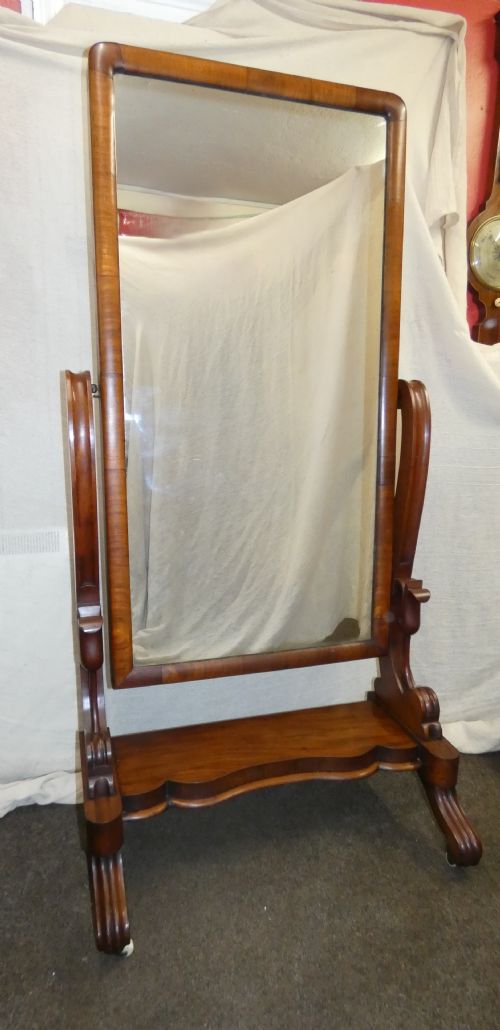
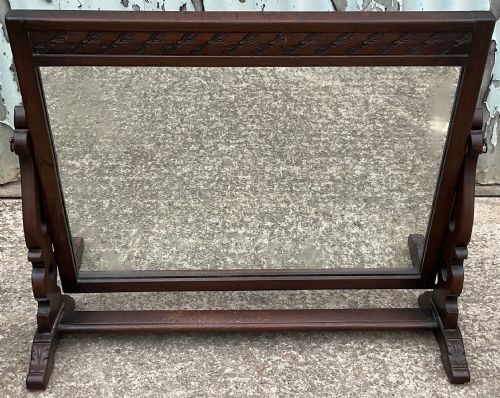
A victorian tilting mirror is a pivoting glass used for dressing, ranging from large floor-standing cheval mirrors to smaller table-top dressing glasses. Buyers seeking a victorian tilting mirror will find substantial floor-standing pieces mounted in substantial frames, alongside adjustable toilet mirrors designed for placement on chests or tables.
The dominant material seen across these items is mahogany, often figured as flame mahogany, paired with mirror glass and brass hardware. Other examples turn up in oak, pitch pine and styles spanning Regency, William IV, Victorian, Edwardian and Arts and Crafts periods.
Most examples function by swinging on side pivots held within upright supports, allowing the user to adjust the angle of the glass. These forms serve practical dressing needs while adding architectural presence to bedrooms and dressing rooms.
What varies in quality
Quality in a victorian tilting mirror rests in the choice of timber, particularly the depth of flame grain in mahogany or the solidity of oak and pitch pine frames. Superior execution shows in crisp turning on uprights and substantial brass mounts rather than lighter, plain hardware.
The integration of the tilting mechanism dictates daily usability, where well-fitted pivots hold the glass firmly at the desired angle without slipping. Proportions also separate standard production from finer bespoke pieces designed with sabots, castors and detailed framing.
Some tall floor-standing mirrors rely on brass castors so enthusiastic dressers can wheel their reflection around the bedroom on a whim.
The Victorian Tilting Mirror Glossary
- Cheval mirror
- A large floor-standing swing mirror supported by four legs or a heavy frame, designed for full-length viewing. These tall glasses allow the user to see their entire outfit.
- Toilet mirror
- A smaller dressing table mirror designed to sit on a chest of drawers or dressing table. These often feature small drawers built into the base plinth.
- Sabot
- A protective brass or metal shoe fitted to the foot of a table or mirror frame leg. This detail guards the timber against knocks and floor dampness.
- Pitch pine
- A resinous pine timber used in late-period frames, known for its distinct grain pattern and durability. It provides a robust alternative to mahogany.
Victorian Tilting Mirror: Frequently Asked Questions
What is a cheval mirror?
A cheval mirror is a floor-standing swing mirror that allows full-length reflection in a bedroom or dressing space. The glass pivots within a vertical frame.
These pieces range from slim Regency designs to large Victorian mahogany examples supported on sabots and castors.
How do tilt mirrors work?
Tilt mirrors operate on side pivots secured to upright posts, allowing the user to angle the glass forward or backward.
Friction hardware or thumbscrews keep the heavy glass plate fixed at the chosen angle during use.
Where should I place a dressing mirror?
Floor-standing cheval versions suit bedrooms and dressing rooms where full-length views are needed. Table-top toilet mirrors sit securely on top of chests of drawers.
Positioning them near natural light sources helps maximise their reflective utility in the room.
What woods are used?
Mahogany is the primary timber found in these listings, alongside flame mahogany variations, oak, pitch pine and walnut. Brass hardware often accompanies the wooden frames.
Different periods favoured different grains, from Regency mahogany to later Arts and Crafts oak.