
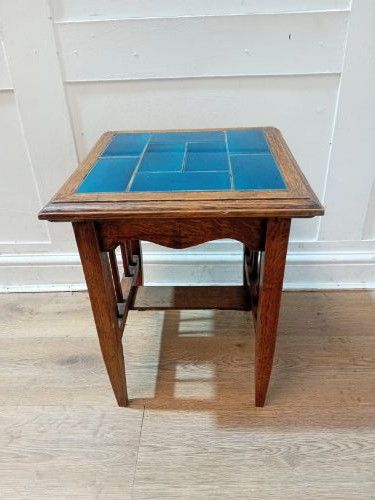


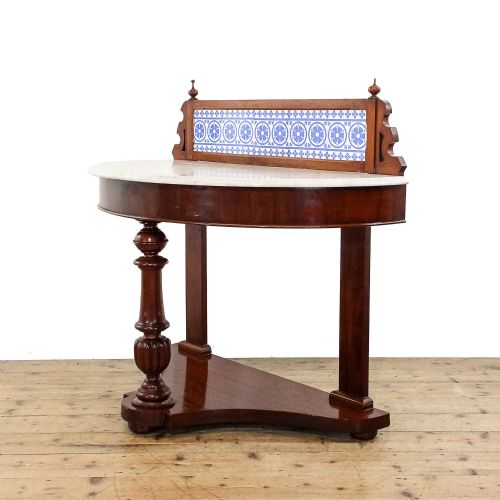


Victorian Tile Top Table
A victorian tile top table brings sturdy ceramic and timber together for practical daily surface use.
Victorian Tile Top Table
A victorian tile top table encompasses washstands, side tables, and plant stands produced across the nineteenth century. These items often feature integrated ceramic tiles designed to handle water and heavy daily use in domestic spaces.
The versions most commonly met on this page combine timber frames such as mahogany, oak, or painted pine with ceramic inserts. Makers frequently adapted these surfaces for bedroom and hallway utility.
Examples stretch from the 1870s into the Edwardian period, absorbing aesthetic movement and arts and crafts design principles. The resulting forms balance robust utility with decorative surface work.
How they were made
Construction relies on traditional cabinet timbers like mahogany, oak, and pine, shaped into firm frames to support heavy ceramic inserts. Joinery is paired with structural brass fittings where strength is required.
Surfaces combine glazed ceramic tiles or marble slabs fitted flush into wooden tops, sometimes backed by tiled splashbacks on washstands. These materials were selected for their durability and resistance to moisture.
Finishes range from ebonised treatments and painted pine to polished mahogany, reflecting the stylistic preferences of the nineteenth century.
Some washstands squeezed tiled backs, twin drawers, and over-shelves into a single bedroom footprint.
What varies in quality
The integration of the ceramic or marble top into the wooden framework dictates the success of the piece. Finer examples display precise carpentry where timber meets tile without awkward gaps.
The artistic execution of the ceramic tiles themselves creates a clear division in grade. Hand-painted or transfer-printed patterns from the aesthetic movement display sharper detail and deeper glazes than standard commercial production.
The Victorian Tile Top Table Glossary
- Washstand
- A bedroom table or cabinet designed to hold a basin, jug, and related washing equipment. These often incorporate marble or tiled surfaces to protect the wood from splashes.
- Aesthetic Movement
- A late nineteenth century design style emphasising visual beauty over narrative subject matter. Pieces from this movement often utilise ebonised finishes and stylised motifs.
- Arts and Crafts
- A design movement valuing traditional craftsmanship and simple forms. It appears in robust oak construction and honest joinery.
- Ebonised
- Wood treated with a dark finish to imitate ebony. This technique was popular in nineteenth century furniture design.
Victorian Tile Top Table: Frequently Asked Questions
What is a victorian tile top table used for?
These pieces served practical roles in nineteenth century bedrooms and hallways as washstands or side tables.
The durable ceramic surface made them ideal for holding jugs, basins, or plants without risking water damage to the wood.
How do I identify the period?
Dating relies on timber selection, construction methods, and stylistic cues like aesthetic movement or arts and crafts details.
Ebonised finishes and specific tile patterns help narrow down the decade of manufacture.
Are these tables waterproof?
The ceramic tiles and marble inserts provide a highly resistant surface against moisture and spills.
However, the surrounding timber frames require standard care to avoid water staining.
What woods were used?
Cabinet makers utilised mahogany, oak, and painted pine for the structural frames and legs.
Selected pieces also feature ebonised surfaces to achieve a dark, uniform appearance.