
Victorian Tiered Furniture
Victorian tiered furniture brings vertical display and storage to rooms through multi-level whatnots, étagères, and buffets.
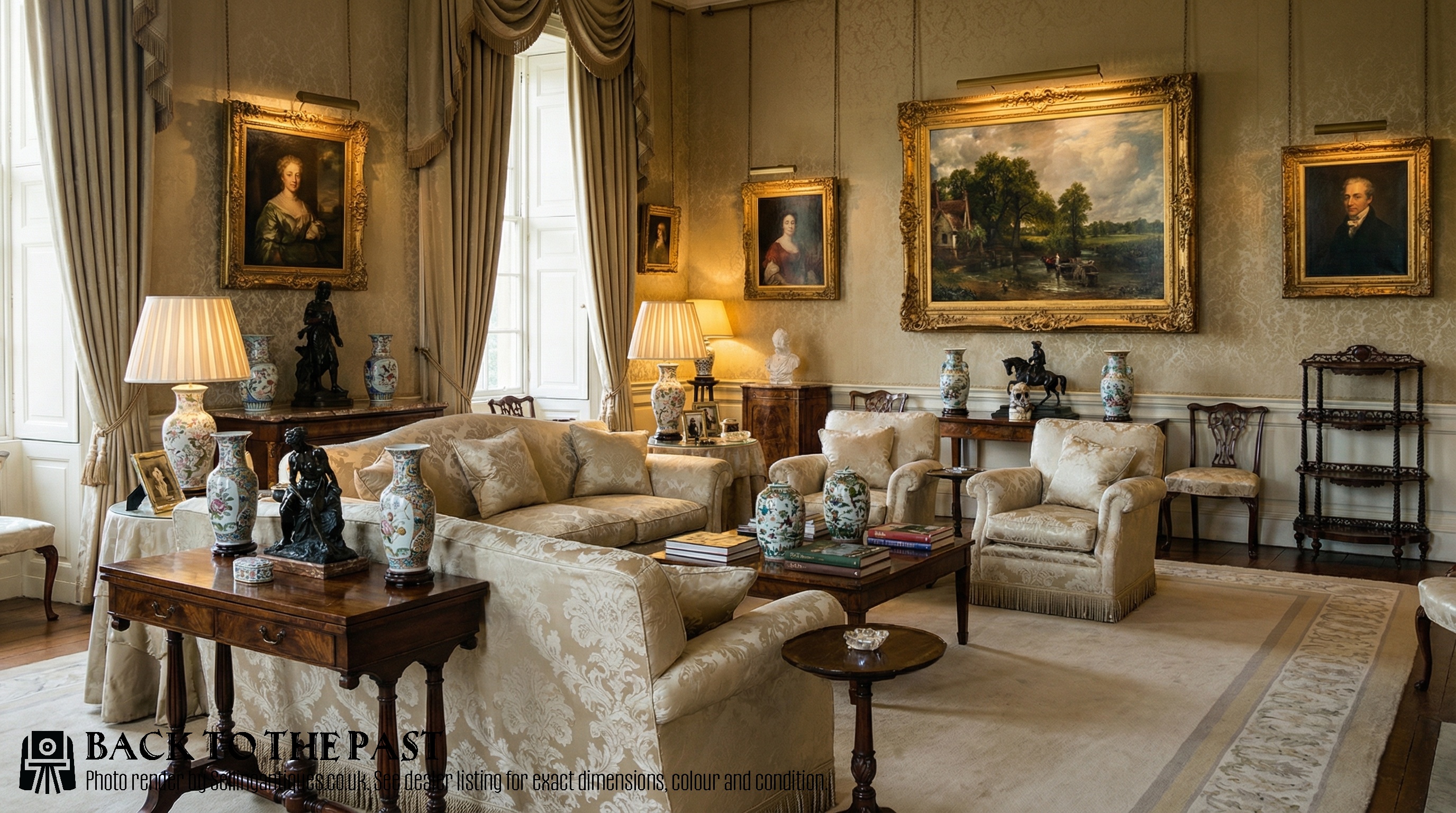
Victorian Tiered Furniture
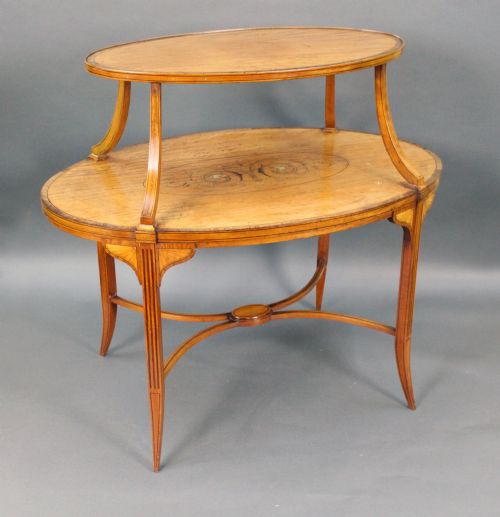
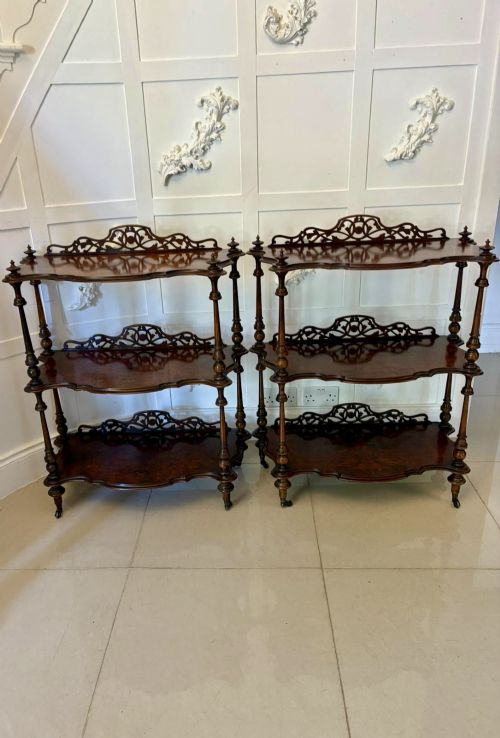
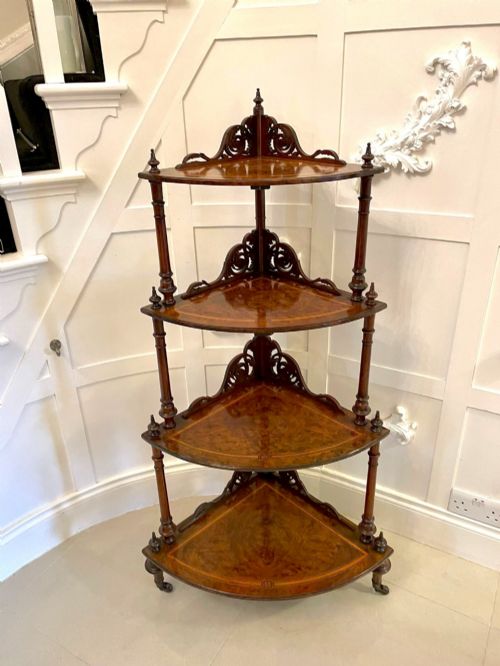
Victorian tiered furniture encompasses multi-level wooden pieces designed for display and storage, ranging from corner whatnots and wall shelves to étagères and revolving bookcases. These multi-tiered items serve to organise books, display ornaments, or hold tableware in domestic interiors.
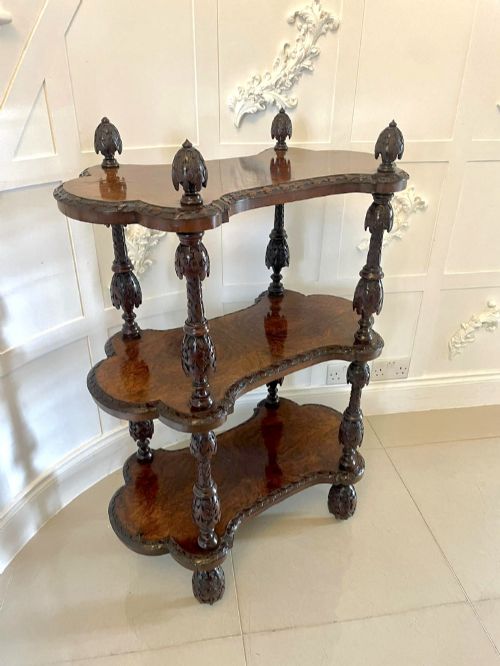
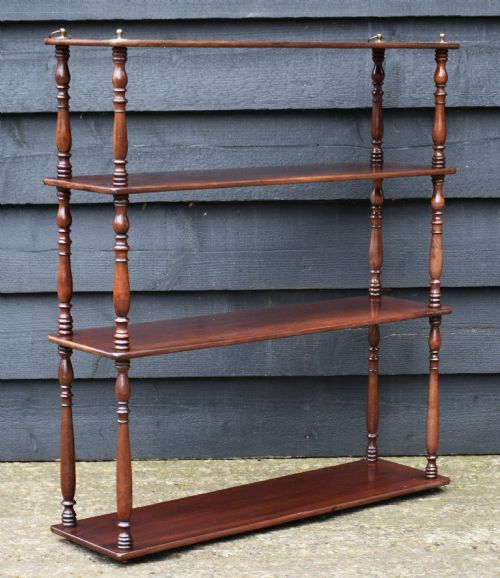
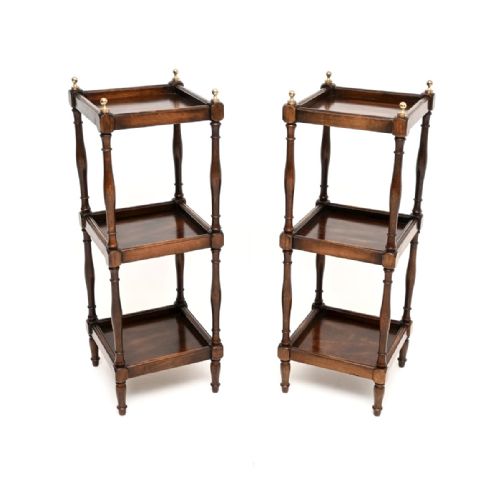
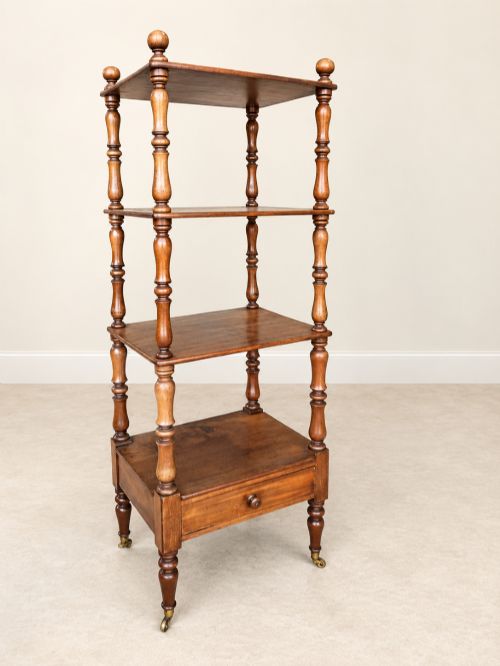
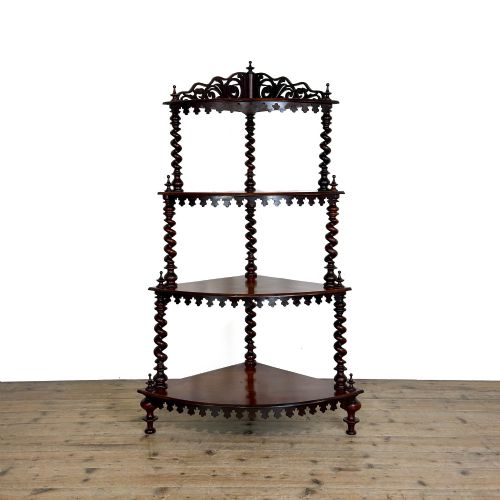
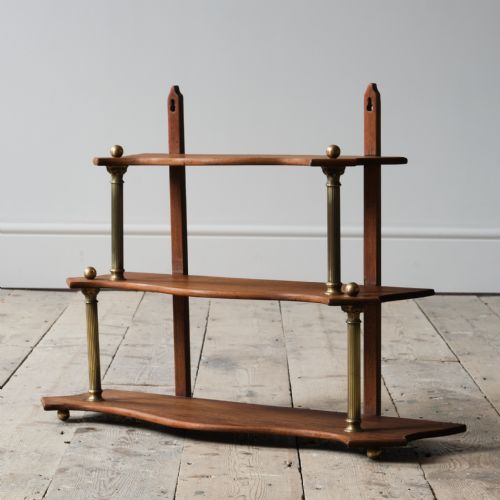
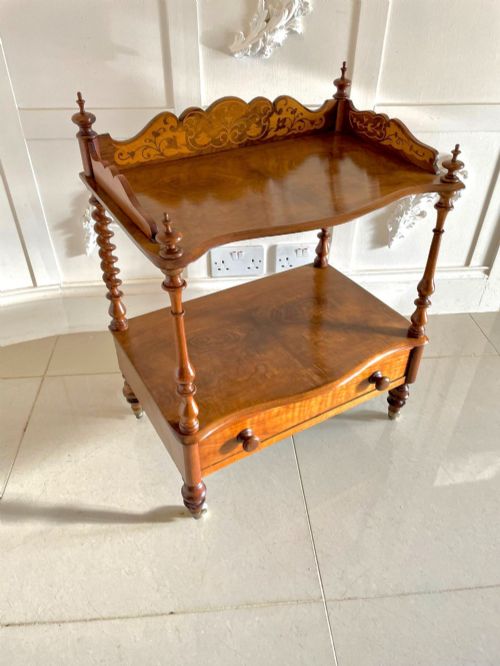
The pieces appearing on this page date principally from the nineteenth century, including specific decades such as the eighteen-fifties, sixties, eighties, and nineties, alongside earlier Georgian and William IV examples. Whatnots and wall-hanging shelves dominate the selection, offering two, three, or four tiers supported by turned columns, barley twists, or brass mounts.
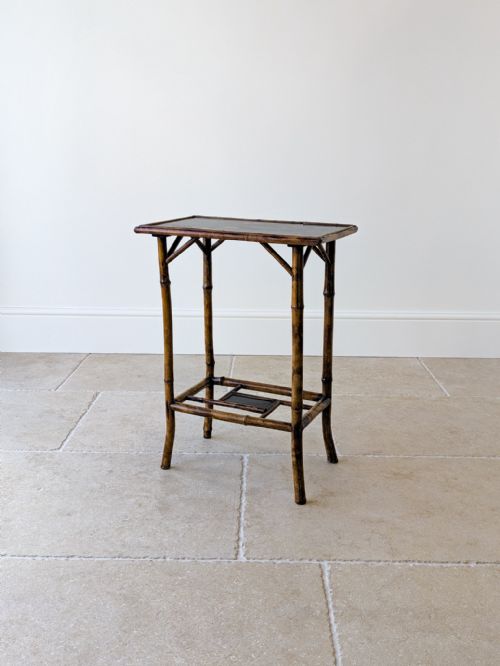
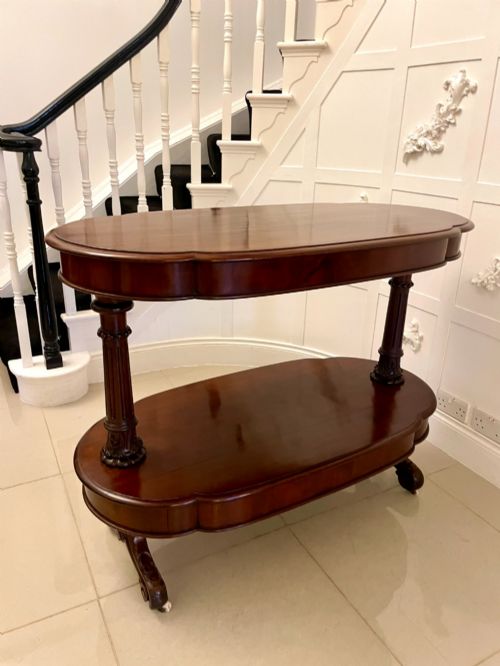
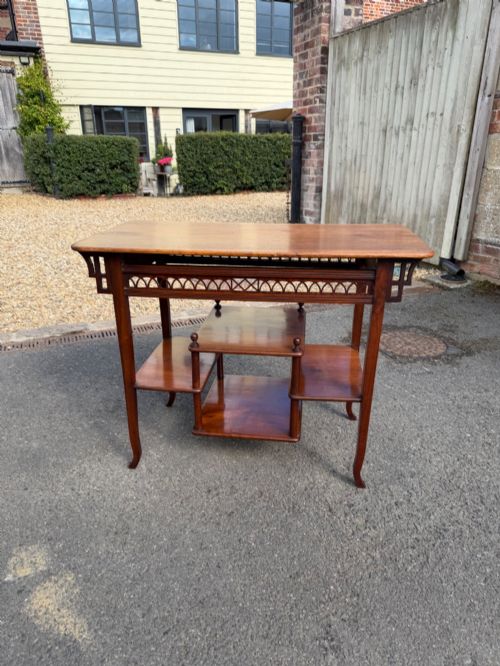
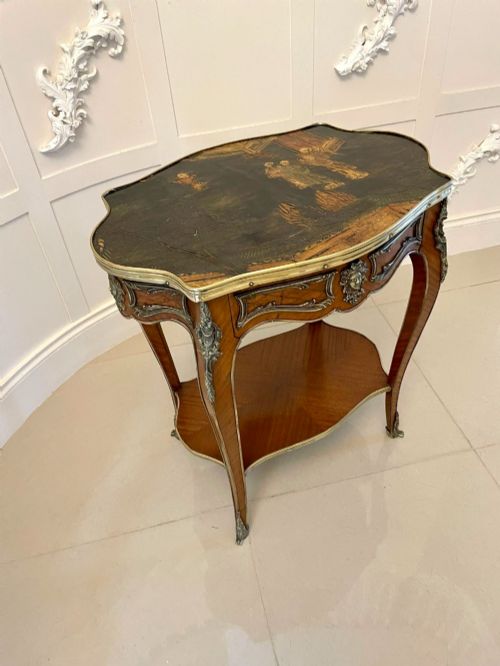
Makers and designers worked within varied styles including Aesthetic Movement, Anglo-Indian, and Louis XV Revival, utilising forms that fit both compact corners and larger reception rooms. Buyers encounter everything from bamboo occasional tables to serpentine-shaped burr walnut whatnots and mahogany dumbwaiters.
Materials and Construction
Cabinet makers utilised dense hardwoods such as mahogany, walnut, burr walnut, and rosewood, frequently selecting veneers to create decorative patterned surfaces on tabletops and tier shelves. Oak, pine, and exotic materials like bamboo and padauk also appear, shaped into turned supports, barley twist columns, and carved panels.
Construction methods involved jointed shelves fixed to upright vertical supports, supplemented by brass fixings, ormolu mounts, and occasional parcel gilding. Movable elements such as revolving mechanisms on bookcases, rise and fall actions on buffets, and telescopic centres on dumbwaiters required precise mechanical fitting.
Period styles represented include Regency, William IV, Aesthetic Movement, and Louis XV Revival.
Factors of Quality
Quality rests upon the selection of timber and the dexterity of the cabinet work, particularly in the handling of burr veneers and solid mahogany frames. Pieces displaying finely carved oak details, crisp barley twists, or precise parquetry stand apart from plainer utility items.
Integration of secondary materials such as brass fittings, ormolu mounts, and porcelain castors demonstrates superior craftsmanship. The architectural proportion of stacked tiers and the stability of upright supports dictate the overall success of each étagère or whatnot.
Gillows
The Victorian Tiered Furniture Glossary
- Whatnot
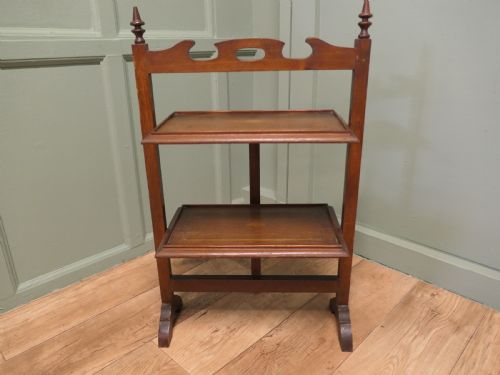
- A piece of furniture consisting of open shelves for displaying small objects or books. These typically feature three or four tiers supported by upright posts or columns.
- Étagère
- A piece of furniture with a set of open shelves for displaying ornaments. Originating in France, the form became popular in nineteenth-century drawing rooms.
- Dumbwaiter
- A tiered serving table or stand used in dining rooms for holding food and tableware. Examples may include revolving tiers or rise and fall mechanisms.
- Barley Twist
- A type of turning resembling a twisted rope, used to form the vertical supports on stands and whatnots. This decorative woodwork style is common across nineteenth-century pieces.
- Canterbury
- A low, open-tiered stand fitted with partitions for holding music sheets, books, or magazines. Some versions incorporate a drawer or small table surface at the top.
Victorian Tiered Furniture: Frequently Asked Questions
What is Victorian tiered furniture used for?
These multi-level pieces serve primarily for displaying ornaments, ceramics, and books while making efficient use of vertical space in a room. They provide functional surfaces in drawing rooms, hallways, and dining areas.
Items such as whatnots and wall shelves hold decorative items, whereas revolving bookcases and dumbwaiters offer accessible storage for books and dining requisites.
How do I identify a whatnot?
A whatnot is recognised by its open framework of stacked horizontal shelves supported by vertical pillars, corner posts, or turned legs. They are designed specifically for display rather than enclosed storage.
Sizes vary from small corner versions to large multi-tiered freestanding units in mahogany or burr walnut.
What is the difference between an étagère and a whatnot?
While both terms describe multi-tiered display furniture, étagères often originate from French design influences and frequently incorporate decorative elements like parcel gilding, mirror glass, or exotic woods. Whatnots tend to be British pieces built for practical shelf storage.
In practice, nineteenth-century makers and retailers used both terms interchangeably for open shelving units.
Where should I place tiered furniture at home?
Corner whatnots and wall-hanging shelves fit effectively into unused wall spaces or awkward room angles, adding display capacity without blocking floor areas. Freestanding étagères and revolving bookcases sit well in studies, libraries, and drawing rooms.
Care should be taken to keep burr walnut and rosewood surfaces away from direct heat sources and strong sunlight to protect the polish.