
Victorian Tier Side Table
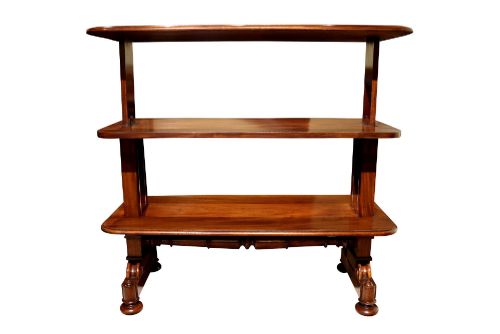
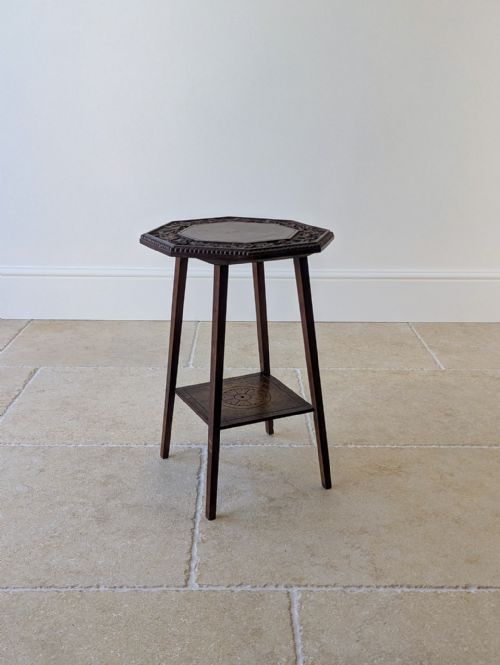
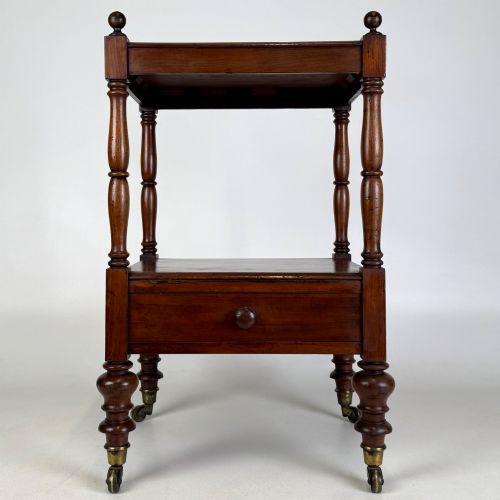
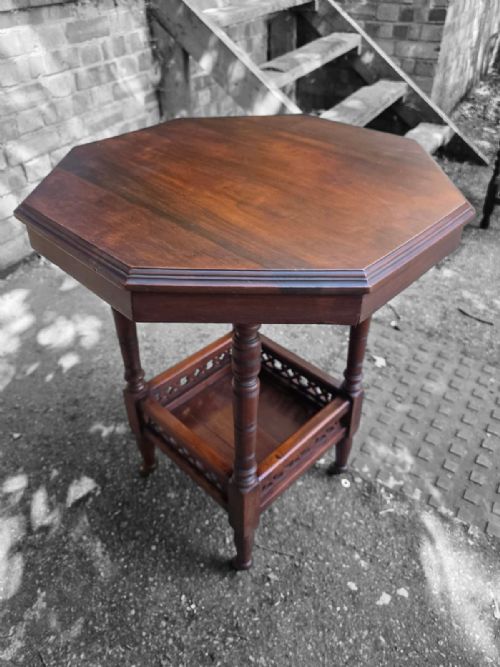
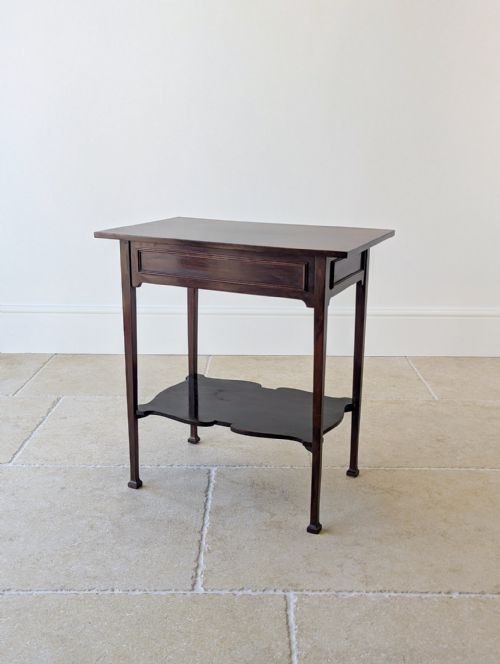
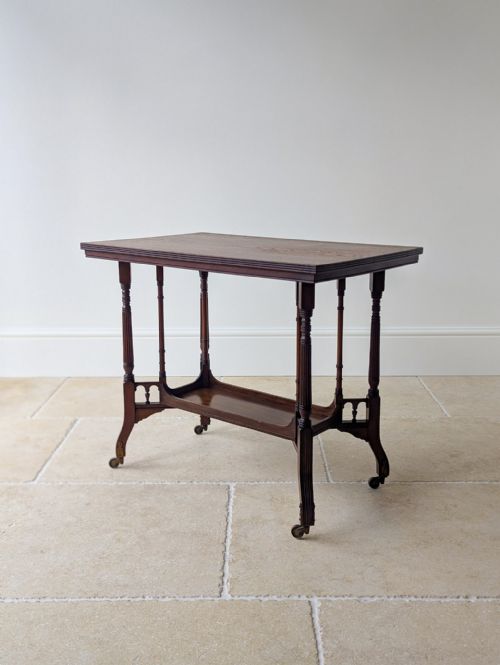
When you search for a victorian tier side table, you encounter practical multitiered furniture designed to maximise surface area in nineteenth-century rooms.
Victorian Tier Side Table
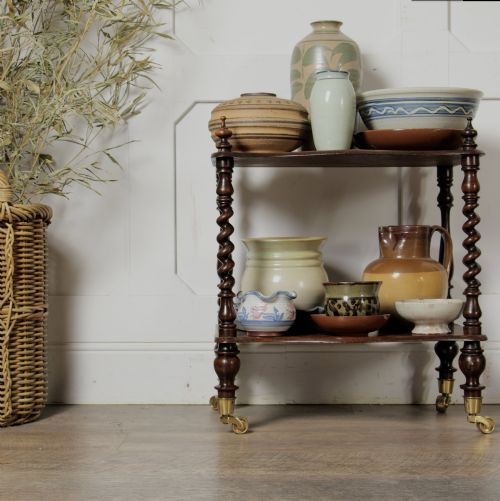
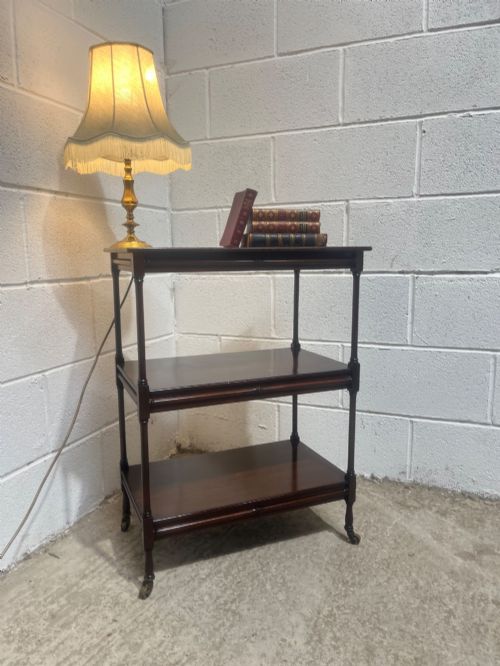
A victorian tier side table serves as a functional multileveled surface, combining display space with a compact footprint. These pieces appear frequently as two-tier or three-tier variants intended for lamps, books, or decorative objects.
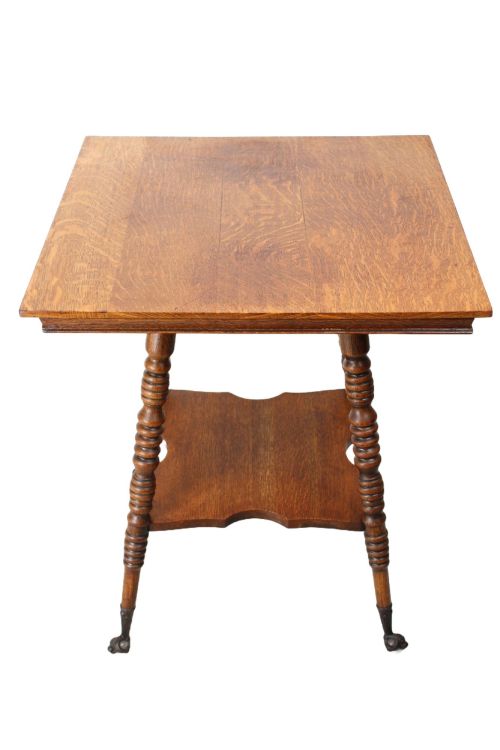
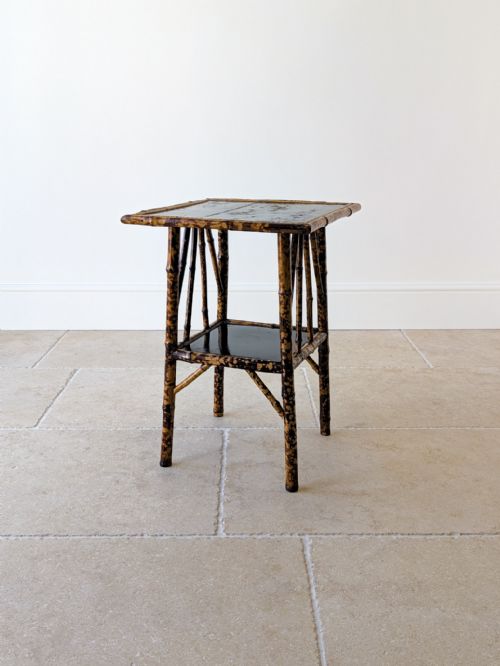
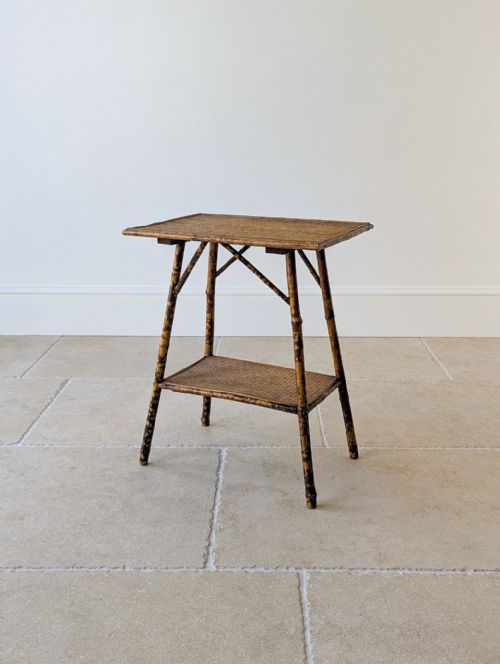
The selections span standard side tables, lamp tables, and small etagères, often originating from the later decades of the nineteenth century. Makers constructed these items in various woods, including mahogany, walnut, and bamboo, reflecting shifting domestic tastes.
The form adapts easily to modern interiors, functioning as a bedside stand, corner display, or hallway support. Lower shelves provide structural stability while offering practical storage for everyday items.
How They Were Made
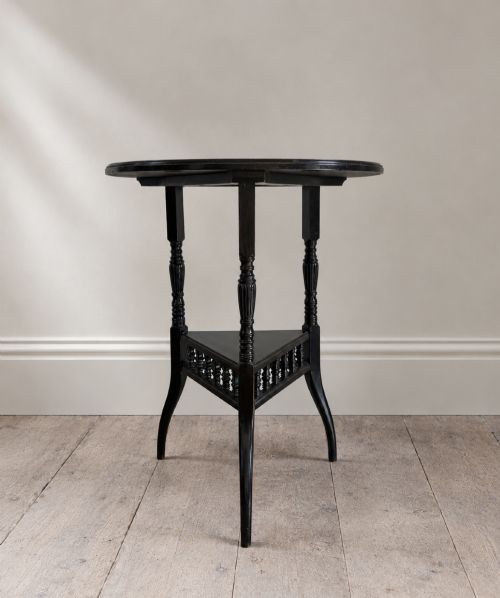
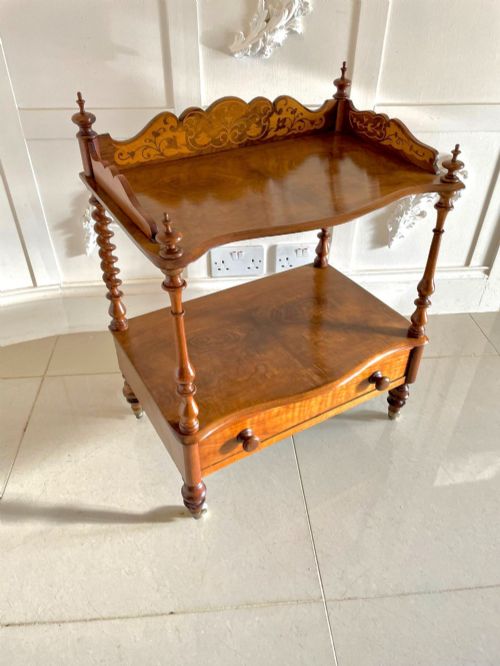
Cabinetmakers utilised dense hardwoods such as mahogany and walnut for structural durability, often employing burr veneers to create decorative grain patterns on top surfaces. Bamboo also emerges in specific vernacular or Anglo-Japanese designs, bound together to form lightweight, rigid frameworks.
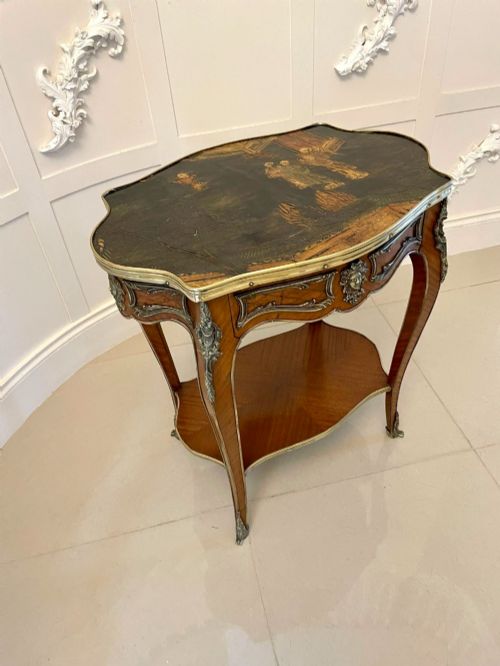
Joinery techniques relied on traditional mortise and tenon methods to secure vertical supports to the horizontal tiers. Marquetry inlay, brass mounts, and ebonised finishes appear across various pieces to elevate the visual detail of the timber.
Listings feature woods including mahogany, walnut, oak, rosewood, and bamboo, spanning the Victorian and Edwardian eras.
What Varies in Quality
The grade of timber selection and the precision of veneer work dictate the baseline standard of a piece. Finer examples display meticulously matched burr walnut or detailed marquetry, whereas utilitarian items rely on plain solid woods.
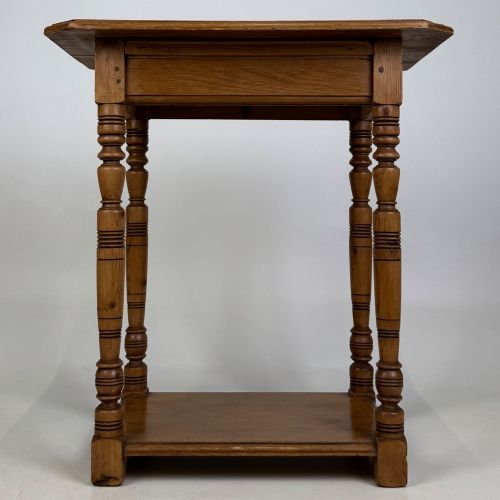
Construction rigidity separates superior tables from standard examples. Solid turning on legs, tight joints between tiers, and refined decorative carving or brass hardware indicate skilled workshop production.
Gregory And Co·Gillows·Liberty Of London·William Birch·Robert Strahan·Edwards And Roberts·Holland And Sons
The Victorian Tier Side Table Glossary
- Etagere
- A piece of furniture consisting of a set of open shelves for displaying small objects. These tiers are supported by slender columns or uprights.
- Whatnot
- An open set of shelves used for displaying ornaments or holding books. This term often interchanges with etagere in nineteenth-century inventories.
- Buffet
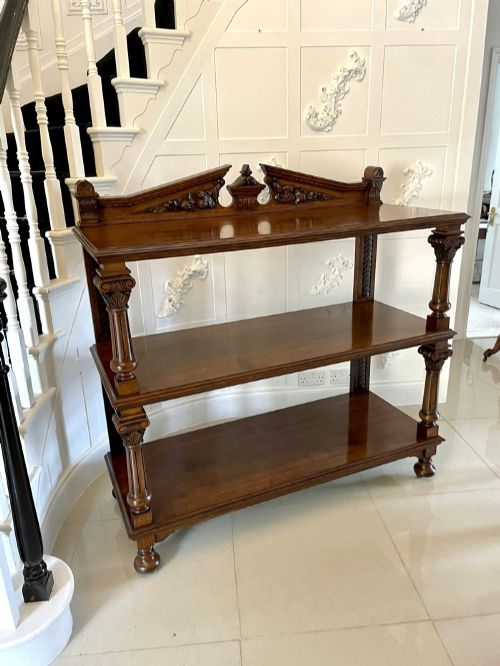
- A sideboard or tiered server used for holding tableware or food. In nineteenth-century contexts, smaller buffet variations double as multi-shelf side tables.
- Marquetry
- Decorative veneer applied to furniture in geometrical patterns or pictorial designs. Craftsmen cut thin pieces of wood, shell, or ivory to fit flush into a prepared surface.
- Japanning
- A type of European finish that emulates East Asian lacquer work. Artisans applied heat-dried varnish layers, frequently decorated with raised metallic motifs.
Victorian Tier Side Table: Frequently Asked Questions
What were tier side tables used for?
These pieces functioned primarily as movable stands for lamps, reading materials, and decorative ornaments within nineteenth-century reception rooms. Their multiple levels allowed households to display collections without occupying excessive floor space.
Over time, owners adapted them for various domestic uses, including bedside placement and hallway display. The lower tiers provided stable platforms for heavier volumes or secondary items.
How do I identify a Victorian tier table?
Look for timber choices typical of the nineteenth century, such as solid mahogany, walnut, or applied burr veneers. Construction methods often involve traditional hand-cut joinery and turned upright supports.
Stylistic cues also help determine the period, including Aesthetic Movement ebonising, bamboo frames, or classical revival motifs. Maker stamps or labels underneath shelves occasionally confirm specific origin workshops.
Where should I place one at home?
A tier side table fits effectively beside a sofa or armchair to hold lighting and reading materials within easy reach. Their compact footprints also suit narrow hallways and small corners.
In bedrooms, tall versions serve well as bedside stands with space for books on the lower shelves. Their open structure prevents them from dominating smaller room layouts.
How do I care for the wood surface?
Dust the tiers regularly with a soft, dry cloth to prevent particulate buildup on delicate veneers and polished finishes. Avoid placing the table in direct sunlight or near heat sources to prevent timber cracking.
Apply a quality beeswax periodically to nourish antique wood surfaces and maintain their natural lustre. Avoid using modern silicone sprays or abrasive chemical cleaners.