

Victorian Three Tier Shelves
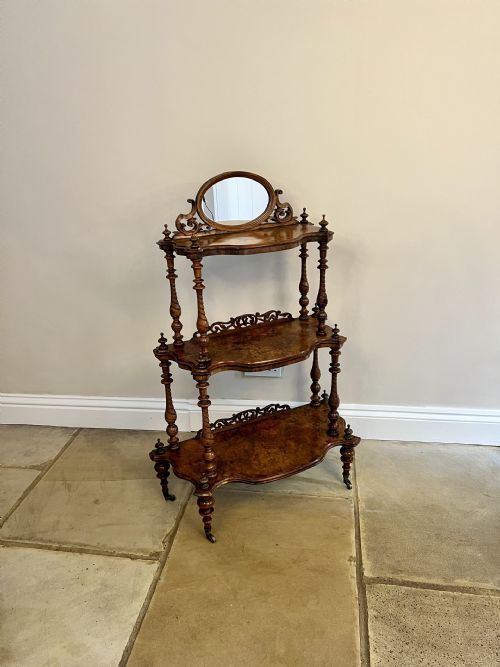
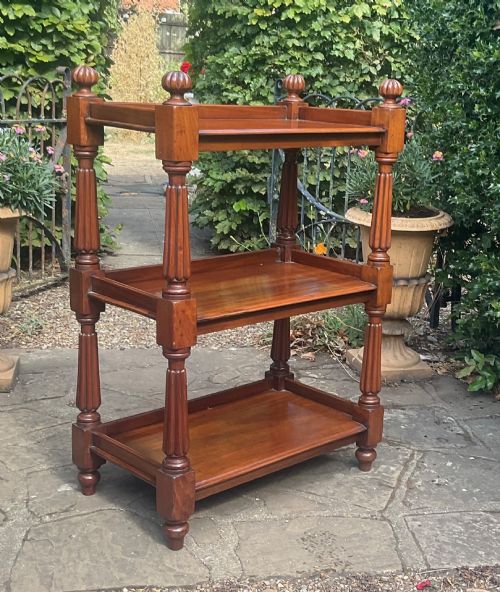
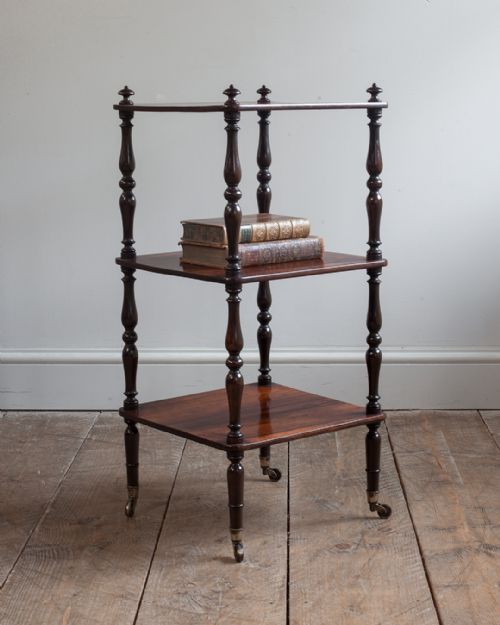
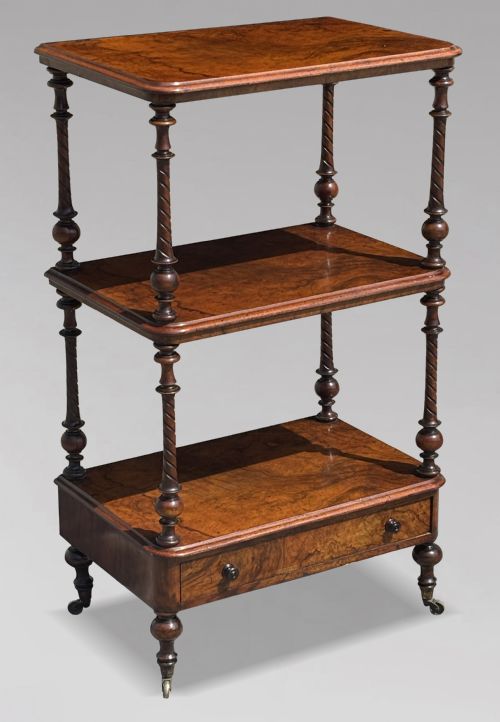
Victorian three tier shelves are tiered display pieces offering multiple open tiers of timber, which bring practical display space and architectural depth to a room.
Victorian Three Tier Shelves
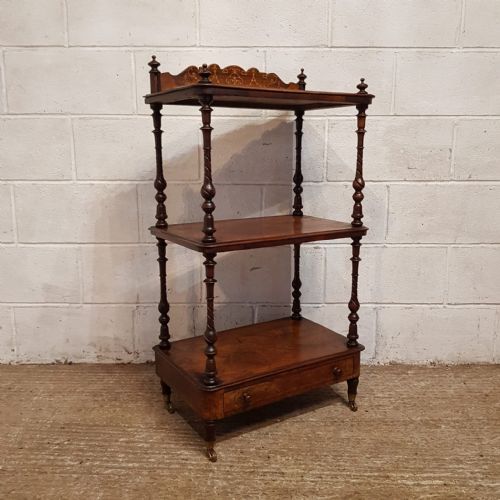
Victorian three tier shelves encompass freestanding whatnots, etagères, buffets, and wall-hanging display units spanning the nineteenth century. These multi-level pieces serve as open platforms for books, ornaments, and display items within domestic interiors.
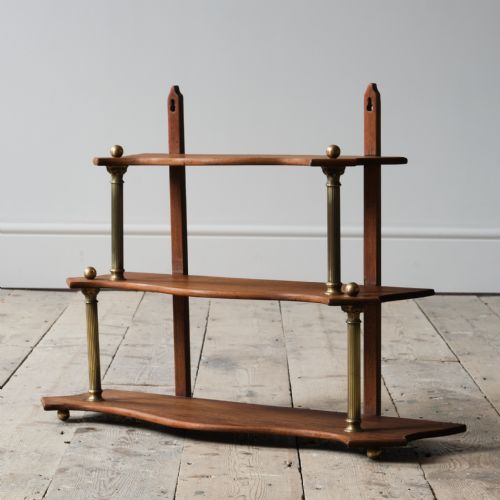
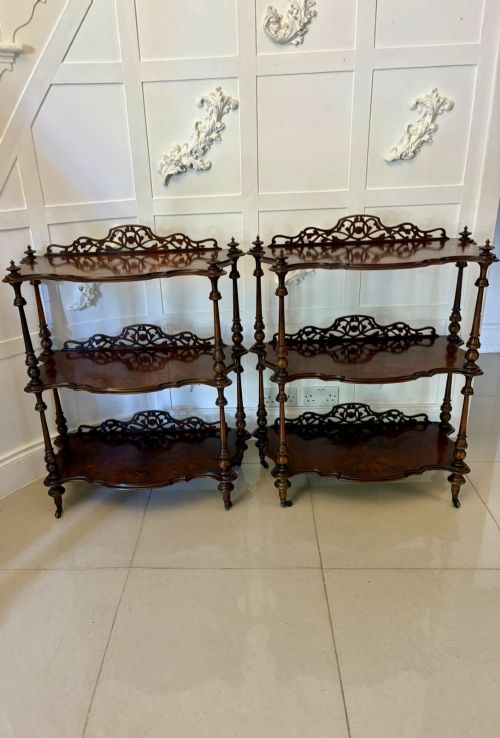
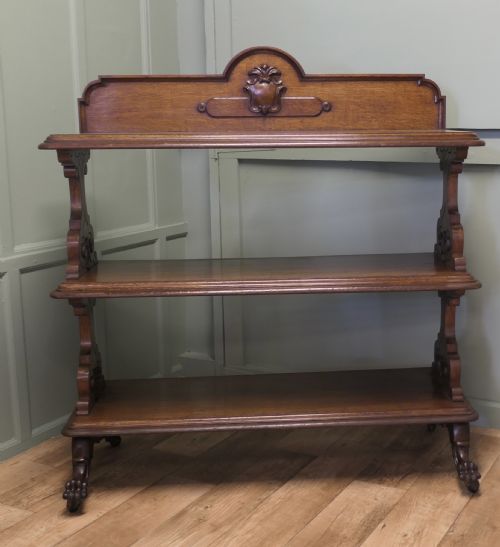
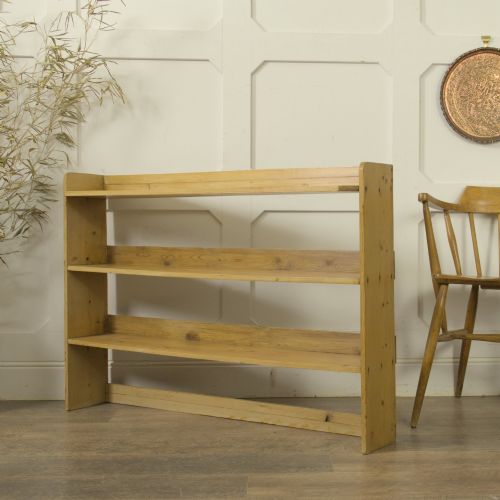
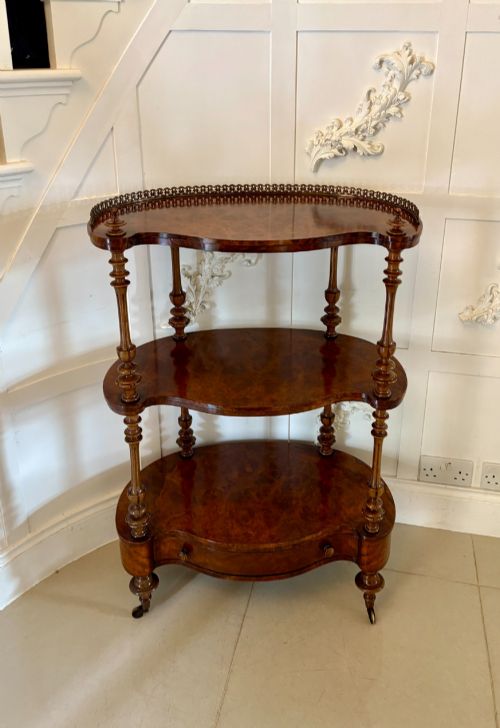
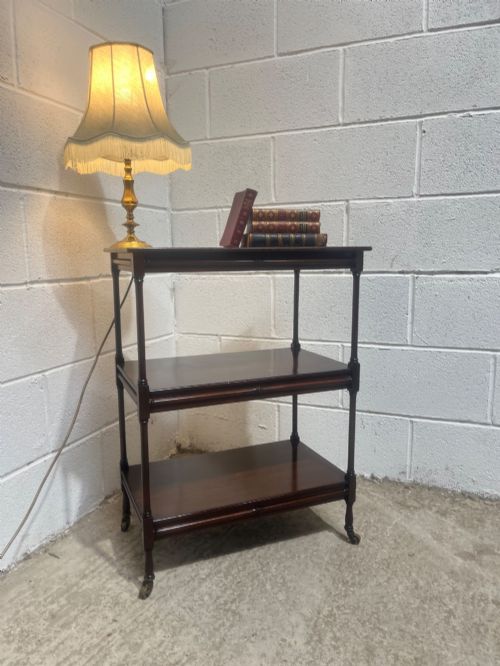
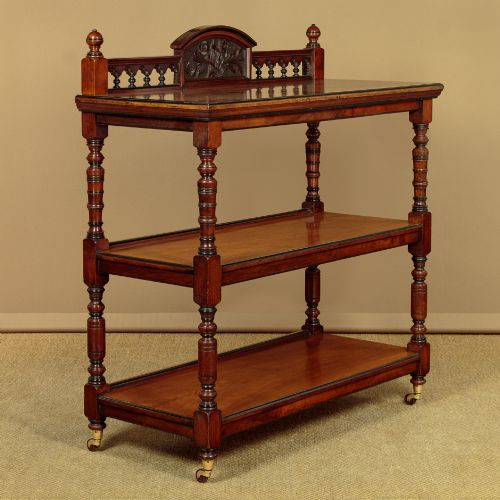
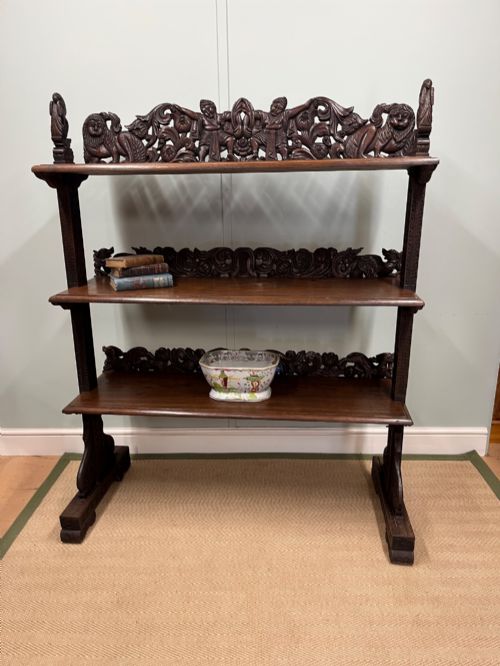
Buyers browsing this selection will frequently encounter freestanding burr walnut and mahogany whatnots alongside wall shelves and tiered buffets. Pieces range from compact wall-hanging units to substantial carved freestanding items set on original castors.
How they were made
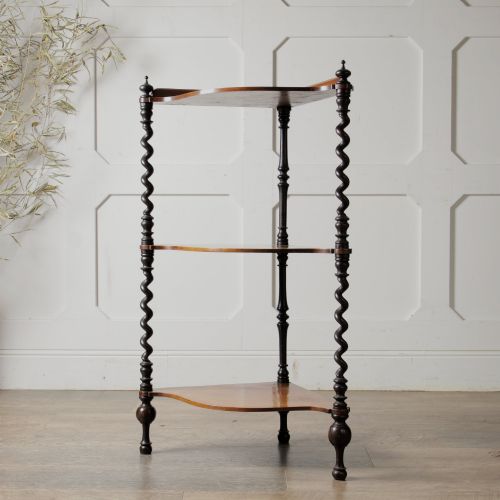
Cabinetmakers constructed these tiered units primarily from solid and veneered timbers including walnut, burr walnut, mahogany, rosewood, oak, and pine, occasionally incorporating brass mounts and barley twist supports. Freestanding variations often utilise turned columns and finials to separate the tiers.
Surface detailing relies on figured wood grains, serpentine shaping, carved ornamentation, and ebonisation to accentuate the timber. Structural mobility is frequently achieved through the inclusion of original castors beneath the lowest tier.
Some nineteenth-century shelves arrived with fully adjustable tiers, allowing owners to rearrange their knick-knacks on a whim.
What varies in quality
The distinction between standard domestic items and exhibition pieces lies in the choice of timber and the ambition of the carving. Highly figured burr walnut veneers, serpentine profiles, and intricate carved detailing elevate a piece well above plain utility furniture.
Construction nuance also separates examples, seen in the delicacy of turned supports, the presence of brass mounts, and whether a freestanding unit retains its original castors and galleries.
Samson and Son London
The Victorian Three Tier Shelves Glossary
- Whatnot
- A freestanding open-shelved piece of furniture with three or more tiers designed for displaying ornaments or books. It developed in the eighteenth century and remained popular throughout the Victorian period.
- Etagère
- A French-derived term for a piece of furniture consisting of a series of shelves for displaying small objects. They are closely related to whatnots and often share a lighter structural framework.
- Buffet
- A tiered shelving unit or sideboard used for serving or display. Victorian examples frequently feature three tiers supported by turned columns.
- Burr Walnut
- Timber taken from the gnarled growth of a walnut tree, yielding highly decorative swirling grain patterns. It was favoured by Victorian cabinetmakers for high-status display furniture.
Victorian Three Tier Shelves: Frequently Asked Questions
What is the difference between a whatnot and an etagère?
A whatnot is traditionally an English freestanding shelving unit with multiple tiers for display, while an etagère is a French-inspired term often used interchangeably for similar multi-shelf furniture.
Both forms serve the same primary function of holding decorative items, though etagères can sometimes exhibit lighter, more ornamental framing.
Were these shelves used for books or ornaments?
These tiered structures accommodated both books and decorative ornaments depending on the room they inhabited. Smaller wall-hung versions often held portable volumes, while freestanding burr walnut whatnots displayed porcelain and small sculptures.
Their open tiers meant possessions remained visible from all angles within a Victorian parlour or drawing room.
How do I place a freestanding three tier shelf in a modern room?
Freestanding units work effectively against flat walls or as corner display stands, adding vertical storage without bulk. Their open timber tiers prevent rooms from feeling crowded.
Ensure the piece has adequate floor clearance, particularly if it sits on original castors, and avoid placing excessive weight on the upper tiers.
How can I tell a Victorian whatnot from a later reproduction?
Examine the secondary timbers on the underside and back panels, which should align with nineteenth-century forestry and construction practices. Hand-cut joinery and natural timber ageing provide strong indicators of period manufacture.
Hardware such as brass mounts and castors should match the technological methods and wear patterns of the Victorian era.