


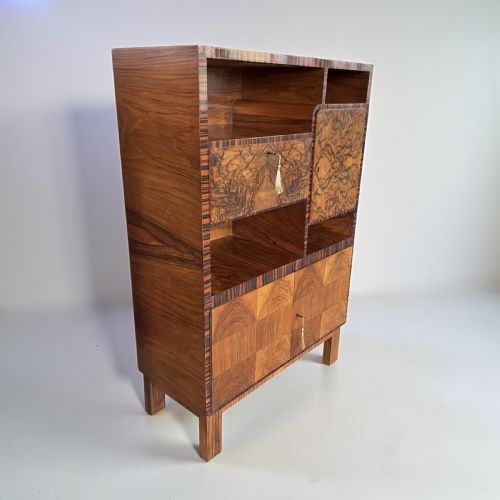

Vintage Walnut Display Stand
A vintage walnut display stand brings rich grain and practical staging to any room.
Vintage Walnut Display Stand
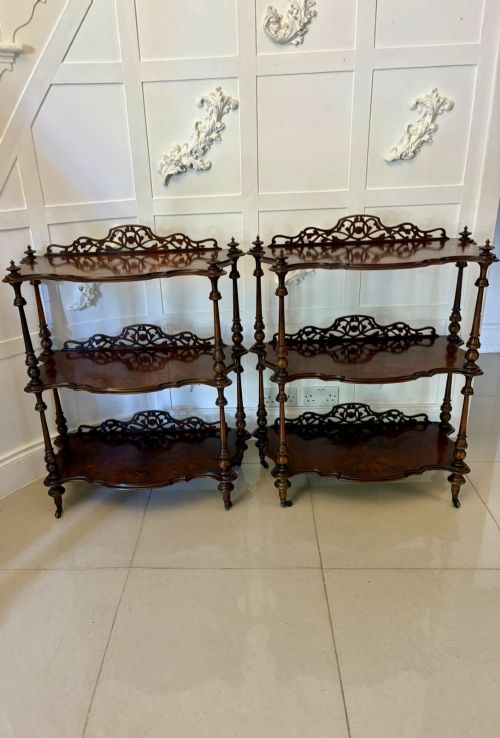
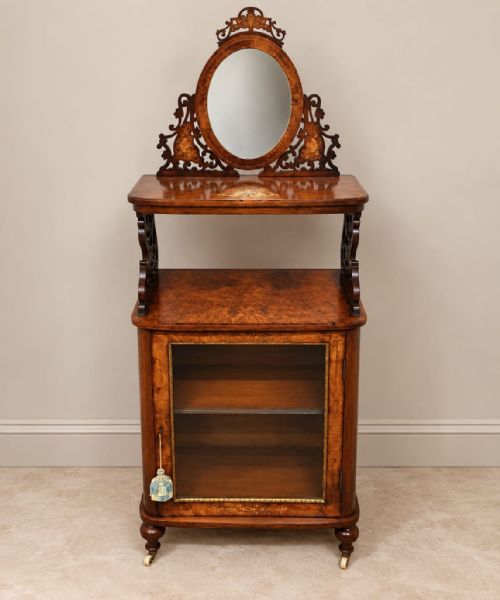
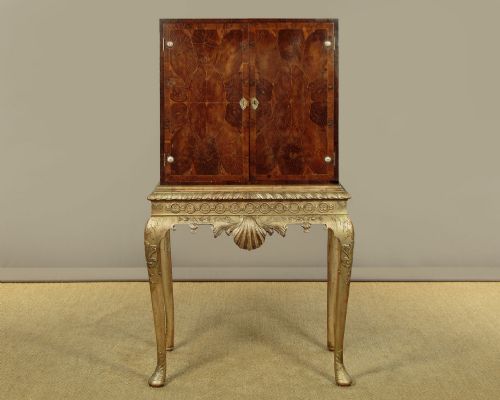
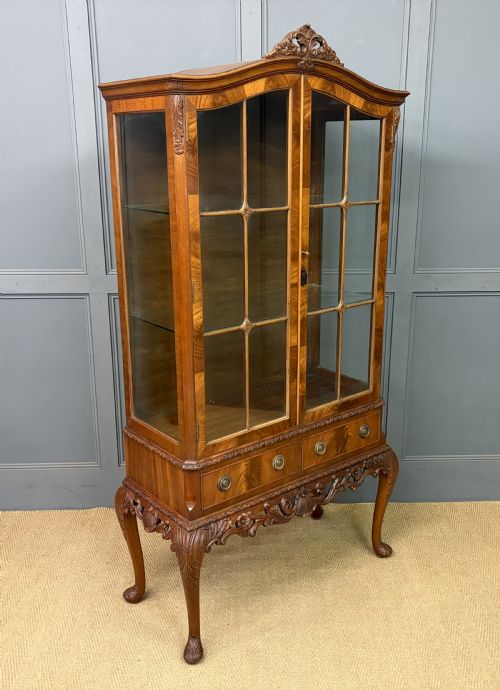
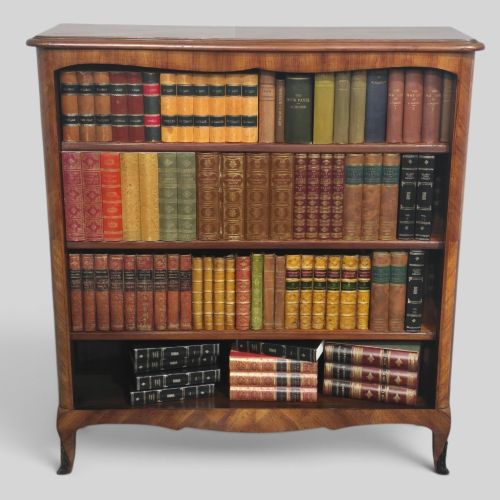
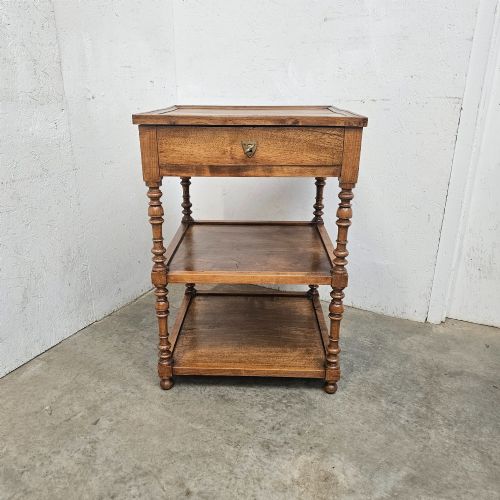
A vintage walnut display stand encompasses tier-based whatnots, pedestal plant holders, and compact cabinets designed to elevate ornaments or books. These items appear across the Victorian, Edwardian, and Art Deco periods, shifting from ornate carved tiers to streamlined modernist geometry.
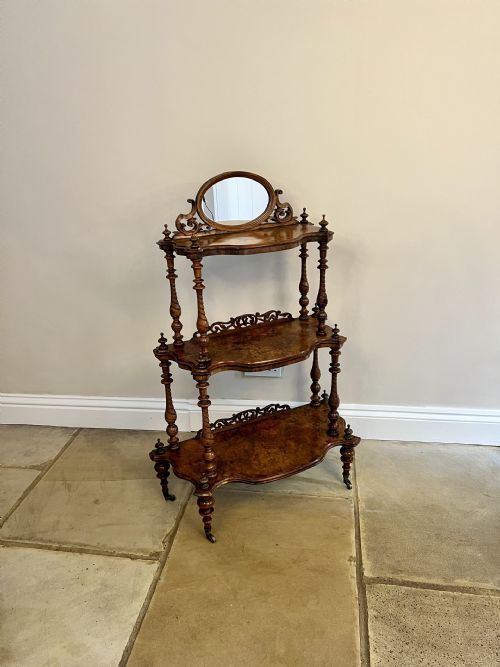
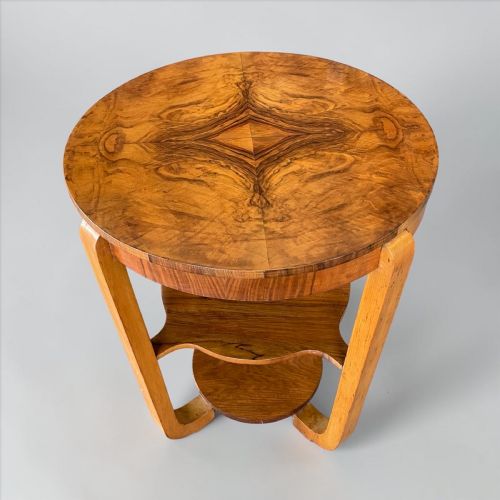
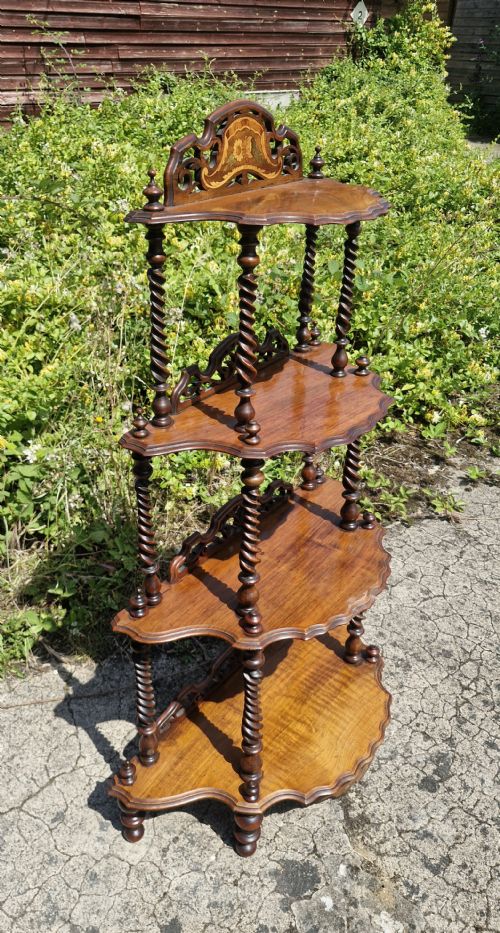
The most common form on this page is the multi-tiered Victorian whatnot or corner stand in burr walnut, alongside later Art Deco pedestals and occasional tables. Buyers select these pieces to organise collections or display individual objects with architectural presence.
Origins stretch from English workshops to French provincial makers and Italian studios, utilising local hardwoods and decorative veneers. Each piece balances structural uprights with open shelving or enclosed glazing to suit domestic display needs.
How they were made
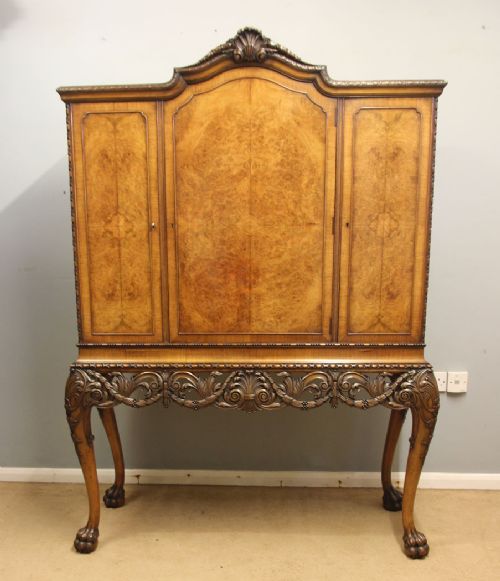
Cabinet makers utilised solid walnut frames overlaid with figured burr walnut veneers to create rich, swirling grain patterns across table tops and cabinet doors. Brass mounts, ormolu details, and occasional ivory inlay provided contrast against the dark wood surfaces.
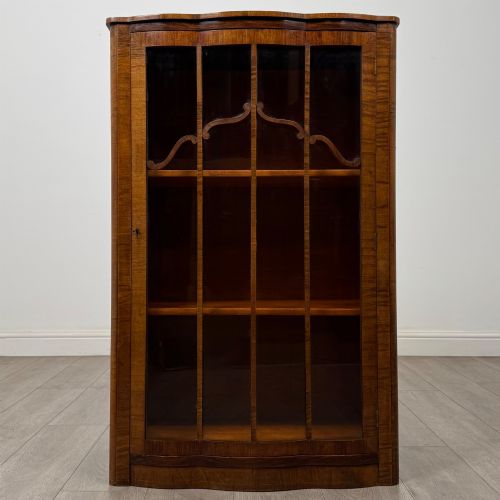
Construction techniques evolved from nineteenth-century turned columns and fretwork brackets to the clean lines of twentieth-century pedestals and tables. Glazed panels, marble inserts, and ebonised wood accents appeared depending on the prevailing style of the decade.
Several stands feature fully adjustable reading ledges, proving that Victorians took their lounging literature with absolute engineering seriousness.
What varies in quality
Quality rests in the selection of the walnut veneer and the crispness of the turning on legs and uprights. Superior pieces display book-matched burr walnut grain that flows evenly across multiple shelves or doors without interruption.
Construction integrity separates standard items from exceptional ones, particularly in the joinery of tiered whatnots and the smooth operation of adjustable reading stands or cabinet doors. Finer examples maintain original brass fittings and stable, balanced tier supports.
Maple & Co.·Shoolbred·Hille
The Vintage Walnut Display Stand Glossary
- Whatnot
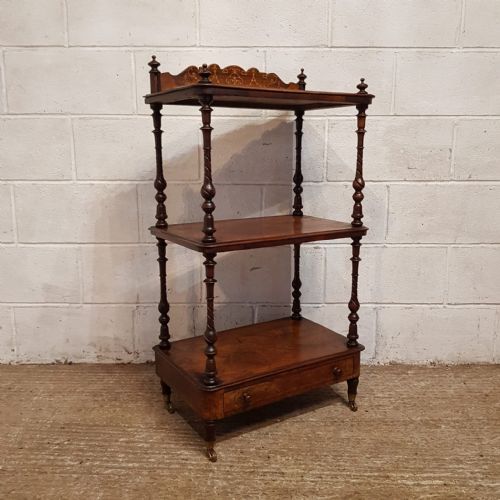
- A piece of furniture consisting of open shelves for displaying small objects. These tiers are typically supported by slender turned columns.
- Burr walnut
- A prized timber veneer taken from the grotesque growth on a walnut tree. It yields highly figured, swirling grain patterns.
- Etagere
- A French term for a piece of furniture with several open shelves for holding ornaments. They often feature delicate ormolu mounts or inlaid marquetry.
- Torchiere
- A tall stand or pedestal originally designed to hold a torch or candle. Later versions support decorative urns, sculptures, or plants.
- Marquetry
- The art of applying pieces of veneer to a structure to form decorative patterns. Craftsmen use various tinted woods to build pictorial designs.
Vintage Walnut Display Stand: Frequently Asked Questions
What is a walnut whatnot?
A whatnot is a multi-tiered stand designed for displaying ornaments, books, or collections in a drawing room. Victorian examples frequently utilise burr walnut with turned columns and pierced gallery rails.
These stands provide vertical storage without dominating floor space. They suit corners or blank wall sections where small decorative items require elevation.
How do I style a display stand?
Balance heavier items on lower tiers to maintain visual stability while placing lighter ceramics or glass on upper shelves. Allow breathing room around each piece so the walnut grain remains visible.
Combine the stand with complementary furniture from the same era, such as an Art Deco pedestal or a Victorian side cabinet. Varying the height of placed objects adds depth to the overall arrangement.
Are these stands suitable for plants?
Certain walnut stands, specifically jardiniere tables and torchiere pedestals, were constructed specifically to hold plants and floral arrangements. Many include protective liners or marble inserts for this purpose.
For standard wooden whatnots, waterproof saucers protect the polished walnut surface from moisture damage. Using protective mats preserves the antique veneer beneath potted greenery.
How do I distinguish Victorian from Art Deco pieces?
Victorian walnut pieces feature dark tones, turned columns, carved fretwork, and figured burr veneers. They lean towards ornate detailing and historical revival styles.
Art Deco stands embrace geometric symmetry, Macassar ebony contrasts, and streamlined pedestals. These twentieth-century designs reduce ornamentation in favour of clean architectural silhouettes.