





Victorian Tiered Accent Shelf
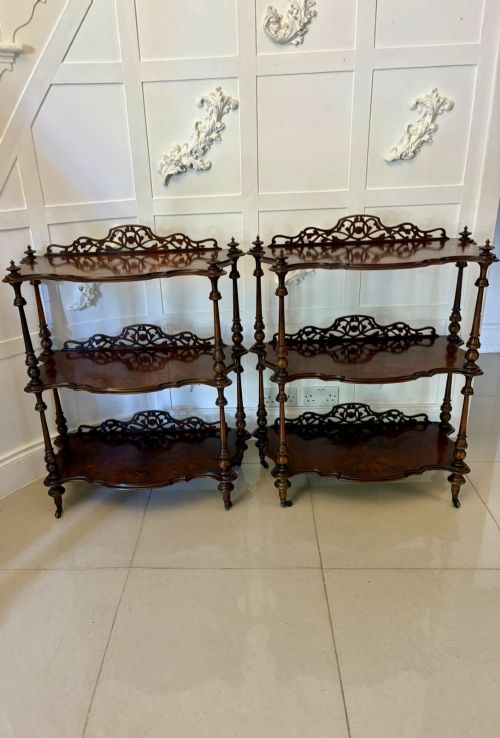
These victorian tiered accent shelf examples bring multi-level display and rich timber character into a room.
Victorian Tiered Accent Shelf
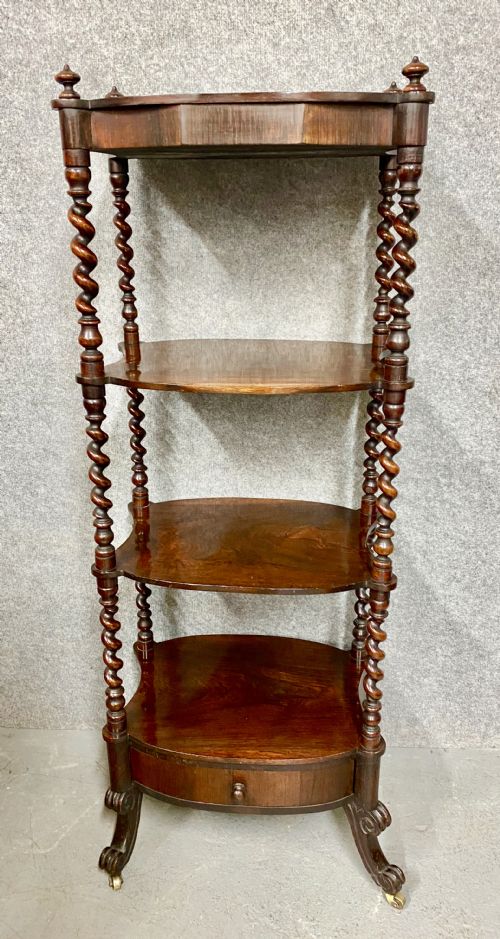
A victorian tiered accent shelf typically takes the form of a whatnot, etagere, or multi-level display stand designed to hold decorative objects or books. These pieces provide vertical storage and surface area without dominating the floor space of a room.
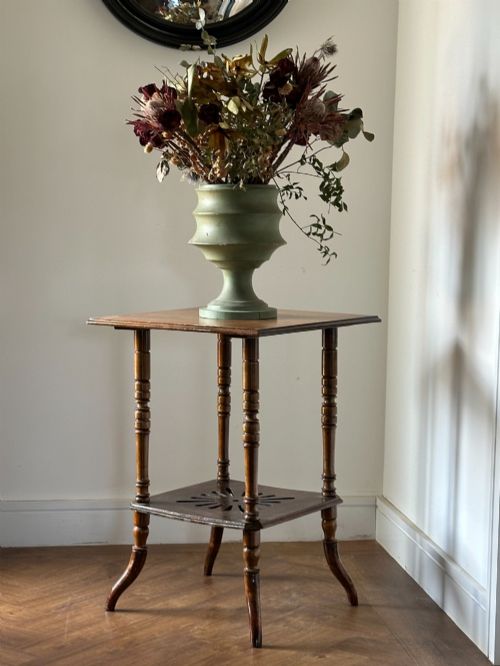
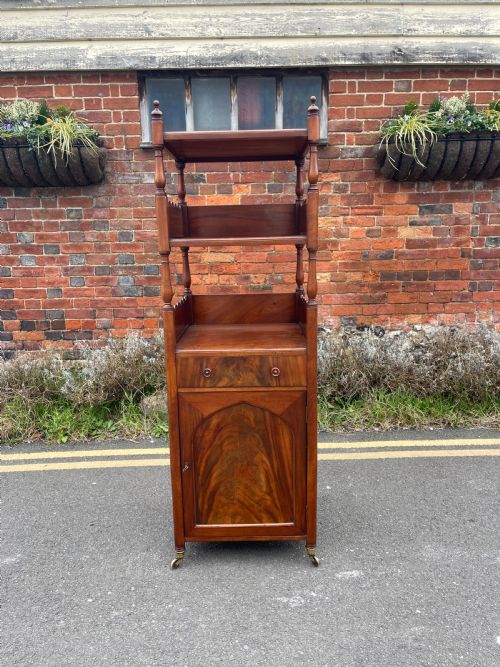
The versions most commonly found here span the Victorian era, alongside related Edwardian and nineteenth-century pieces. They appear in forms ranging from simple three-tier stands to cupboard-base whatnots and inlaid octagonal tables.
Originating as functional display furniture for sitting rooms and parlours, these stands combine utility with decorative presence. They suit modern interiors just as well by offering compact display zones for plants, ceramics, and ornaments.
Materials and construction
Cabinet makers utilised dense hardwoods such as mahogany, walnut, rosewood, and burr walnut for the primary structure and shelves. Ebonised wood and satinwood also appear, often enhanced with boxwood stringing and marquetry inlay.
Metal elements like brass feature as mounts and structural supports, particularly on campaign-influenced or decorative pieces. Turnery, delicate spindle supports, and carved oak or walnut details define the uprights holding the tiers aloft.
Listings feature woods including mahogany, walnut, rosewood, burr walnut, ebonised wood, satinwood, and brass.
Distinctions in quality
The choice of timber veneer and decorative embellishment sets finer examples apart from simpler utility items. Burr walnut and figured rosewood demand greater skill in selection and matching across multiple tiers.
Joinery execution, such as the stability of the tier supports and the precision of marquetry inlay, dictates the overall integrity. Pieces incorporating integrated cupboards or sophisticated brass mounts demonstrate more ambitious workshop design.
E.W Godwin
The Victorian Tiered Accent Shelf Glossary
- Whatnot
- A piece of furniture consisting of a set of open shelves for displaying small objects. They typically feature three or four tiers supported by slender uprights.
- Etagere
- A piece of furniture with a set of open shelves for displaying ornaments. The term often applies to French or refined English tiered stands.
- Marquetry
- Decorative inlay work where pieces of wood, shell, or ivory are fitted into a veneer to form geometric or floral patterns. This technique embellishes table tops and shelf surfaces.
- Ebonised
- Wood treated to resemble ebony through staining or painting black. This finish gained popularity during the Victorian and Aesthetic Movement periods.
Victorian Tiered Accent Shelf: Frequently Asked Questions
What is a whatnot used for?
These tiered stands were designed to hold ornaments, books, and small decorative objects in Victorian living spaces. They allowed homeowners to display collections vertically without cluttering table tops.
Today, they serve a similar purpose in modern homes. They work well for holding house plants, framed photographs, or ceramics in a corner or hallway.
How do I distinguish an etagere from a whatnot?
While both terms describe multi-tiered shelving units, an etagere often implies a slightly more decorative or French-influenced design. Whatnots frequently feature simpler uprights and practical shelf arrangements.
In practice, makers and dealers used both terms interchangeably during the nineteenth century. The construction materials and decorative details matter more than the specific label.
Where should I place a tiered stand?
These compact pieces fit easily into corners, beside armchairs, or against blank wall spaces where a full bookcase would feel too heavy. Their open structure keeps rooms feeling light.
Avoid placing them in areas with direct sunlight or extreme humidity to protect the delicate rosewood, walnut, or mahogany veneers from drying out.
How do I date a Victorian tiered shelf?
Dating relies on observing timber choices, construction methods, and stylistic influences like the Aesthetic Movement or French Rococo Revival. Mid-nineteenth-century pieces often use solid mahogany or rosewood, while later decades favour burr walnut and ebonised finishes.
Comparing the turned supports and joining techniques with dated examples helps narrow down the decade of manufacture. Inlaid motifs also reflect the prevailing tastes of the 1860s through to the Edwardian era.