
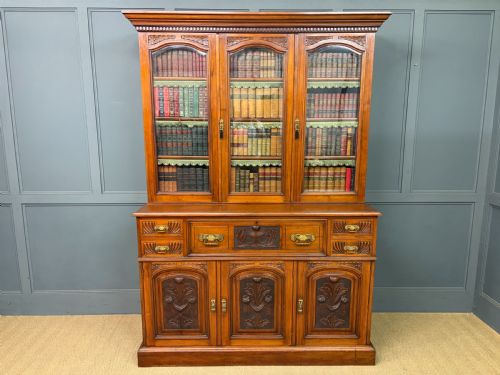
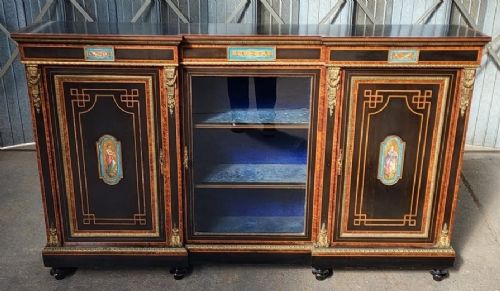
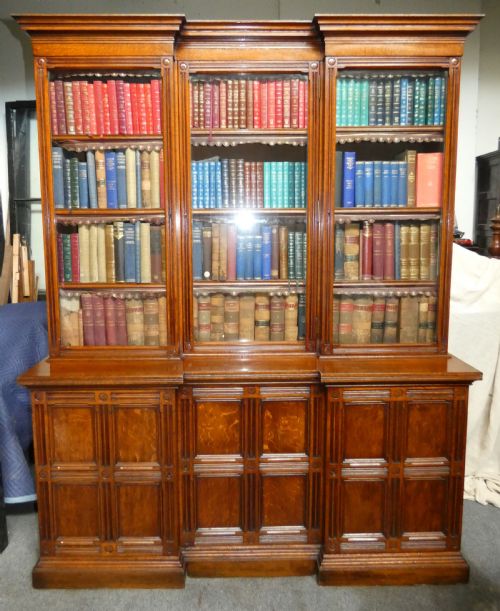
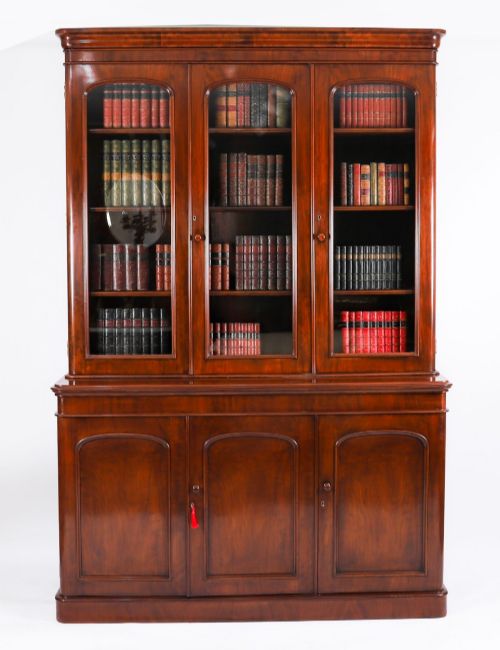
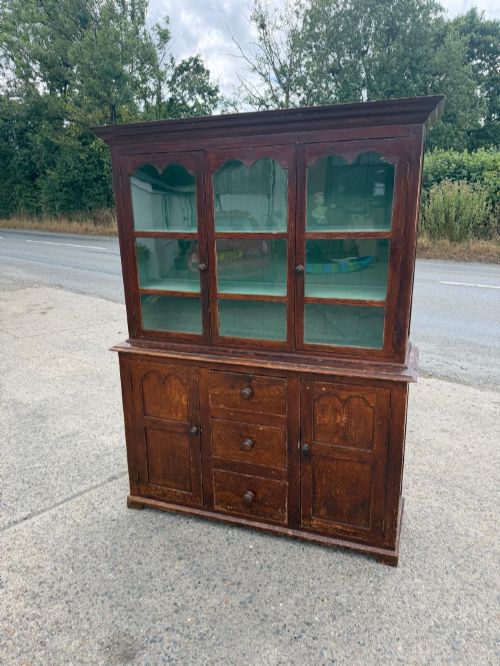
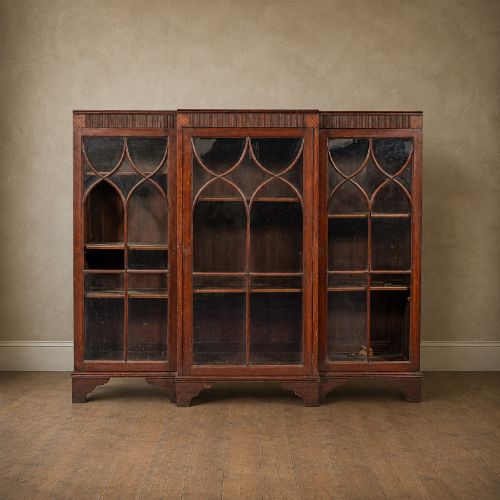
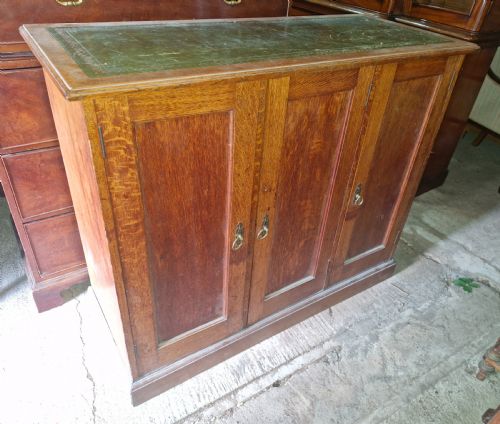
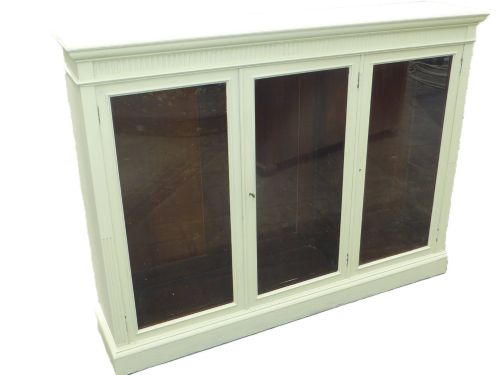
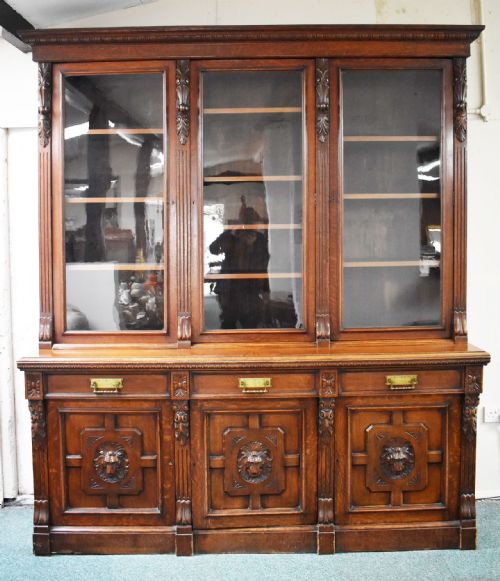


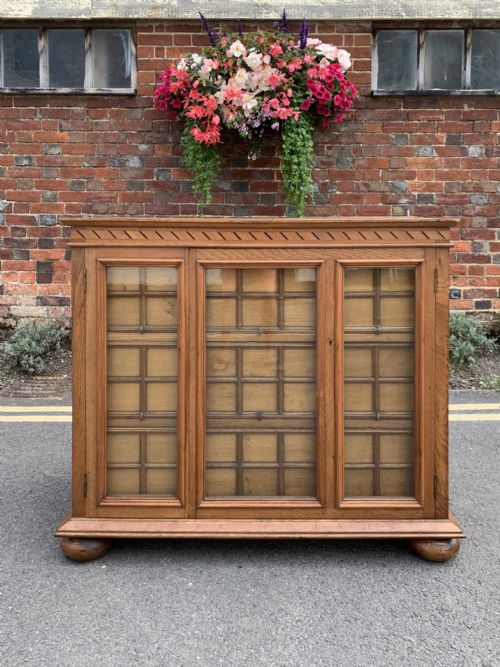

Victorian Three Door Bookcase
A victorian three door bookcase offers serious presence and practical storage, housing an extensive library while anchoring a substantial room.
Victorian Three Door Bookcase
A victorian three door bookcase is a substantial piece of furniture designed to house extensive libraries and display collections in nineteenth-century homes. The central section typically projects forward in a breakfront format, flanked by two side doors that create a balanced tripartite facade.
Most examples found in the inventory date from the Victorian period, though related pieces span from eighteen-sixty through nineteen-thirty in various regional styles. Materials range from traditional timbers like mahogany and oak to decorative veneers including burr walnut, satinwood, and amboyna.
Buyers encounter these cabinets in forms that vary from large breakfront library bookcases to glazed display cabinets and side cabinets. The upper sections frequently feature glazed doors protecting adjustable shelving, while lower sections often provide enclosed wooden cupboards.
Materials and Construction
Cabinet makers built the structural carcasses of these pieces using solid timbers such as mahogany, oak, and pine, often applying figured veneers to prominent surfaces. Burr walnut, flame mahogany, and satinwood provide the decorative grain patterns seen on the finest facades.
Glazing bars divide the large glass panels of the upper doors, allowing visibility of the contents while securing the panes within wooden frames. Brass hardware, including locks, hinges, and occasional ormolu mounts, provides functional closure and decorative contrast to the dark woods.
Some nineteenth-century bookcase doors feature concertina action, folding neatly back against the sides when opened.
Distinctions in Execution
Quality reveals itself in the selection of timber veneers, where symmetrical grain alignment across the three doors shows greater craftsmanship. The complexity of carved ornamentation and the precision of marquetry inlay further separate standard workshop production from exceptional cabinet work.
Edwards and Roberts·Maple and Co
The Victorian Three Door Bookcase Glossary
- Breakfront
- A cabinet design where the central section projects forward from the flanking sections. This arrangement creates visual depth and breaks up the flat facade of large bookcases.
- Ormolu
- Gilded bronze mounts applied to furniture for decoration. This technique adds metallic highlights to ebonised and veneered surfaces.
- Glazing bars
- Wooden strips that hold individual panes of glass within a door frame. They form geometric patterns across the front of the bookcase.
- Marquetry
- Decorative veneer patterns formed by fitting together small pieces of various woods. Artisans use this technique to create elaborate floral or pictorial designs on cabinet doors.
Victorian Three Door Bookcase: Frequently Asked Questions
How do I adjust the shelves?
Most of these bookcases feature adjustable wooden shelves supported by brass studs or wooden ratchets inside the glazed compartments. You simply lift the shelf to clear the supports and reposition them into the desired slots.
Take care when moving heavy oak or mahogany shelves to avoid marking the interior lining or the glass panels behind them.
Are the three sections detachable?
Larger breakfront models typically separate into a base section, a middle cabinet section, and a cornice top to ease transport. The three door configuration often splits vertically into a central unit and two flanking wings.
Professional removal is recommended for heavy hardwood pieces to prevent damage to the structural joints and heavy plate glass.
How do I care for walnut veneer?
Keep walnut furniture away from direct sunlight and strong heat sources to prevent the delicate veneer from drying and lifting. Dust regularly with a soft, dry cloth and apply occasional beeswax polish to nourish the timber.
Avoid using modern liquid sprays that contain silicone, as they can penetrate aged finishes and damage the wood over time.