

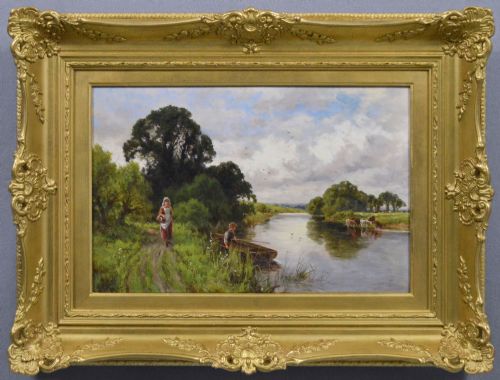


Victorian Thames River Scene
These Victorian thames river scene paintings capture the bustling maritime life and tranquil reaches of the capital's waterway, offering a direct window into nineteenth-century river views.
Victorian Thames River Scene
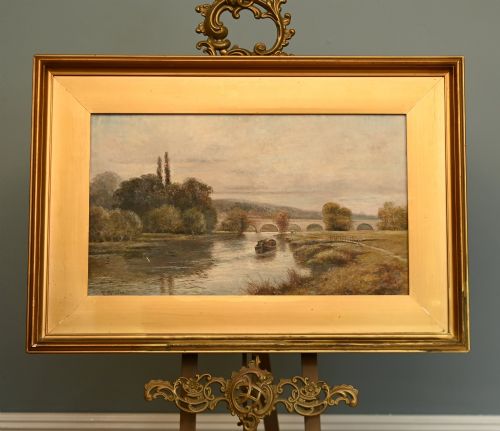
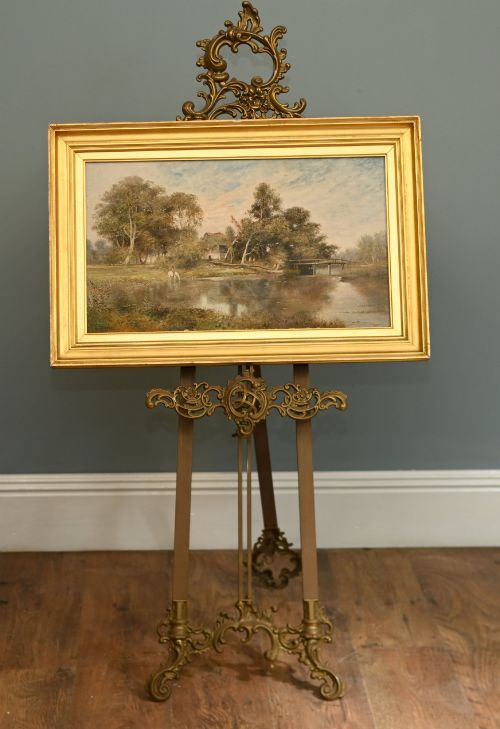
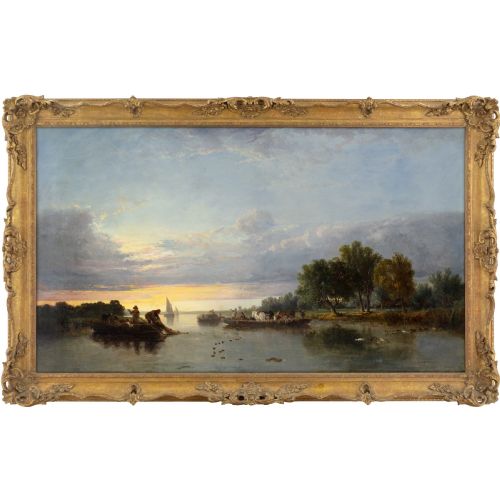
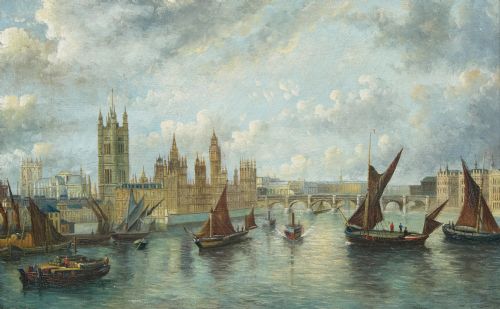
A victorian thames river scene typically presents framed views of the iconic waterway, ranging from bustling London pools with shipping and the Houses of Parliament to quiet pastoral stretches near Windsor, Marlow, and Wargrave. These artworks record the changing moods of the river through topographical watercolours and expressive oil paintings.
The pieces appearing on this page span from the late nineteenth century into the Edwardian era and beyond, capturing both the commercial heart of the city and rural lock views. Buyers encounter diverse formats, including detailed watercolours on paper and substantial oils on canvas, often housed behind glass in period wood frames.
How They Were Made
Artists captured these river views primarily using oil paint on canvas or watercolour applied to paper, employing traditional brushwork to render water, sky, and architectural landmarks. Many works utilise a careful balance of translucent washes for atmospheric river mists or rich, layered oils to depict shipping traffic and masonry.
Finished works were mounted behind glass where paper was utilised, and secured within protective wood frames that often bear the patination of their age. The physical construction combines fine pigments with stable canvas supports and sturdy paper bases designed to endure.
Listings feature both paper and canvas supports, utilising watercolour and oil paint to depict London landmarks and pastoral river reaches.
What Varies in Quality
The strength of a victorian thames river scene rests in the artist's handling of light upon water and the precise architectural rendering of landmarks such as St Paul's Cathedral or Windsor Castle. Superior examples display confident brushwork and a clear sense of atmosphere, distinguishing accomplished observations from routine topographical sketches.
Condition and medium preservation also divide the collection, with well-preserved watercolours retaining vibrant pigments beneath clean glass, while robust oil paintings on canvas show stable paint layers without excessive craquelure. The prominence of the recorded location and the specific skill in depicting figures, boats, or shipping further elevate individual works.
Alfred Young Nutt·John Macvicar Anderson·Henry H Parker·Henry John Kinnaird·Robert Winchester Fraser·A. A. Finch·A. G. Hayward·Walter Duncan·Henry Sykes·Frederick George Coleridge·Frank Wasley·Carleton Grant·Edward Fletcher·Herbert John Finn·Frank William Scarbrough·Francis Moltino·R. Allan
The Victorian Thames River Scene Glossary
- Watercolour
- A painting method in which the paints are made of pigments suspended in a water-based solution. This technique allows for delicate, translucent washes particularly suited to capturing river mists and open skies.
- Oil on canvas
- A traditional painting medium utilising pigments mixed with drying oil applied to a stretched cloth surface. This combination provides rich depth of colour and durability for larger river scenes.
- Eyot
- A small island, particularly one in a river. Painters frequently depicted these grassy islets along pastoral stretches of the Thames near places like Marlow.
- Provenance
- The chronological history of the ownership of a work of art. Documented provenance helps establish the authenticity and background of nineteenth-century paintings.
Victorian Thames River Scene: Frequently Asked Questions
What subjects appear in these river scenes?
These works depict a broad range of subjects situated along the waterway, stretching from rural locks and quiet pastoral backwaters to bustling commercial areas in central London.
Commonly featured landmarks include Windsor Castle, the Houses of Parliament, St Paul's Cathedral, and Tower Bridge, alongside working vessels such as Thames barges and local fishermen.
Are these paintings original period pieces?
The listings comprise authentic period works created during the nineteenth and early twentieth centuries, capturing historical views of the river and its surroundings.
Artists recorded the changing landscape using traditional media such as oil paint and watercolour on paper, reflecting the artistic styles of the British school of the period.
How should I display watercolour river scenes?
Watercolour paintings require protection from direct sunlight to prevent the fading of delicate pigments on paper. Framing behind glass with suitable mounts ensures the surface remains safe from atmospheric moisture and dust.
What is the difference between oils and watercolours here?
Oil paintings utilise pigments bound in drying oil on canvas, offering rich textures and deep tones suitable for busy shipping scenes. Watercolours employ water-soluble pigments on paper, creating luminous, translucent effects ideal for atmospheric river mists and lighter landscapes.