




Victorian Teak Desk
A victorian teak desk is a robust, travel-ready writing surface designed for officers and officials, prized for its dense timber and clever brass-bound construction.
Victorian Teak Desk
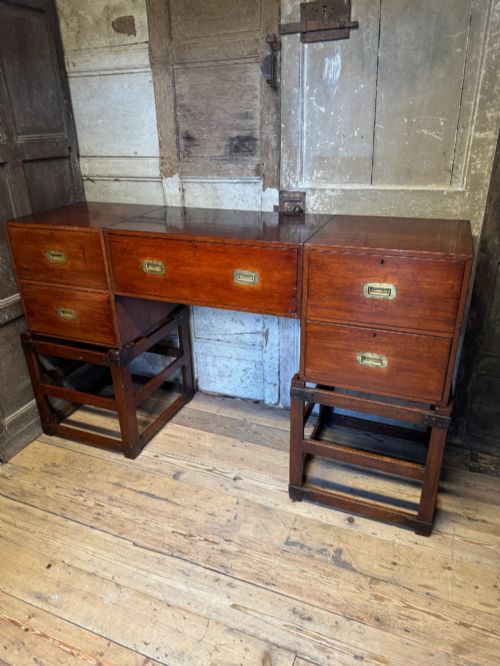
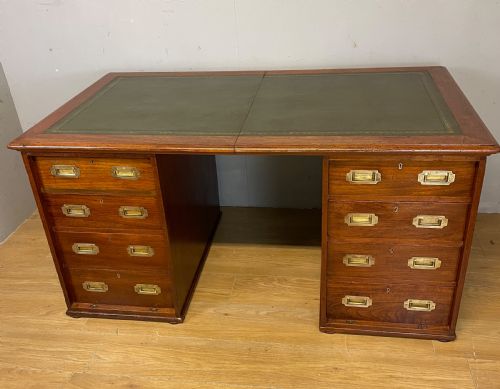
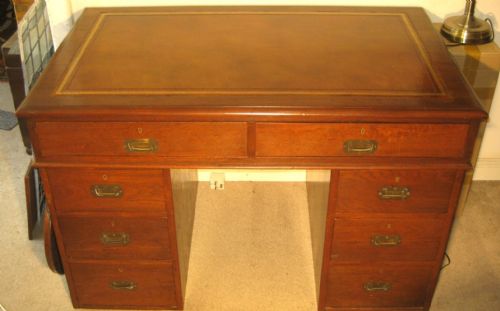
When you search for a victorian teak desk, you encounter heavy, durable writing furniture made for colonial service, naval life and distant administration. These pieces range from substantial pedestals and davenports to modular secretaire chests built to dismantle for transit.
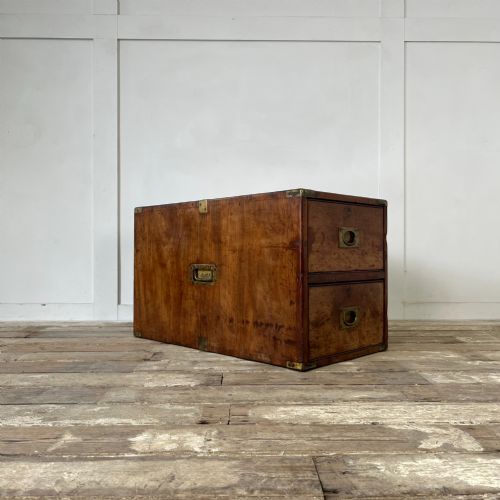
The version you meet most frequently on this page is the campaign secretaire chest, where the top drawer drops to reveal a fitted writing surface and pigeonholes. Alongside these stand solid pedestal desks and Anglo-Indian writing tables carved from dense tropical timber.
Originating largely from the nineteenth century, these desks reflect a period of global travel and military expansion. Makers utilised dense hardwoods to withstand harsh climates while employing modular designs that travelled easily by ship or rail.
How they were made
Makers built these desks using dense teak and secondary hardwoods, reinforced with brass corners, straps and flush-fitting carrying handles. This metalwork protected vulnerable edges during transit and held sectional carcases firmly together.
Surfaces frequently incorporated inset leather writing panels, often tooled with gilt borders to provide a smooth writing plane. Drawer construction relied on hand-cut dovetails, whilst modular sections locked securely using brass pins or secret mechanisms.
The listings on this page span the Victorian period, featuring teak, mahogany and oak alongside brass and leather materials.
What varies in quality
The distinction between ordinary utility pieces and exceptional examples lies in the precision of the brass mounts and the complexity of the interior fittings. Superior desks feature heavily recessed hardware, finely turned handles and secret compartments hidden behind dummy drawers.
The quality of the timber grain and the crispness of any carved detailing also separate standard items from finer work. Pieces associated with specific regiments or named individuals often display superior construction and more intricate internal arrangement.
The Victorian Teak Desk Glossary
- Campaign desk
- A modular writing table built in two or three sections to allow easy transport during military campaigns and colonial travel. These desks usually feature flush brass handles and protective corner brackets.
- Secretaire
- A cabinet or chest containing a pull-down drawer or flap that conceals a fitted writing interior with pigeonholes and small drawers. This form combined storage and writing functions into a single compact unit.
- Anglo-Indian
- A descriptive term for furniture made in India during the British Raj, combining British forms with traditional local carving techniques. Such pieces often utilise dense native timbers like teak.
- Davenport desk
- A compact pedestal writing desk featuring a sloping, hinged writing surface and drawers opening to the side. The form originated in the early nineteenth century and remained popular throughout the Victorian era.
- Brass mount
- A protective metal fitting let flush into the wood of campaign furniture to prevent damage during transit. These mounts also served a decorative function.
Victorian Teak Desk: Frequently Asked Questions
Why are these desks made in sections?
Modular construction allowed officers and officials to pack heavy furniture into manageable boxes for transport on ships, trains and wagons.
This knockdown design protected the desk during rough journeys across colonies and allowed rapid assembly upon arrival at a new posting.
How do I identify a campaign desk?
Campaign furniture is characterised by flush brass handles, corner brackets and sectional carcases that separate into distinct modular units.
Many examples also include threaded screw-in feet and recessed hardware designed to avoid snagging during transit.
What is a secretaire drawer?
A secretaire drawer is the top drawer of a chest or desk fitted with a hinged front that drops down to create a writing surface.
Behind this flap lie small pigeonholes and letter drawers for organising correspondence while travelling.
How should I care for teak furniture?
Teak is an oily, durable hardwood that requires minimal intervention to maintain its condition. Occasional dusting and careful treatment of leather writing surfaces will preserve the piece.
Keep the timber away from direct heat sources and sudden humidity changes to prevent movement in the wood.