


Victorian Tea Caddy Scoop
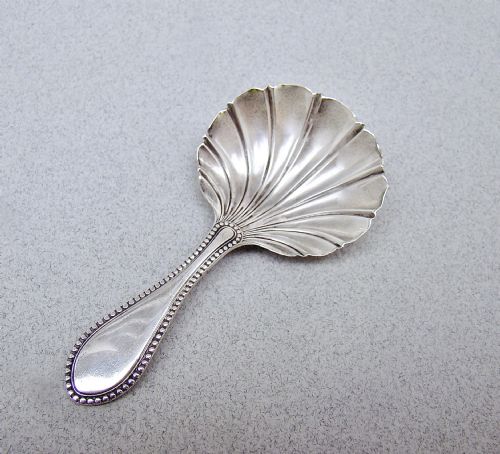
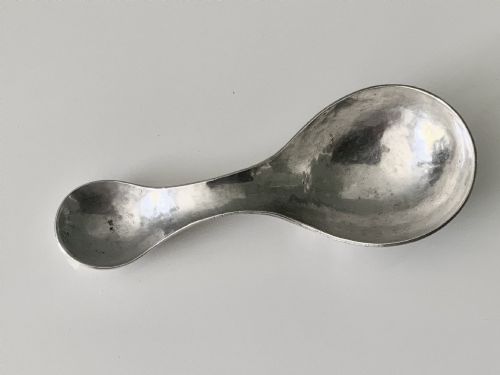
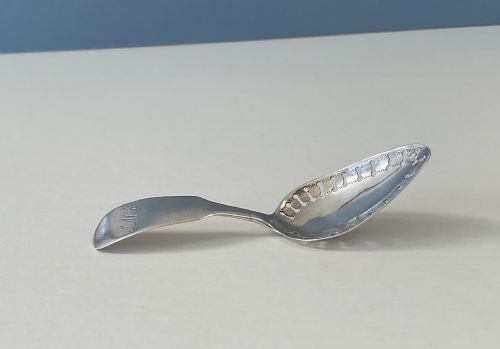
These Victorian tea caddy scoop items are small silver implements designed for measuring loose tea leaves from a storage vessel.
Victorian Tea Caddy Scoop
A Victorian tea caddy scoop is a specialised silver utensil encountered mainly in nineteenth-century forms alongside occasional later interpretations.
The selections span periods from the Georgian era through to the twentieth century, appearing as distinct caddy spoons or tea caddy spoons.
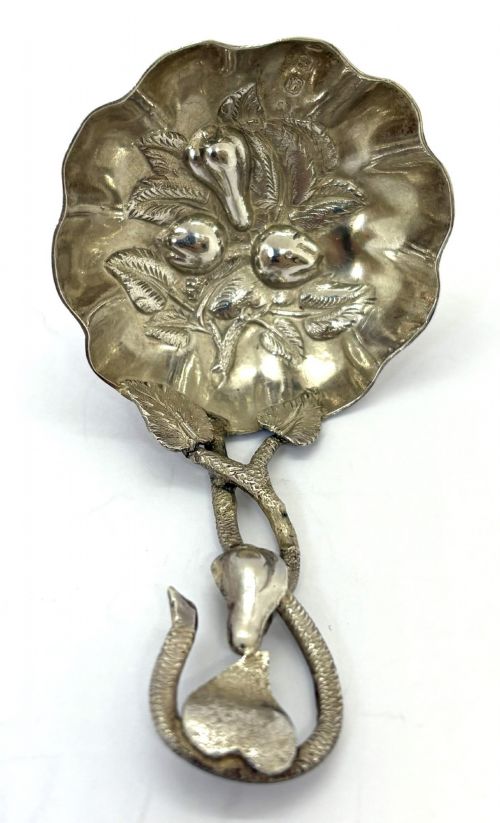
Makers often fashioned these with specific regional characteristics such as Scottish Provincial designs or intricate Victorian novelty silver styles.
Materials and methods
Silversmiths utilised sterling silver and standard silver to shape these implements through traditional hammering and casting techniques.
Detailing on the bowls frequently incorporates fine foliate engraving to ornament the metal surface.
One exceptional piece takes the whimsical form of a jockey's cap.
Judging the standard
Distinction in these pieces rests upon the crispness of the engraved decoration and the integrity of the silver form.
Works bearing clear hallmarks from established silversmiths demonstrate greater documentary interest than unmarked examples.
Martin Hall & Co·Mappin & Webb·George Unite
The Victorian Tea Caddy Scoop Glossary
- Caddy spoon
- A small utensil specifically proportioned for measuring dry tea leaves into a caddy. These feature shallow bowls designed to hold a single measure.
- Sterling silver
- A precious metal alloy consisting of silver and other metals to ensure durability. It provides the primary material for the majority of these items.
- Hallmark
- An official stamp applied to precious metals indicating standard of purity and origin. These marks often reveal the assay office and date letter.
- Foliate engraving
- Surface decoration carved into the metal representing leaves and foliage. This technique adds texture and visual interest to the bowl or handle.
Victorian Tea Caddy Scoop: Frequently Asked Questions
What is a tea caddy scoop used for?
These implements served to transfer loose tea leaves from a caddy into a teapot with precision.
Their compact size ensured they fitted neatly inside traditional tea containers alongside the leaves.
How do I identify a Victorian piece?
Examination of the hallmarks stamped onto the silver usually reveals the exact year of manufacture and assay office.
Stylistic elements like foliate engraving also point towards nineteenth-century production methods.
Are all these items made of silver?
The listings consist entirely of sterling silver and standard silver objects.
Precious metal composition remained the standard medium for this class of tableware throughout the periods represented.
How should I display a caddy scoop?
Their small scale makes them suitable for placement inside glass cabinets or alongside antique tea wares.
Keeping them protected from tarnishing helps preserve the bright silver surface over time.