
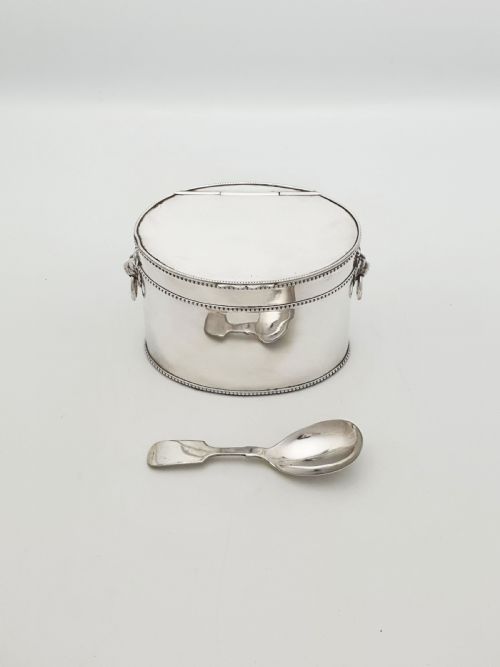


Silver Tea Leaf Spoon
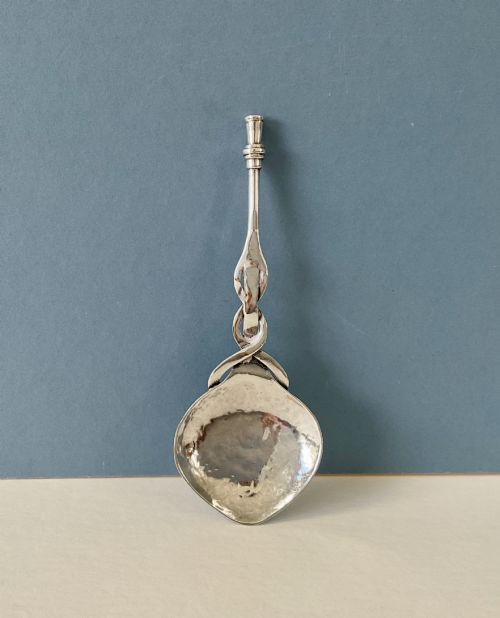
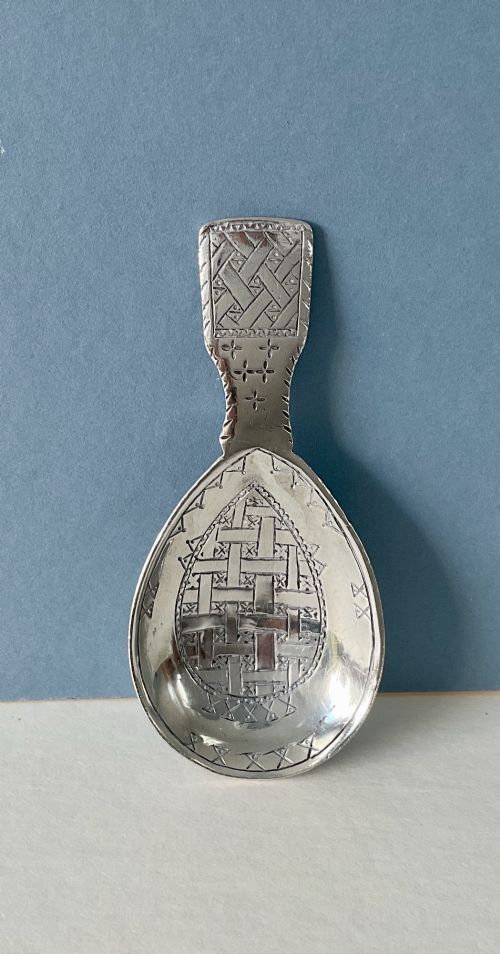
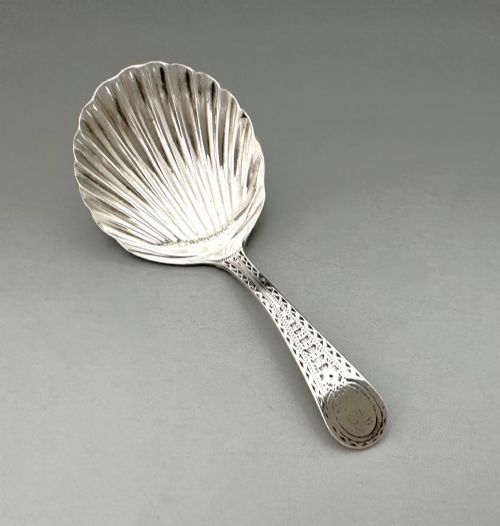
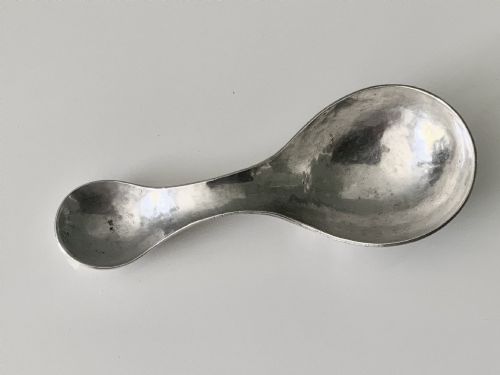
These silver tea leaf spoon pieces are small, finely formed caddy spoons shaped like natural foliage, prized for serving loose leaves with elegance.
Silver Tea Leaf Spoon
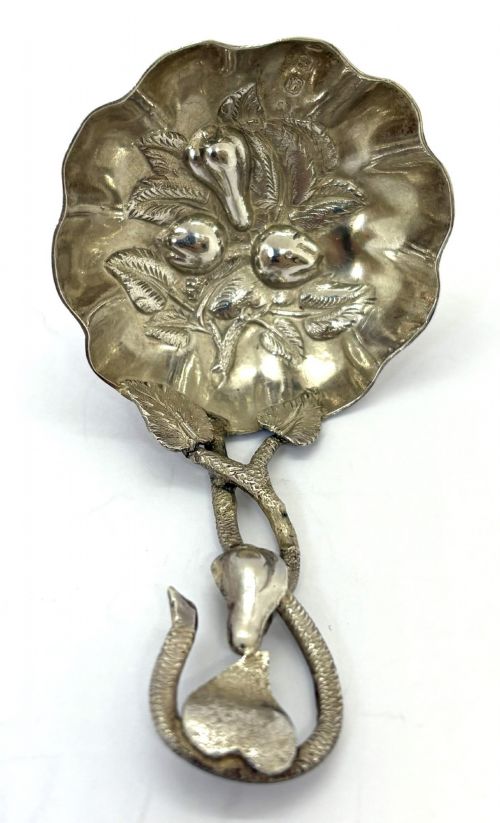
A silver tea leaf spoon typically takes the form of a caddy spoon modelled directly on botanical leaf motifs, most notably vine and grape foliage. You will frequently encounter examples originating from the Georgian and Victorian periods, alongside later Arts and Crafts, Edwardian, and Art Deco interpretations.
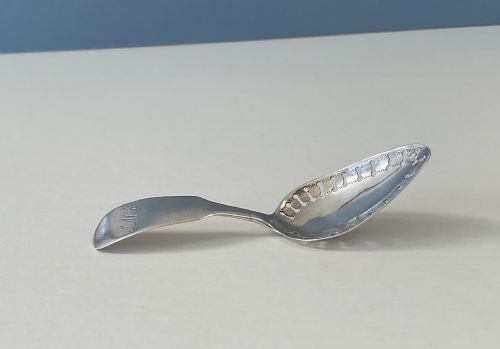
The objects serve primarily as tea utensils designed to measure and dispense loose tea from caddies into pots. While caddy spoons represent the majority of forms, related tea equipment such as mote spoons and small teaspoons also appear within the selection.
Origins span British provincial and metropolitan assay offices, including Birmingham, Sheffield, and Glasgow, alongside continental workshops from Denmark and American makers. This geographical spread ensures a variety of regional stylistic touches upon the standard leaf motif.
Materials and construction methods
Items in this category are fashioned predominantly from sterling silver and solid silver, utilising traditional smithing techniques suited to small domestic implements. Silversmiths shaped the bowls to mimic natural leaf contours, often employing hand-hammered texturing or realistic vein engraving to define the surface.
Many pieces incorporate specialist decorative treatments, ranging from the repoussé work seen on vine leaf designs to delicate enamel and rock crystal additions on Arts and Crafts variants. Handles are frequently formed as integral extensions of the leaf stem or decorated with distinct patterns such as double striking and lion mask motifs.
Some spoons double as miniature botanicals, turning your afternoon brew into a quiet stroll through a Victorian greenhouse.
Assessing craftsmanship and execution
Quality in a silver tea leaf spoon rests upon the fidelity of the naturalistic modelling and the crispness of the subsidiary chasing or engraving along the veins and stem. Superior examples display careful attention to anatomical leaf details rather than a generic pressed shape, with balanced proportions between bowl and handle.
The reputation of the maker and the clarity of the underlying hallmarks significantly elevate a piece, distinguishing standard commercial production from workshop output by notable silversmiths. Preservation of the original surface texture and structural integrity without excessive polishing further marks the distinction between ordinary and exceptional survivals.
Joseph Willmore·Taylor and Perry·Georg Jensen·George Unite·Charles Horner·Liberty
The Silver Tea Leaf Spoon Glossary
- Caddy spoon
- A short-handled spoon specifically designed for measuring dry tea leaves from a tea caddy into a teapot. These implements developed a vast array of fanciful shapes, particularly leaf and shell motifs, during the Georgian and Victorian eras.
- Repoussé
- A metalworking technique where the silversmith hammers the metal from the reverse side to form a raised design on the front. This method creates the three-dimensional, tactile texture seen on leaf-shaped bowls.
- Assay office
- An official body charged with testing the purity of precious metal items and stamping them with hallmark symbols. British offices such as those in Birmingham, Sheffield, London, and Glasgow provide verifiable dates and origins for these pieces.
- Double struck
- A manufacturing process where the die is struck twice onto the metal blank to ensure deeper, sharper definition in the pattern. This technique enhances the decorative relief on handles and stems.
- Mote spoon
- An early form of perforated tea utensil featuring a pierced bowl for straining leaves and a pointed terminal. They pre-date standard caddy spoons and appear alongside them in historical tea service contexts.
Silver Tea Leaf Spoon: Frequently Asked Questions
What is a silver tea leaf spoon used for?
These spoons were designed for scooping loose tea leaves from a storage caddy into the teapot. Their specialised shape allowed them to navigate narrow necked containers while serving as decorative table items.
Today, collectors use them to complete antique tea service displays or as dedicated implements for loose leaf tea preparation.
How do I date a silver tea leaf spoon?
Dating relies heavily upon the stamped hallmarks, which indicate the assay office, standard of silver, and a specific date letter corresponding to the active year of the maker. Stylistic indicators, such as Regency curves or Arts and Crafts handworking, also help narrow down the period.
Comparing the form and engraving style to documented examples by makers like Joseph Willmore provides further chronological context.
Are these spoons made of solid silver?
The pieces listed across this category are recorded as sterling silver or solid silver, reflecting the precious metal standard used for quality domestic tableware. Hallmarks stamped directly onto the metal confirm the silver purity.
Makers adhered to strict guild and legal standards depending on the jurisdiction of their workshop.
How should I display or store a caddy spoon?
Because of their compact size and sculptural leaf forms, these spoons display well in shallow cabinet trays or mounted within dedicated silver collections. Handling them with care prevents the accumulation of skin oils that accelerate tarnishing.
Occasional gentle cleaning with a suitable silver cloth preserves the engraved detail without wearing down the high points of the design.