
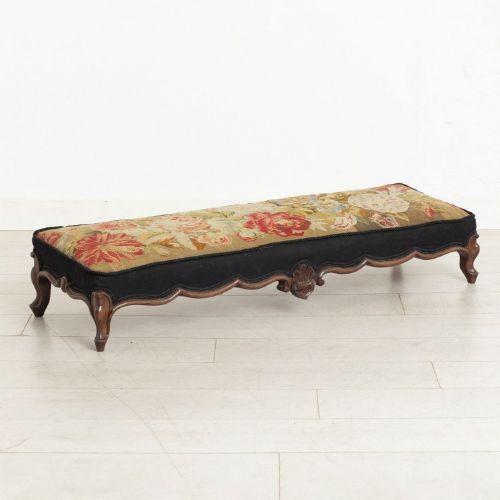


Victorian Tapestry Ottoman
A victorian tapestry ottoman is a low seat or storage piece covered in needlework, offering period character and practical comfort.
Victorian Tapestry Ottoman
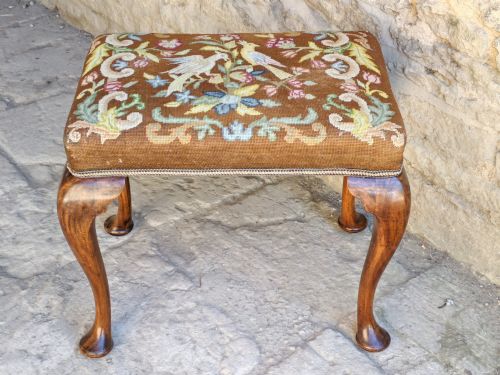
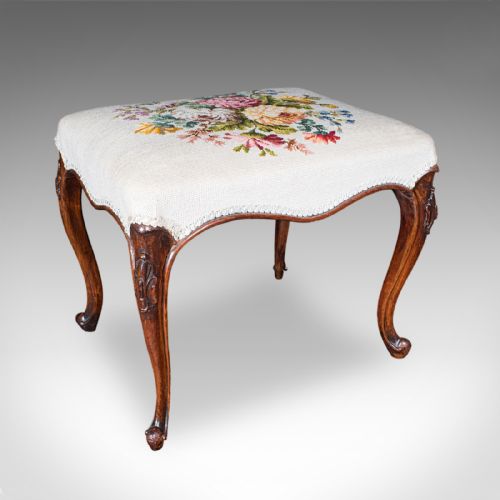
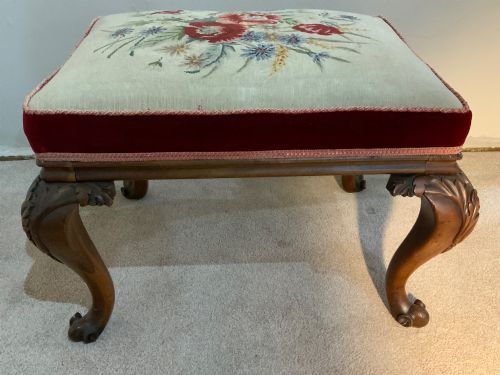
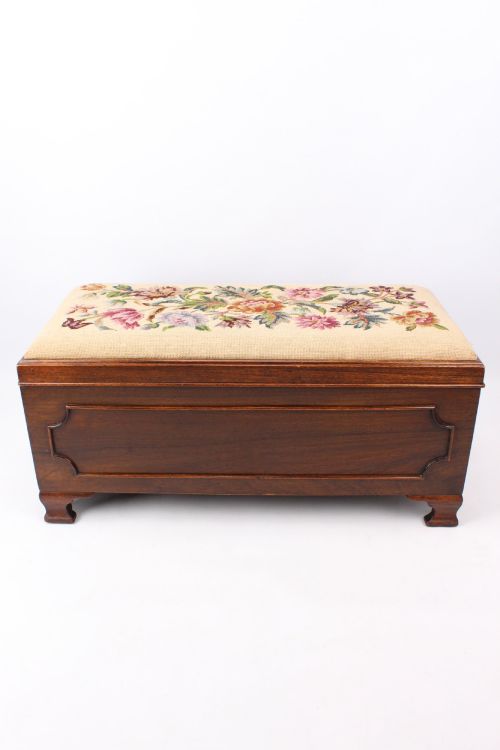
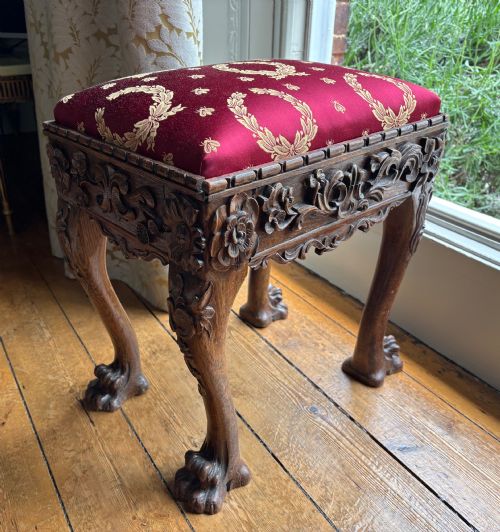
Buyers seeking a victorian tapestry ottoman encounter low footstools, dressing stools, and storage boxes spanning the nineteenth century. Walnut and mahogany frames dominate the selection, often shaped with cabriole legs or carved details reflecting revival styles.
Most examples date from the mid to late nineteenth century, appearing in forms ranging from small fireside stools to larger storage chests. Textile upholstery featuring needlepoint, wool, and tapestry defines the group, occasionally paired with original fabric.
How they were made
Timbers such as walnut, mahogany, rosewood, and oak form the structural frames, shaped through carving and turning techniques. These woods provide the sturdy skeleton required to support heavy textile upholstery.
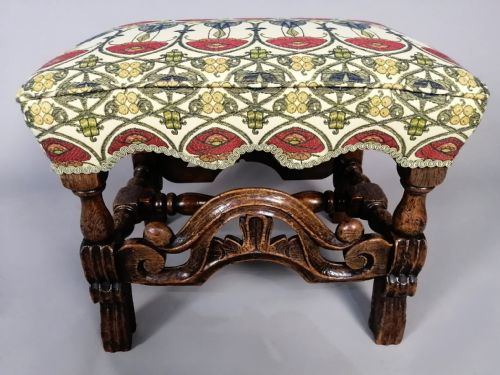
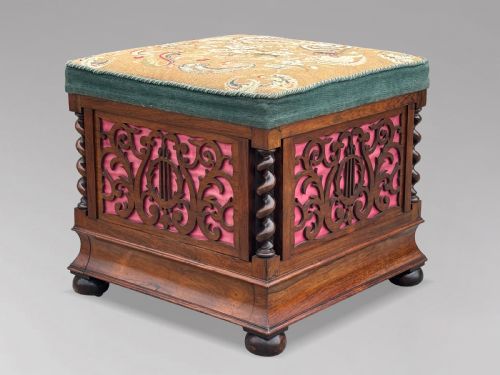
Seats are finished with textile coverings including needlepoint, tapestry, wool, velvet, and fabric. Brass accents and detailed wood carving complete the construction of these nineteenth-century seats.
Listings feature walnut, mahogany, rosewood, and oak frames paired with wool needlepoint and tapestry textiles.
What varies in quality
The refinement of the timber carving and the complexity of the frame dictate the standing of a piece. Finer examples display meticulous detail in walnut or rosewood frames, whereas simpler variants utilise basic pine or standard turned legs.
The execution and preservation of the needlework seat heavily influence distinction. Original tapestry work in sound condition elevates a piece above those with later or worn upholstery.
Hallett And Sons
The Victorian Tapestry Ottoman Glossary
- Ottoman
- A low upholstered seat or storage chest without arms or a back. These pieces often serve as footrests or seating in period interiors.
- Needlepoint
- A type of canvas work embroidery used for upholstery. This technique creates the durable, patterned surfaces seen on nineteenth-century seats.
- Cabriole leg
- A furniture leg that curves outward and then tapers inward. This design element appears frequently on walnut and mahogany stools from the period.
- Tunbridge Ware
- Small woodwork decorated with tiny mosaic wood tesserae to form geometric patterns. This decorative technique occasionally trims specialised small round footstools.
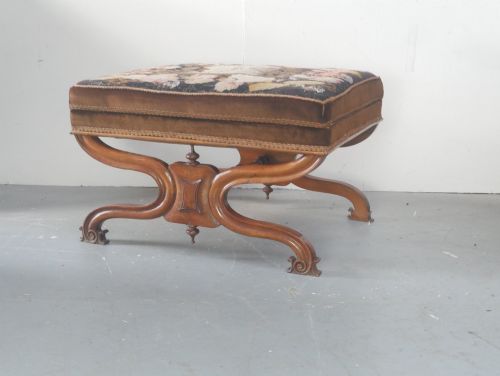
- X-frame
- A structural furniture base formed by intersecting diagonal members. Stools utilising this configuration often display prominent carved details.
Victorian Tapestry Ottoman: Frequently Asked Questions
What is a victorian tapestry ottoman used for?
These pieces function as footstools, fireside seats, dressing stools, and low resting surfaces. Some designs incorporate storage compartments beneath the upholstered top for household items.
Their compact size allows them to sit easily beside armchairs, sofas, or window seats in living spaces.
How do I date a nineteenth-century footstool?
Dating relies on observing timber choices, upholstery styles, and framing techniques recorded across the period. Walnut and mahogany were utilised extensively alongside revival aesthetic details.
Specific decades bring subtle shifts in leg shapes and carving styles, helping distinguish mid-nineteenth-century work from later decades.
Are tapestry seats original?
Many pieces retain their original needlework or wool tapestry tops, while others have received replacement textiles over time. Examining the attachment methods and wear patterns helps clarify the age of the fabric.
Original textiles often exhibit authentic period colour softening and hand-stitched characteristics unique to nineteenth-century needlework.
How do I clean antique needlework?
Needlepoint and tapestry surfaces require gentle maintenance using soft-bristled brush attachments to remove surface dust. Avoiding harsh liquids protects fragile wool fibres and aged backing materials.
Professional textile conservation is recommended for deep cleaning or repairing structural thread loss on historic upholstery.
Where should I place an ottoman?
These stools suit placement in living rooms as fireside companions or at the foot of beds for dressing purposes. Their low profiles ensure they fit comfortably beneath windows or beside larger seating arrangements.
Integrating them into a room adds texture through the patterned tapestry top and warm wood framing.