


Victorian Tabletop Drawers
Victorian tabletop drawers offer compact storage in miniature chests, cabinets, and mirrors crafted for nineteenth-century dressing tables and desktop use.
Victorian Tabletop Drawers
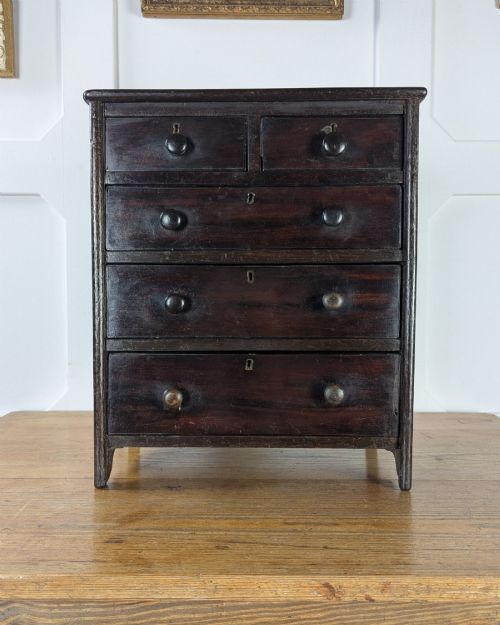
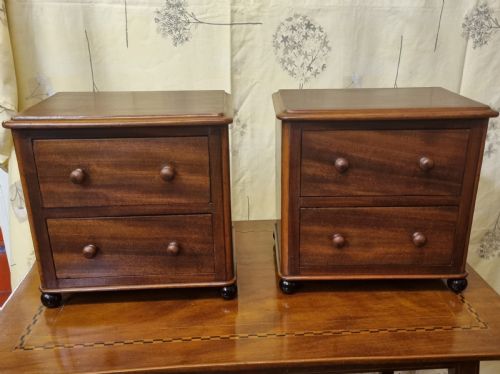
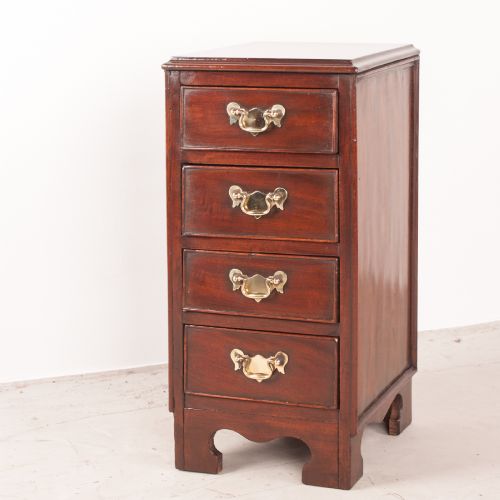
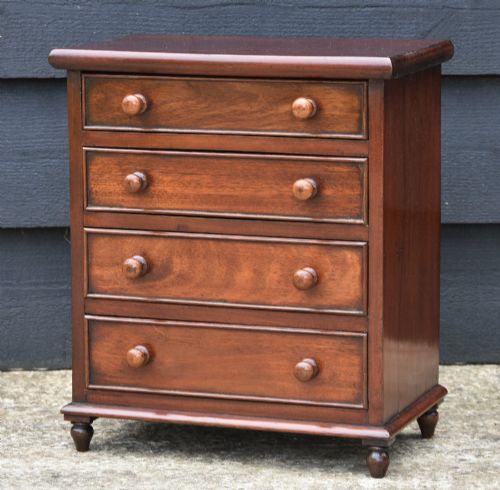
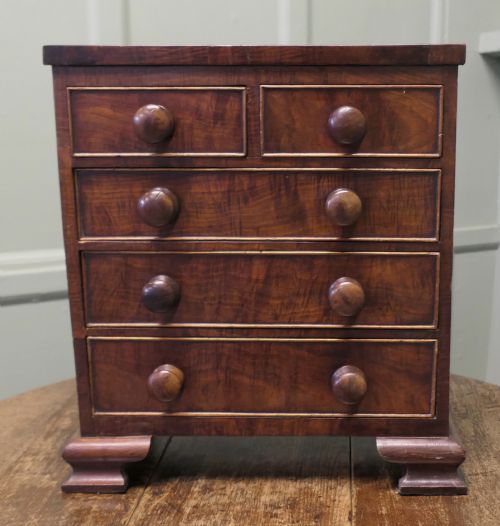
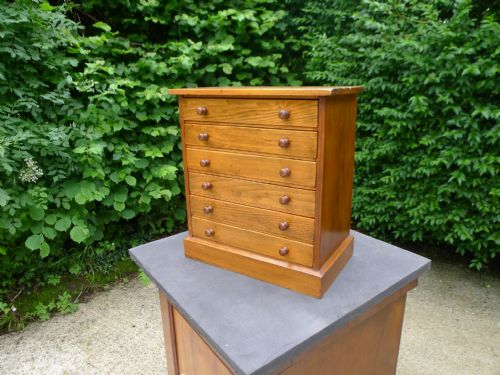
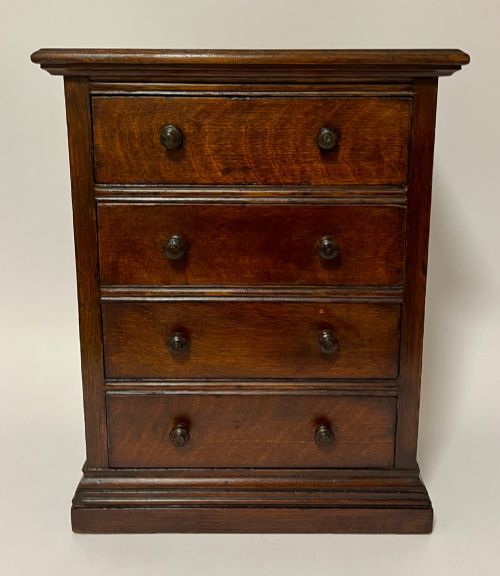
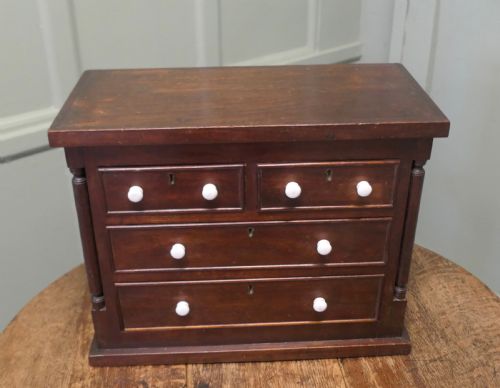
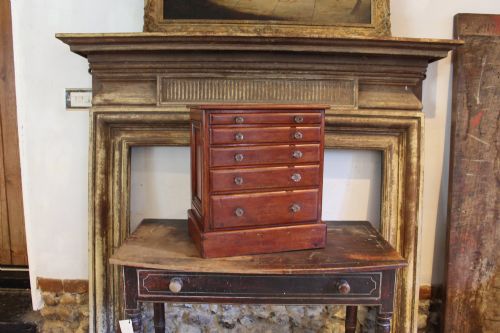
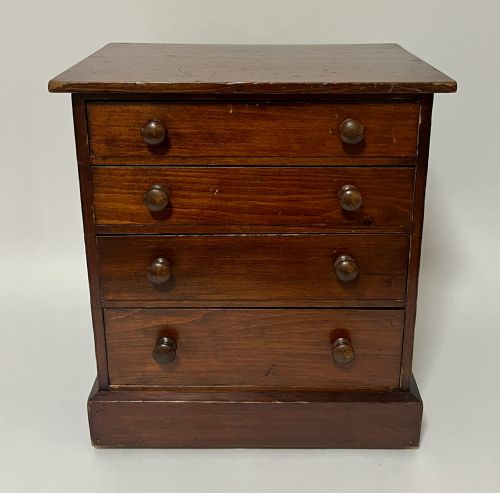
Victorian tabletop drawers encompass miniature chests of drawers, collectors' cabinets, spice drawers, and dressing mirrors originating from the nineteenth century and adjacent periods. Buyers searching for victorian tabletop drawers encounter diverse forms including apprentice pieces, specimen cabinets, and small storage chests designed to sit upon tables.
The objects span periods from the Georgian style and Regency through Early Victorian, Victorian, Edwardian, and up to nineteen-twenty, reflecting changing domestic requirements for small-scale storage. Materials visible across these pieces include mahogany, walnut, pine, fruitwood, and amboyna, frequently accented with brass hardware and glass elements.
Materials and Construction
Cabinet makers built these small chests and cabinets primarily using solid and veneered timbers such as mahogany, walnut, oak, and pine, occasionally applying paint or stain. Joinery techniques suited to small-scale furniture allowed for tight drawer construction, dovetailed corners, and sometimes secret compartments or bureau fitments.
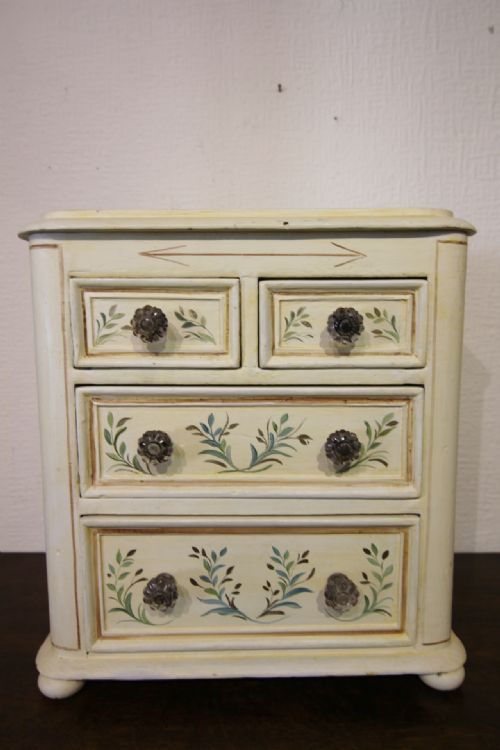
Surface finishes rely on natural timber patinas, French polish, or painted layers, paired with functional brass handles, knobs, or locks. Inlaid details utilising mother-of-pearl or contrasting woods appear on specific miniature chests and dressing mirrors.
Listings include specimens built from mahogany, pine, walnut, and fruitwood across the Victorian and Edwardian eras.
Craftsmanship and Proportion
Quality in these small pieces rests upon the crispness of the timber selection, such as figured walnut, amboyna, or well-grained mahogany, and the precision of the miniature proportions. Superior examples demonstrate careful attention to drawer linings, smooth running drawers, and harmonious scale rather than mere reduction in size.
The refinement of brass fittings, the presence of subtle inlay work, and the depth of the timber's natural patina distinguish finer specimen cabinets and apprentice chests from utilitarian pine storage boxes.
Luxmore's of Ilfracombe·Heal & Sons
The Victorian Tabletop Drawers Glossary
- Apprentice piece
- A small item of furniture made by a trainee craftsman to demonstrate mastery of skills. These often mirror full-size chests of drawers.
- Specimen cabinet
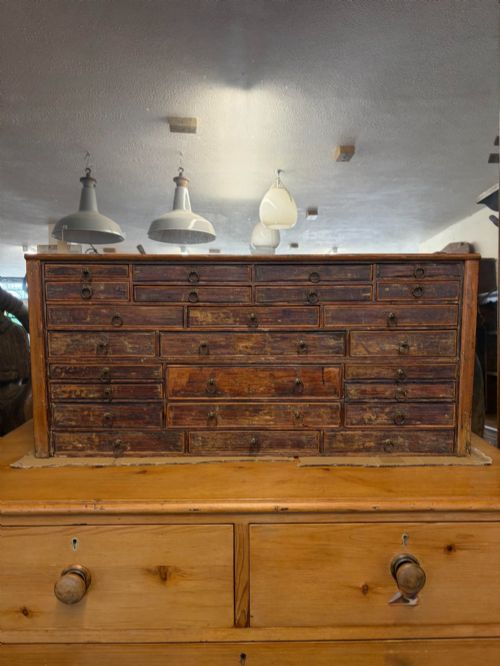
- A small cabinet with multiple shallow drawers intended for storing natural history samples, coins, or small collections. They frequently feature secure locking doors.
- Bowfront
- A furniture front that curves outward in a convex shape. This profile appears on select miniature mahogany chests.
- Swing mirror
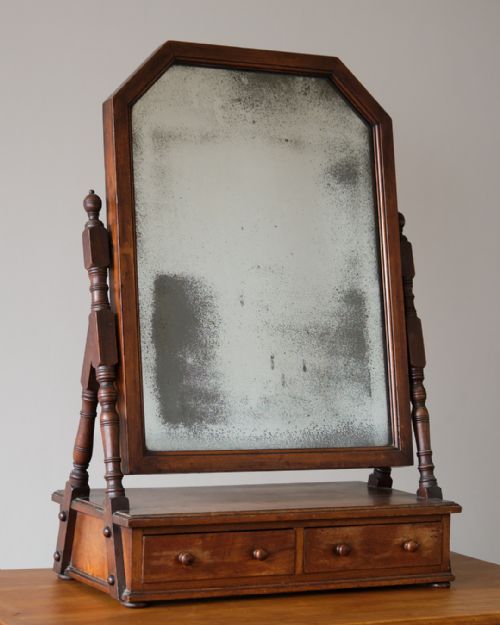
- A dressing glass mounted on vertical pivots between upright supports, allowing the mirror plate to tilt. These often sit atop a small drawer base.
Victorian Tabletop Drawers: Frequently Asked Questions
What were Victorian tabletop drawers used for?
These small pieces served various domestic and professional storage needs on tabletops and dressing surfaces. They held trinkets, letters, sewing accessories, and small personal valuables.
Collectors also utilised specialised cabinets with multiple shallow drawers to organise natural history specimens, microscope slides, and coins safely.
Are these considered true apprentice pieces?
Many nineteenth-century miniature chests carry the traditional description of apprentice pieces, denoting work created to demonstrate a woodworker's skill. Some represent genuine training items, while others were simply manufactured as luxury miniature furniture for domestic display.
Both categories share identical period construction methods and fine timber selections on a reduced scale.
How do I style tabletop drawers at home?
These compact chests and cabinets sit easily on top of sideboards, desks, chests of drawers, and dressing tables. Their small footprint provides functional storage for everyday items while adding architectural character to a room.
Cabinets with glass doors or open display trays can also showcase small collections of curiosities or natural objects.
What timbers are most common?
Mahogany appears most frequently across these nineteenth-century tabletop pieces, often selected for its rich grain and warm patina. Walnut, burr walnut, and pine also feature widely in both country house and urban examples.
More decorative items incorporate rarer woods like amboyna, fruitwood, or rosewood alongside brass and mother-of-pearl details.