

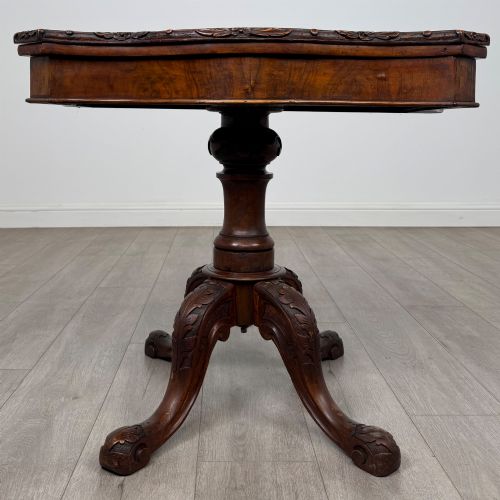
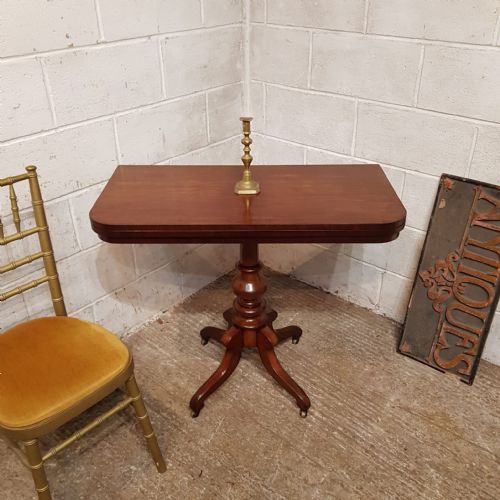


Victorian Swivel Card Table
A victorian swivel card table is a dual-purpose folding furniture piece designed for parlor games and tea, offering clever hidden storage inside.
Victorian Swivel Card Table
A victorian swivel card table functions primarily as a console or side table against a wall before opening up for evening entertainment. When hosting guests, the top leaf turns on a central pivot and unfolds to reveal a baize-lined playing surface, supported by the swing of the rear framework.
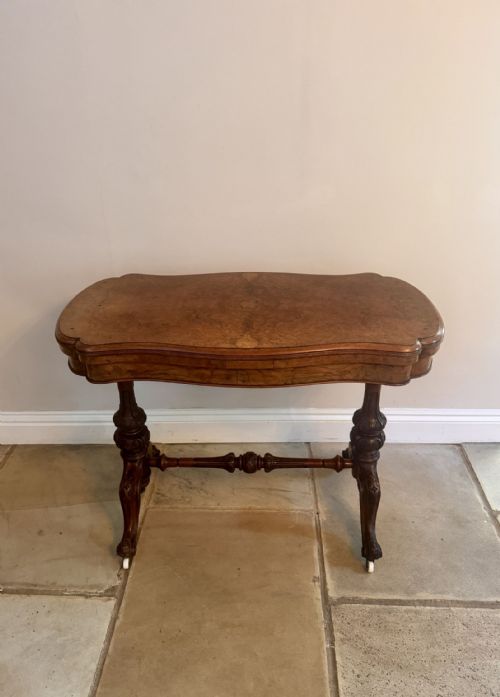
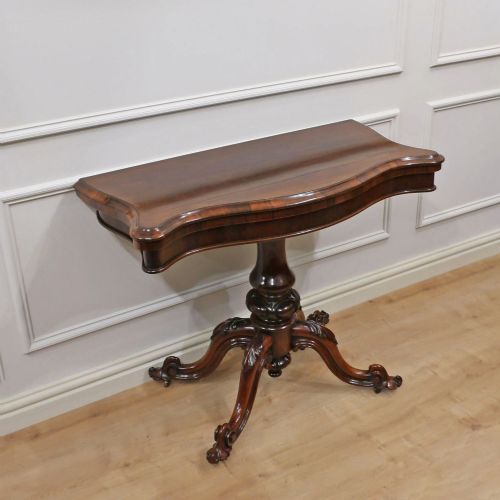
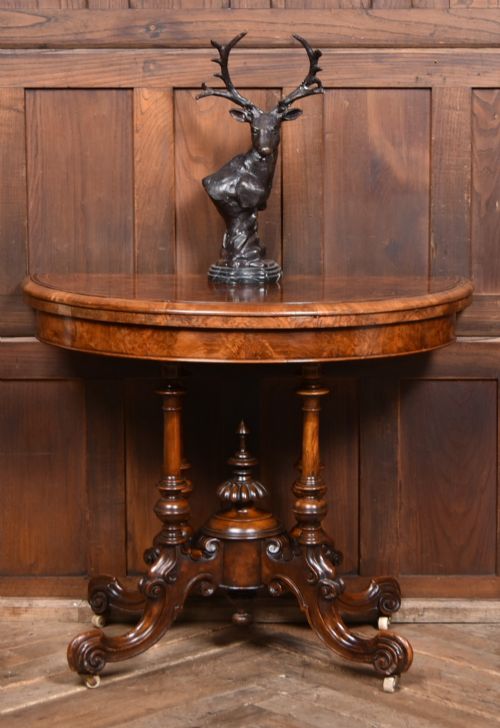
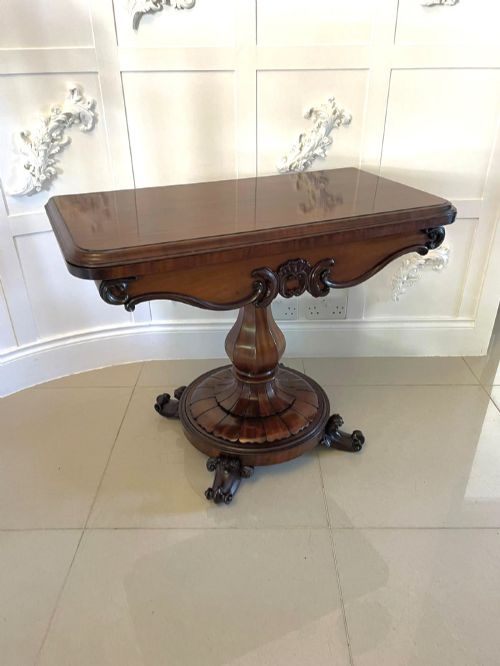
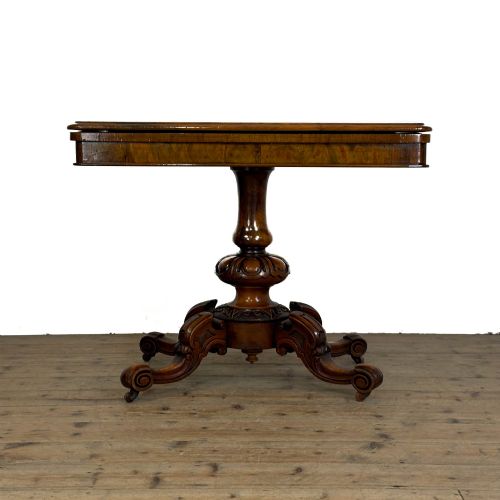
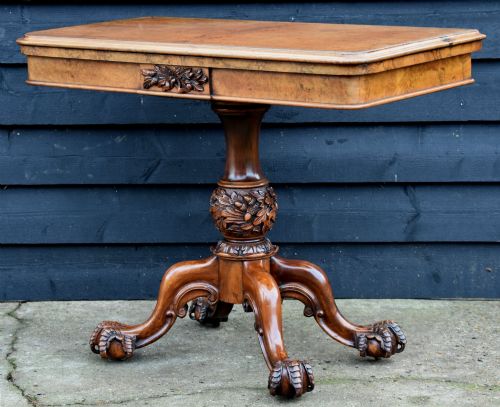
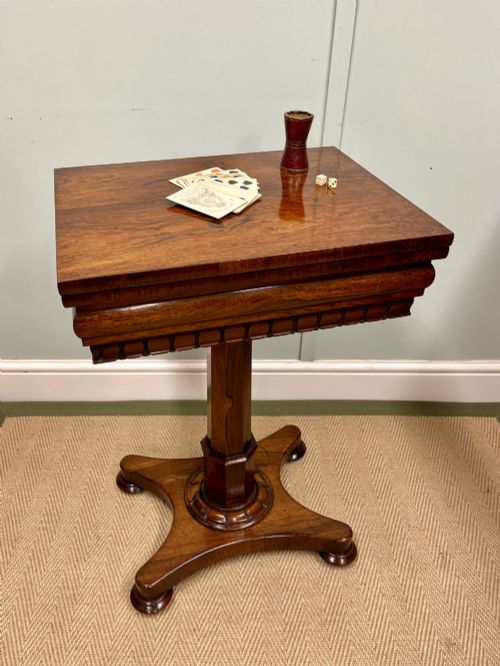
Most examples encountered here date from the nineteenth century, displaying characteristic woods such as walnut, burr walnut, rosewood, and mahogany. These pieces span various stylistic influences including Early Victorian, William IV, and Arts and Crafts movements, often featuring geometric inlays or serpentine shapes.
Makers utilised domestic and exotic timbers to construct versatile forms that served as tea tables, games tables, and occasional tables. The pivoting mechanism allows the doubled top to rest securely upon a pedestal base or turned legs when closed.
Materials and Construction
Cabinet makers constructed these tables using solid structural timbers like mahogany and oak, applying decorative veneers of burr walnut, rosewood, and amboyna to the visible top surfaces. Wood inlay, brass fittings, ceramic castors, and ebony details frequently accent the primary timber carcase.
The swivel mechanism relies on a sturdy wooden pivot block or brass pivot pin concealed beneath the frieze. Expert joinery ensures the folded leaves align evenly when closed and sit level when opened for play.
The documented forms range from compact occasional tables to large tea and card tables spanning the nineteenth century.
Distinctions in Quality
The choice of veneer defines much of the visual merit, with tightly figured burr walnut or rich rosewood grain commanding greater appreciation than plain timbers. Subtle carving on the pedestal knees, crisp floral marquetry, and well-executed edge mouldings separate standard production from superior workshop output.
Structural integrity governs durability, meaning tables that swivel smoothly without sagging at the hinge joint demonstrate superior original joinery. The weight and stability of the pillar base or leg configuration ensure the table remains balanced when the heavy top opens.
Edwards & Roberts·Gregory and Co
The Victorian Swivel Card Table Glossary
- Swivel top
- A table top design featuring a pivot that allows the upper leaf to rotate ninety degrees before folding out flat. This movement uncovers a hidden compartment used for storing playing cards and counters.
- Fold-over
- A hinged tabletop construction that doubles the surface area when opened. It rests on a pivoting leg or swinging frieze rail for support.
- Serpentine
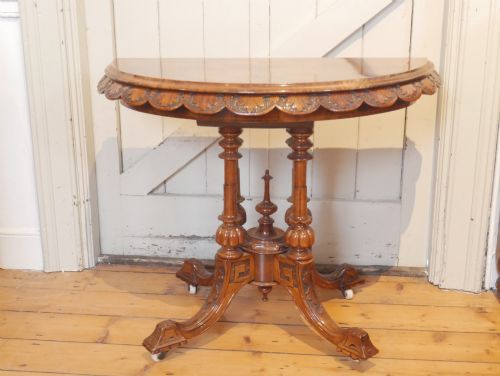
- A curved furniture edge featuring a convex centre flanked by concave curves. This undulating shape requires precise carpentry, particularly when applied to veneered aprons.
- Marquetry
- Decorative veneer work forming pictorial or geometric patterns using various coloured woods. Craftsmen assemble these thin wood veneers into complex designs before applying them to the table top.
- Demi lune
- A half-moon shape used for table tops and frames. When placed against a wall, these tables present a curved profile.
Victorian Swivel Card Table: Frequently Asked Questions
How do you open the top?
Release any internal catch beneath the frieze and lift the top slightly to clear the pivot pin. Rotate the upper leaf ninety degrees until it aligns with the base frame, then unfold the hinged leaf flat.
The weight of the folding leaf rests upon the rotating framework or a swing leg attached to the rear rail, creating a stable surface for card games.
What was the hidden space for?
The shallow recess created between the pivoted leaves serves as a compartment for storing playing cards, dice, and bone gaming counters. When closed, this cavity remains completely out of sight.
Owners kept their evening entertainment essentials neatly organised inside the table carcase, ready to deploy when guests arrived for parlour games.
Where should I place it?
These pieces sit comfortably against a hallway or living room wall in their closed console position, occupying minimal floor space. Ensure you leave adequate clearance around the table if you intend to unfold the top regularly.
Keep the wood away from direct sunlight and heat sources to prevent the burr veneers or rosewood from drying and splitting over time.
How do I date these tables?
Examine the secondary timbers, castor types, and overall silhouette to establish an approximate period. Earlier nineteenth-century examples often display simpler mahogany frames, while mid-Victorian pieces favour highly figured burr walnut and carved details.
Design cues shifted through William IV, Early Victorian, and later Arts and Crafts styles, reflecting the changing aesthetic preferences of cabinet makers.