
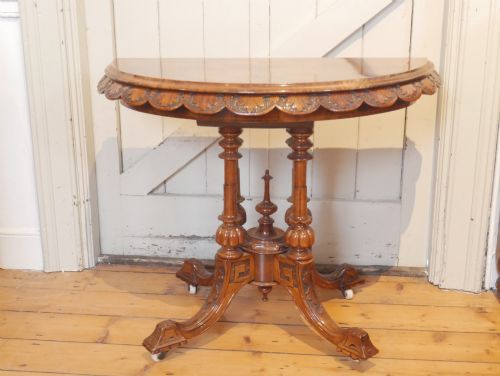
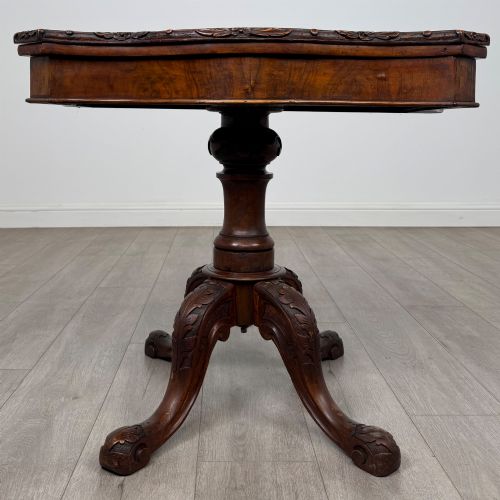


Walnut Swivel Top Table
A walnut swivel top table brings practical ingenuity and rich timber grain to the room, turning from a compact console into a proper surface for cards or tea.
Walnut Swivel Top Table
When you search for a walnut swivel top table, you encounter primarily Victorian card and games tables alongside tea tables and dressing table mirrors. These pieces span the nineteenth century, including Edwardian examples and later Art Deco items.
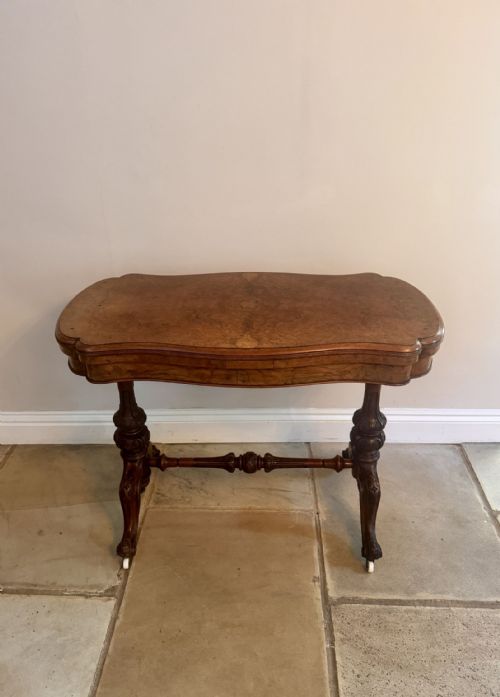
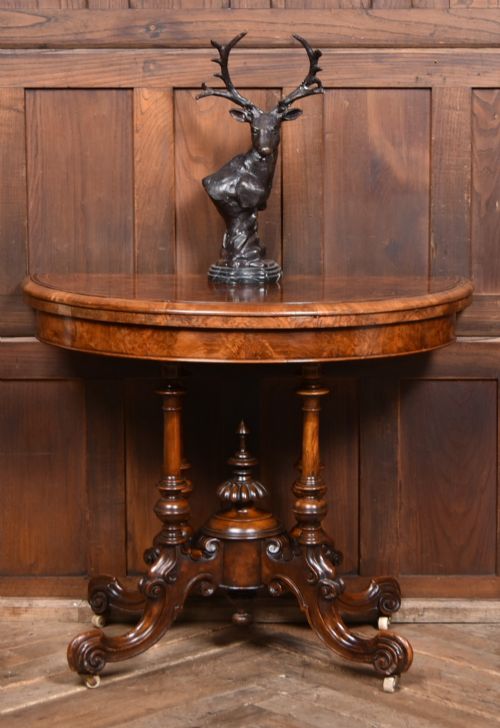
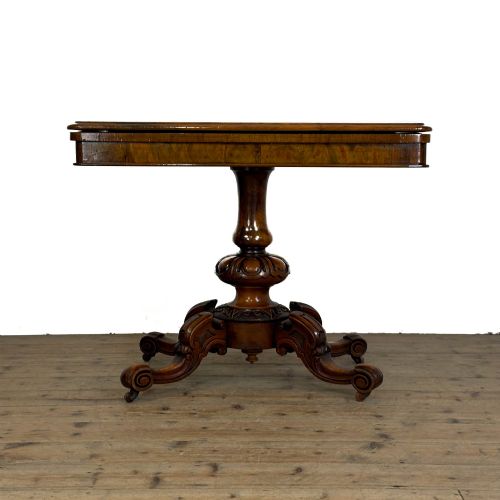
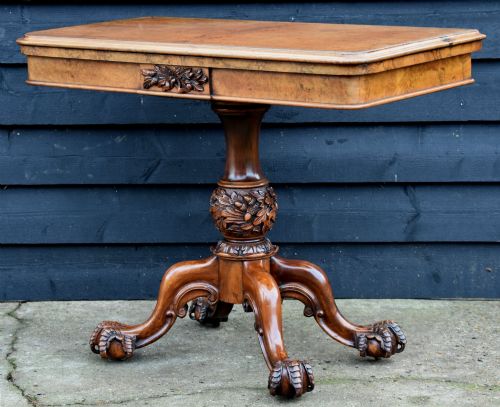
The version you meet most often on this page is the Victorian fold-over card table in burr walnut, featuring a top that pivots to reveal a concealed compartment or opens flat for play.
What varies in quality
The distinction between ordinary examples and the finest pieces lies in the choice of burr or figured walnut veneer and the crispness of the carved details on the pedestals and legs. Superior items display harmonious timber grain across the fold-over leaves and precise joinery in the pivoting mechanism.
The listings here span the Victorian, Edwardian, and Art Deco periods, predominantly featuring card tables and games tables.
Edwards & Roberts·Whytock & Reid·H. Ogden
The Walnut Swivel Top Table Glossary
- Burr walnut
- A prized wood veneer showing knotted growths that produce swirling, highly decorative patterns across the table top.
- Fold-over
- A table top construction featuring two matching leaves hinged together to double the surface area when opened.
- Demi lune
- A half-moon shape characteristic of certain Victorian card tables designed to sit flat against a wall.
- Marquetry
- Decorative woodwork where pieces of various coloured woods are fitted into a veneer to form geometric or floral designs.
- Pedestal table
- A table supported by a central pillar rising from a stable foot or set of carved legs.
Walnut Swivel Top Table: Frequently Asked Questions
How do I open the top?
The upper leaf lifts slightly and rotates on a central pivot pin before folding out flat onto the supporting frame.
Inside, you will often find a shallow compartment lined with baize or felt, originally intended for storing playing cards and counters.
Where should I place it?
These tables sit comfortably against a hallway or drawing room wall when closed, serving as a slim console or side table.
Opening the top requires clearance around the piece, making them suitable for spaces where you occasionally need an extra gaming or tea surface.
How do I date the table?
Examination of the timber, secondary woods, and brass mechanism helps determine the period, with Victorian examples showing distinctive pedestal carvings.
Later Edwardian and Art Deco pieces exhibit cleaner lines and different veneer treatments compared to nineteenth century items.
Can I use it for dining?
Most of these pieces are designed as card, games, or tea tables rather than heavy dining furniture.
The fold-over mechanism provides a stable surface for drinks or cards, but heavy daily use for meals can strain the hinges and delicate veneer.