



Victorian Sweetmeat Dish
A Victorian sweetmeat dish brings small confections to the table in sterling silver, coloured glass, or porcelain crafted during the nineteenth century.
Victorian Sweetmeat Dish
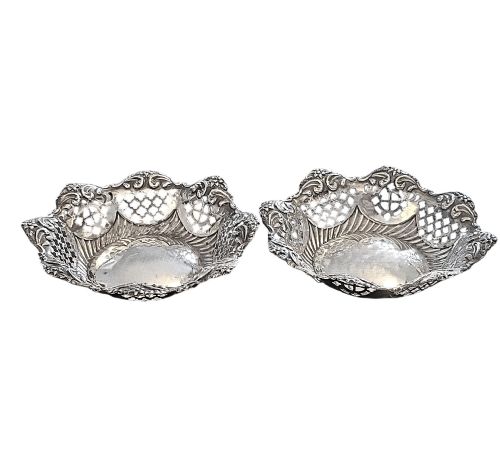
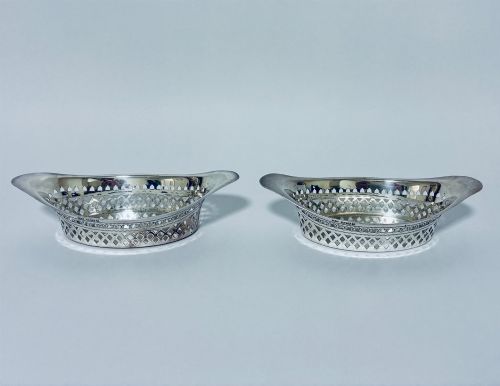
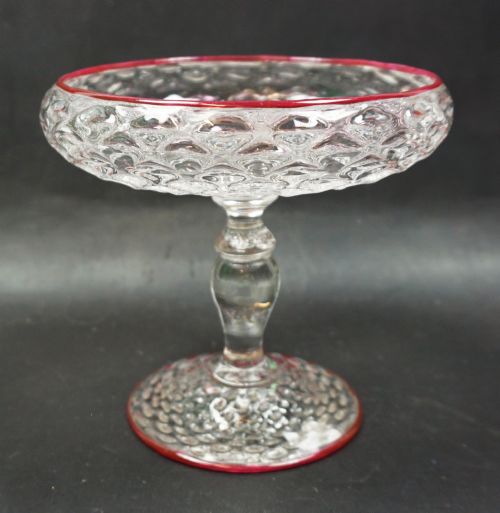
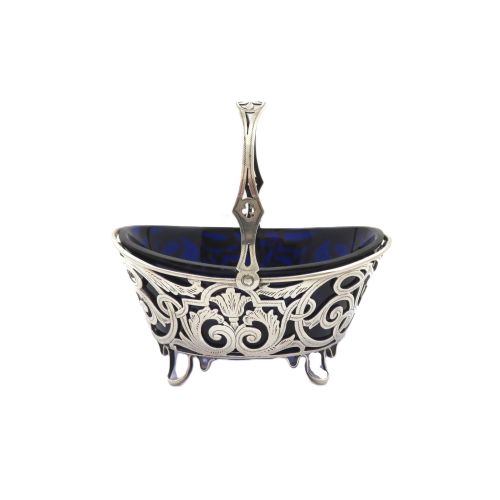
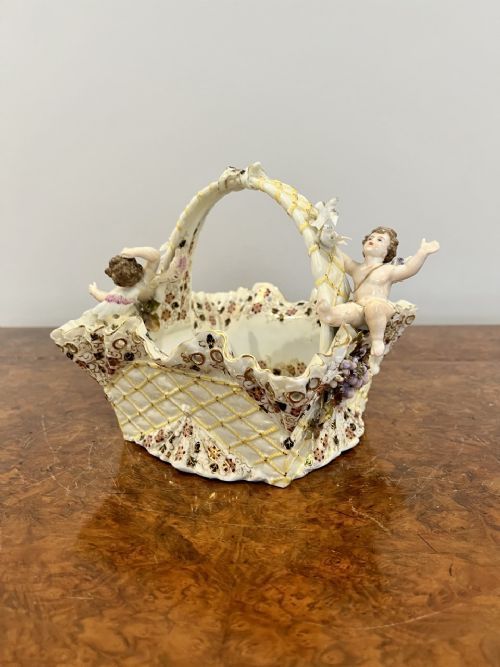
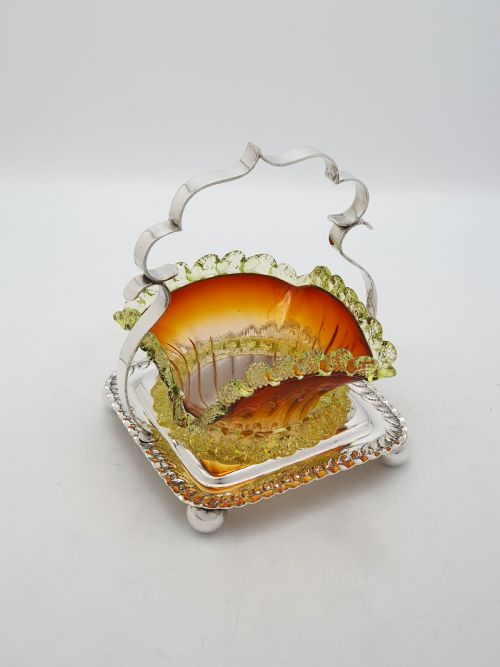
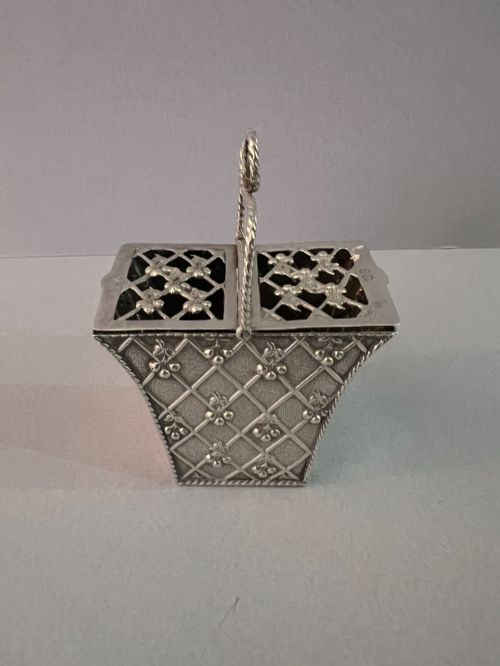
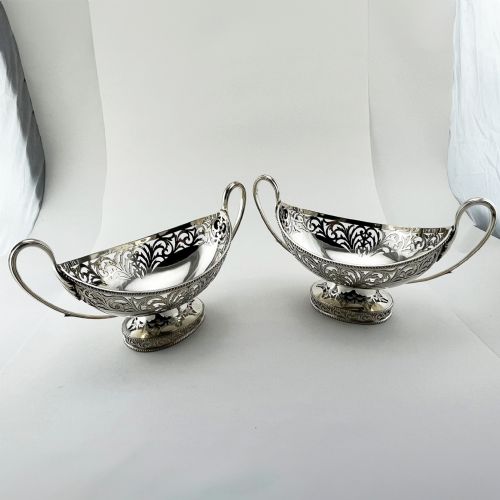
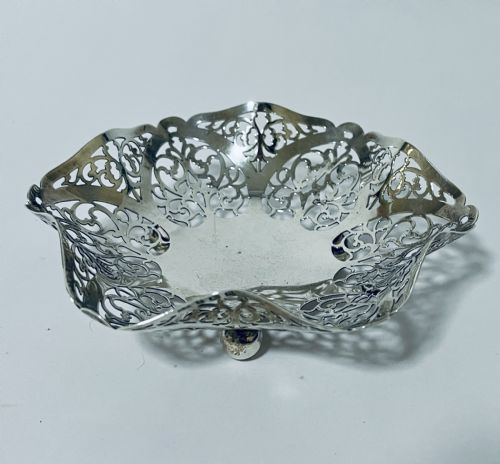
A victorian sweetmeat dish takes the form of a small silver basket, an open bowl, a glass tazza, or a porcelain figure group designed to hold sugar confections and delicacies. These pieces emerge predominantly from Victorian workshops, spanning sterling silver, silver plate, cut crystal, and coloured glass.
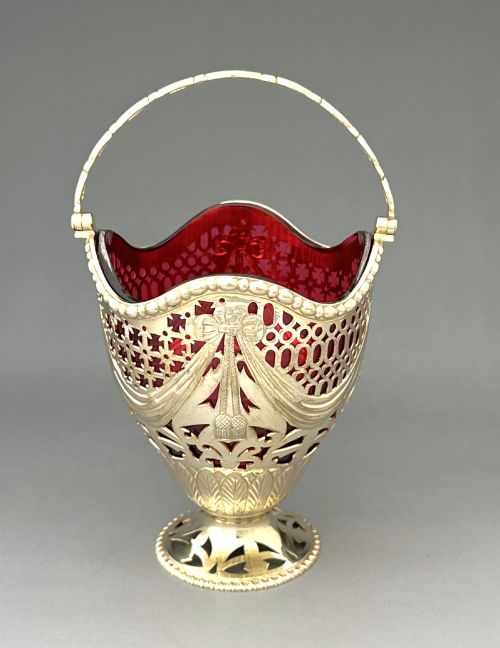
Buyers most frequently encounter footed silver baskets featuring pierced decoration or swing handles alongside glass liners in cranberry, amber, or cobalt. Formats range from simple twin pairs made in Birmingham and Sheffield to elaborate continental porcelain figures and moulded crystal vessels.
Materials and Techniques
Silversmiths constructed these dishes through piercing, embossing, and casting, often pairing solid sterling silver or silver plate with contrasting coloured glass liners. Handles and rims frequently display chased floral motifs or reeded details executed by identifiable makers.
Glassmakers utilised moulding, honeycomb cutting, and applied cane decoration to produce tazzas, jars, and bowls. Porcelain examples involve intricate hand-painted glazes, figural modelling, and gilding characteristic of English and continental factories.
Victorian Sweetmeat Dish Retail Price Guide 2026
Typical asking prices for victorian sweetmeat dish among the pieces listed under this phrase on Sellingantiques today, from the lower quarter to the upper quarter. They describe what is for sale here now, not the wider market.
Listings feature sterling silver, silver plate, porcelain, and multiple variants of coloured glass including cranberry, amber, and cobalt.
Standards of Execution
Quality rests upon the crispness of the pierced metalwork, the weight of the silver or glass, and the retention of original matching liners. Pieces displaying sharp cast floral handles and clear silversmith hallmarks demonstrate superior manufacturing standards.
The finesse of the glass blowing, the depth of the cut crystal faceting, and the hand-painted detail on porcelain figures distinguish finer examples from standard production items.
Mitchell Bosley Co Birmingham·Thomas Bradbury·Volkstedt Porcelain·Baccarat France·William Comyns London·James Deakin Sons Sheffield·Martin Hall·Roberts and Belk·George Fox·Minton
The Victorian Sweetmeat Dish Glossary
- Sweetmeat
- A small confection, sweet, or fruit preserve served at the conclusion of a meal. Dishes specifically designed for these delicacies often feature shallow bowls or baskets.
- Tazza
- A shallow saucer-like dish mounted on a stem and foot. These items elevate confections or fruit above the surface of the table.
- Latticinio
- A type of glasswork incorporating opaque white or coloured glass threads twisted within a clear glass matrix. It frequently appears in nineteenth-century decorative bowls.
- Pierced
- Metalwork perforated with decorative patterns such as lattices, scrolls, or geometric shapes. This technique lightens the visual weight of silver baskets and serving dishes.
- Silver Gilt
- Silver that has been coated with a thin layer of gold on its surface. This finish provides a warm golden tone to the interior of bowls and baskets.
Victorian Sweetmeat Dish: Frequently Asked Questions
What were sweetmeat dishes used for?
These dishes held small sweet confections, dried fruits, nuts, and sugar plums served during formal dining or tea service.
Hosts placed them across the table so guests could help themselves to the sweet delicacies between courses.
How do I identify a Victorian piece?
Examine the object for British silver hallmarks indicating specific assay offices and date letters corresponding to the nineteenth century.
Stylistic cues such as Rococo Revival scrolls or Aesthetic Movement motifs also point directly to this period.
Are glass liners original?
Original glass liners fit snugly into the metal baskets and match the exact contours of the pierced openings.
Replacements often sit unevenly or show differences in glass colour and thickness compared to standard Victorian production.
How should I clean silver baskets?
Use a soft microfibre cloth and mild soapy water to remove dust from pierced silver and embossed detailing.
Avoid abrasive polishes that wear away thin silver plating or damage delicate gilding on the interior surfaces.