
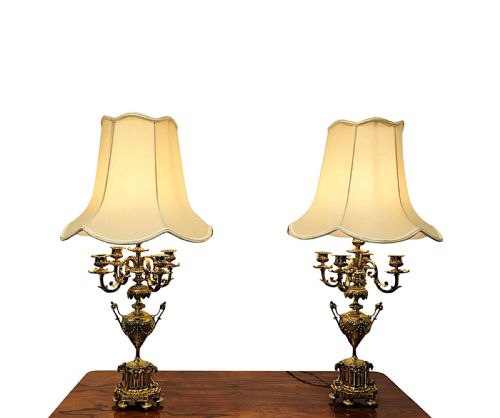


Victorian Style Brass Lamp
When you search for a victorian style brass lamp, you find cast metal lighting built for nineteenth-century interiors, bringing heavy metalwork and period forms into modern rooms.
Victorian Style Brass Lamp
A victorian style brass lamp selection on this page centres on heavy metal table lighting, standard lamps, and oil lamps adapted from earlier periods.
The objects stem predominantly from the nineteenth century, with Victorian pieces joined by Edwardian and early twentieth-century examples running into the nineteen-thirties.
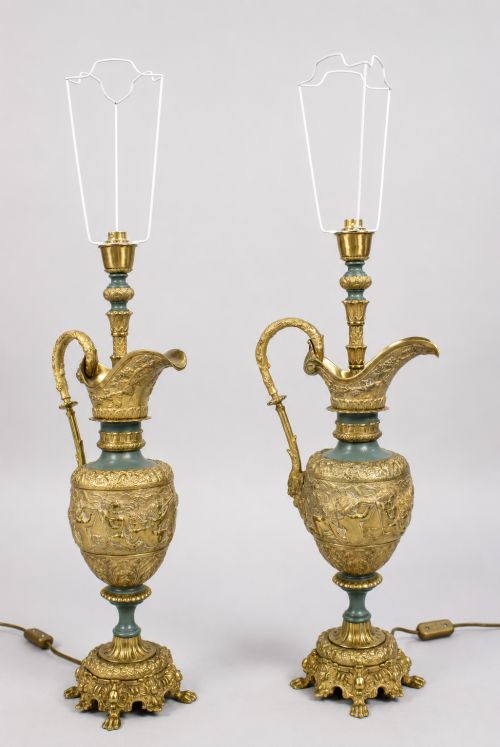
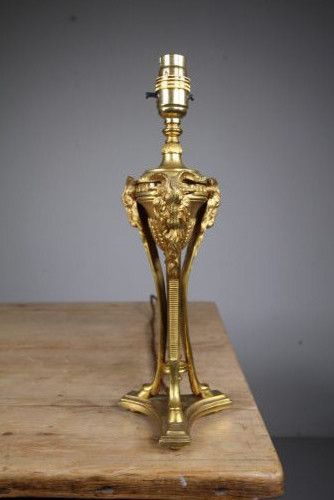
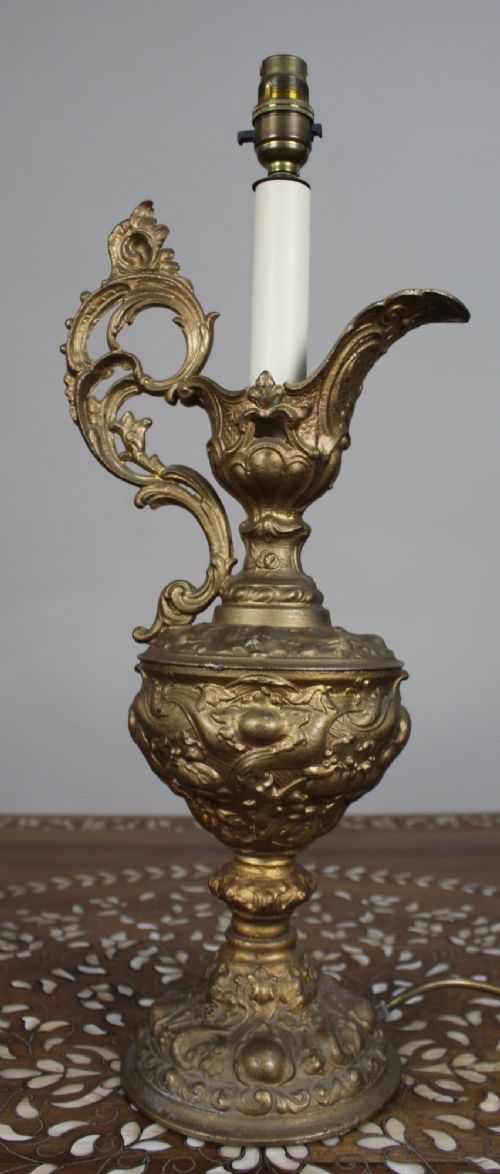
Makers drew on Neoclassical, Gothic Revival, and Rococo Revival styles, creating columnar designs, ewer-shaped bodies, and converted candlesticks.
Gradations in manufacture
Quality rests on the crispness of the casting and the depth of the chasing, distinguishing sharp architectural detail from softer, mass-produced metalwork.
The weight of the brass or bronze and the integrity of the original mounts mark the distinction between standard utilitarian pieces and finer decorative objects.
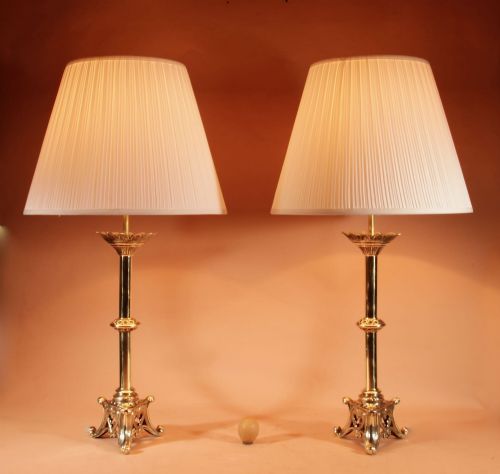
Several heavy table lamps began life as church candlesticks before finding a second career holding light bulbs instead of wax.
The Victorian Style Brass Lamp Glossary
- Corinthian column
- A classical architectural column form featuring ornate acanthus-leaf capitals, frequently utilised for tall nineteenth-century table lamps.
- Ormolu
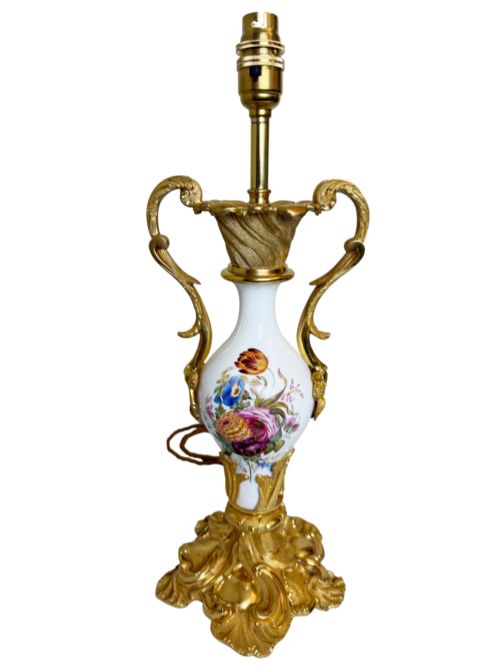
- Gilt bronze produced by applying a finely ground high-carat gold mercury amalgam to a bronze base, creating a rich golden surface.
- Champlevé
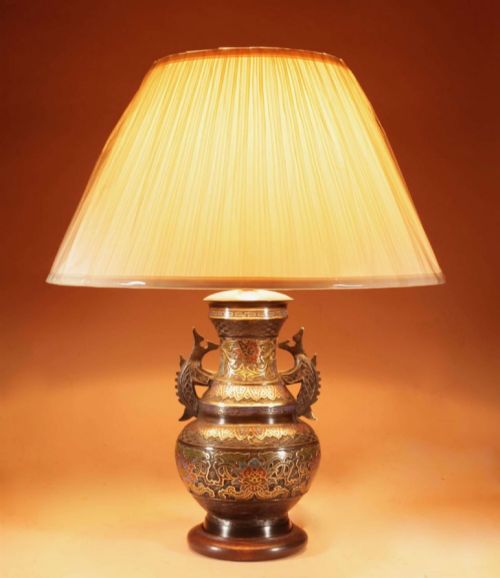
- An enamelling technique where troughs are dug into the metal surface and filled with vitreous enamel before firing.
- Ewer
- A large jug with a wide spout, often adapted in metalwork to form the body of a decorative table lamp.
- Opaline glass
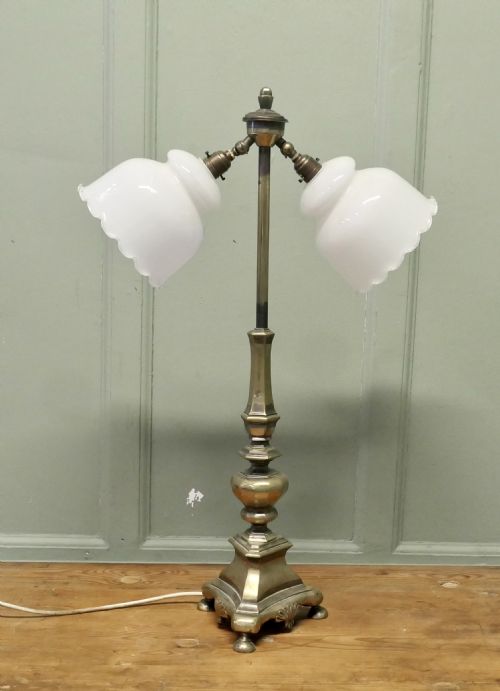
- A pale, translucent glass popular in nineteenth-century lighting for softening and diffusing the glow from oil burners or early bulbs.
Victorian Style Brass Lamp: Frequently Asked Questions
What is a victorian style brass lamp?
These pieces comprise cast metal lighting fixtures produced during the nineteenth and early twentieth centuries, or manufactured later in historical revival styles.
They encompass heavy table lamps, floor standards, and converted oil lamps that utilise classical column designs or Gothic Revival motifs.
How were old oil lamps converted?
Period oil lamps were adapted for electricity by running internal wiring through the original burner mechanism and font.
This process preserves the heavy brass or porcelain body while allowing the fitting of modern lamp holders and shades.
Where should I place a heavy brass lamp?
These substantial metal pieces suit heavy wooden sideboards, entrance hall tables, or dedicated reading corners where their weight anchors the room.
Their classical proportions work well against dark panelling or traditional architectural backgrounds.
How do I identify a nineteenth-century standard?
Look for heavy sand-cast metal construction, patination that shows age on the brass surfaces, and traditional assembly using threaded rods and screws.
Period pieces often display maker stamps or registration numbers hidden beneath the base plate.