


Traditional Brass Task Lighting
Traditional brass task lighting brings focused illumination and period character to a desk, using adjustable forms from the early twentieth century.
Traditional Brass Task Lighting
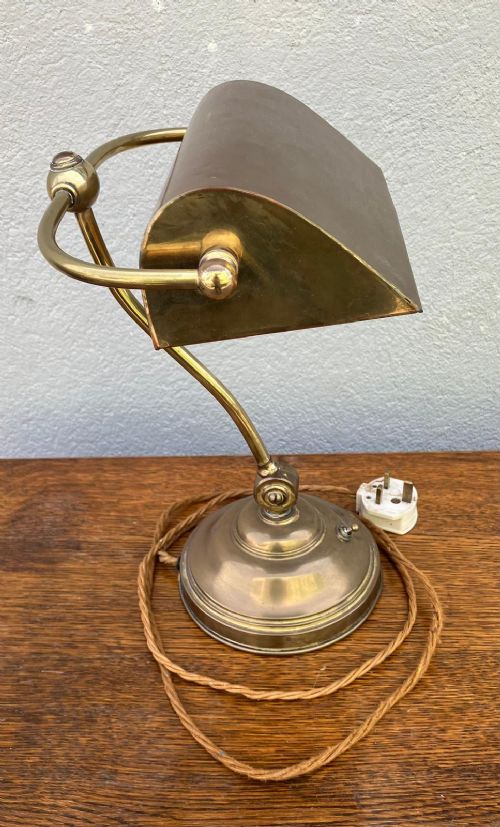
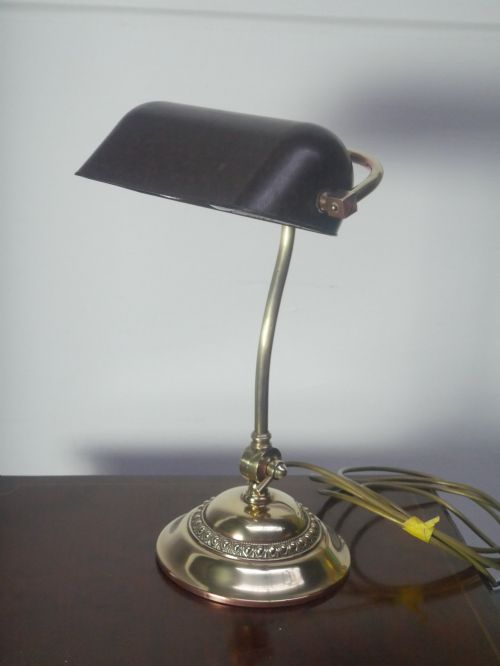
Traditional brass task lighting encompasses practical desk lamps and adjustable table lamps designed for working spaces. These pieces span the Edwardian period, the 1920s, and the 1930s, alongside late nineteenth-century examples.
Buyers encounter classic bankers desk lamps with distinctive shades, swan neck profiles, and bouillotte forms featuring multiple branches. The selection relies heavily on solid brass construction paired with occasional fabric, glass, or toleware elements.
The aesthetic bridges utilitarian workshop designs and refined period styles including Art Nouveau, French Empire, and traditional English motifs. Such desk lamps and table lamps serve both functional workspace roles and decorative interior focal points.
How they were made
Construction relies primarily on solid brass, sometimes cast with ornamental or ormolu details, creating robust frames designed for daily adjustment. Metalworking techniques of the Edwardian era and the 1920s utilised heavy casting and articulated joints to achieve movable arms.
Shades incorporate contrasting materials such as glass, etched glass, fabric, and painted toleware to direct illumination downward onto work surfaces. Bronze also appears in foundational components, adding weight and stability to adjustable notary and bankers lamp designs.
Materials recorded across these desk and table lamps include brass, bronze, ormolu, glass, etched glass, fabric, and toleware.
What varies in quality
Quality rests in the weight of the solid brass and the precision of the adjustable joints, where superior examples maintain firm positioning over time. Finer pieces demonstrate careful finishing in their casting and metalwork, whereas lesser versions rely on lighter gauges of metal.
Material combinations elevate certain objects, such as the inclusion of etched glass or refined ormolu mounts on French Empire and Art Nouveau bouillotte lamps. The integration of authentic period shades, whether glass or tole, distinguishes standard utilitarian output from superior examples.
The Traditional Brass Task Lighting Glossary
- Swan neck
- A curved upper arm on a desk lamp that allows the shade to angle downward for targeted illumination. This profile is frequently seen in Edwardian and 1930s designs.
- Bouillotte lamp
- A traditional table lamp featuring multiple candle arms or light branches rising from a central saucer base, often paired with an adjustable shade. These French-influenced pieces date across the nineteenth and early twentieth centuries.
- Ormolu
- Gilt bronze ornamentation applied to decorative mounts and fittings on fine period lighting. It adds a polished golden tone to nineteenth-century examples.
- Toleware
- Painted or lacquered sheet metal utilised for lamp shades. It provides a durable coloured surface popular in traditional desk lighting.
Traditional Brass Task Lighting: Frequently Asked Questions
What is a bankers desk lamp?
A bankers desk lamp is an adjustable task light featuring a heavy brass base and a distinctive shade designed to reduce glare during paperwork.
These pieces emerged during the early twentieth century and remain popular for study spaces.
How do I adjust a swan neck lamp?
A swan neck lamp uses a curved metal arm that pivots or bends to direct light precisely where needed across a desk.
The mechanics rely on solid brass joints that hold their position through friction or tightening screws.
Where were bouillotte lamps used?
Bouillotte lamps originally provided light for card games on small French tables before transitioning into general desk and table lighting.
They typically feature a central shaft with multiple branches beneath an adjustable shade.
How do I care for antique brass?
Antique brass requires gentle cleaning with a soft cloth to preserve the natural patina accumulated over the decades.
Avoid abrasive polishes that strip away the historical surface character of Edwardian and nineteenth-century pieces.