




Large Brass Column Lamp
A large brass column lamp brings architectural dignity and warm illumination to a room, standing out as a substantial focal point on a sideboard or desk.
Large Brass Column Lamp
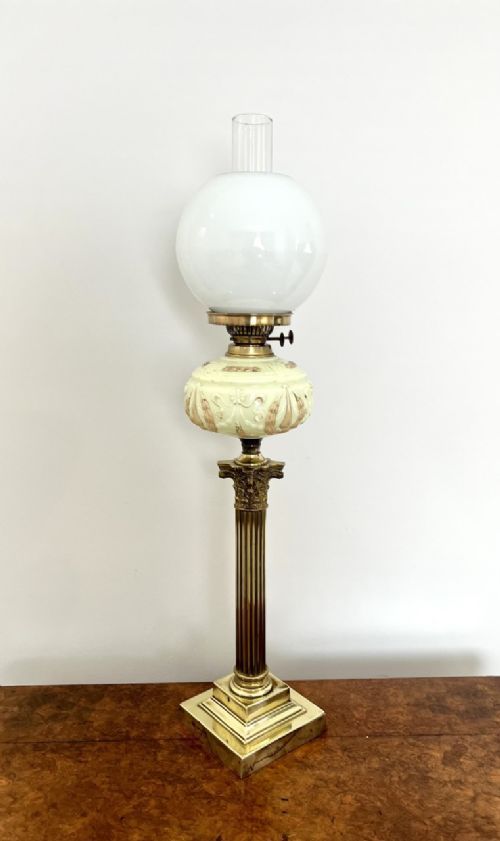
A large brass column lamp takes the form of a substantial vertical shaft, frequently topped with a classical Corinthian capital and supported on a stepped or square base. When searching for a large brass column lamp, collectors encounter variations spanning the Regency, William IV, Victorian, and Edwardian periods.
The form originates from architectural orders and ecclesiastical metalwork, translating stone columns into cast brass, gilt bronze, and ormolu. Table lamps and floor-standing standard lamps predominate, often adapted from earlier oil-burning fixtures or designed originally for electricity.
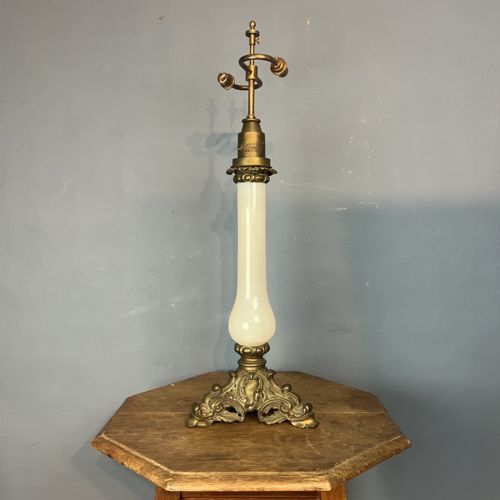
Victorian examples dominate the selection, frequently combining polished or lacquered brass with contrasting elements of opaline glass, ceramic, or faux lapis lazuli columns. The presence of burner mechanisms like the Hinks Duplex or patent stamps indicates a history rooted in domestic lighting evolution.
How they were made
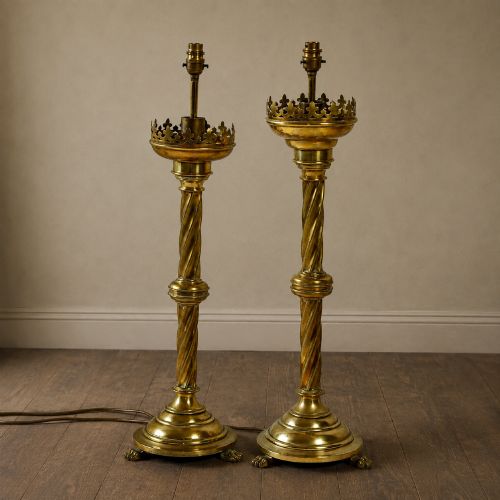
Foundry work relied on sand casting or lost-wax techniques to produce heavy brass, gilt bronze, and ormolu components with sharp acanthus leaves and fluted shafts. Sections were turned on lathes and assembled with threaded rods, securing heavy square bases beneath towering columns.
Makers integrated decorative inserts of coloured glass, including amber twist glass, green opaline, and painted ceramic panels, held firmly within the metal framework. Surface finishes varied from lacquered or fire-gilt brightness to patinated bronzed treatments designed to mellow over time.
Some towering standards spent decades shedding whale oil before swapping wicks for copper wire.
What varies in quality
The weight and crispness of the casting set apart the finer pieces, where Corinthian capitals display deeply undercut volutes and sharply defined acanthus foliage rather than soft, commercial moulding. Solid brass and heavy gilt bronze constructions command greater presence than thinner pressed sheet metal alternatives.
Proportion governs visual success, separating masterwork standard lamps and table pieces from utilitarian lighting. The integration of high-grade materials like opaline glass bodies, faux lapis lazuli, or signed burner mechanisms elevates an ordinary column into an exceptional decorative object.
Messenger and Co·Mc Gary
The Large Brass Column Lamp Glossary
- Corinthian capital
- The ornate top section of a column featuring carved acanthus leaves and scroll-like volutes. This motif is frequently cast in brass to crown the main shaft of the lamp.
- Opaline glass
- A semi-opaque, milky glass often coloured in white, green, or pink and utilised for the central column body. It diffuses light softly and provides a strong textural contrast to polished brass.
- Ormolu
- Finely chopped gold applied to a bronze base through a mercury amalgamation process, or later simulated by bright gilt brass. It yields a rich, warm metallic lustre characteristic of Regency and Victorian luxury pieces.
- Duplex burner
- A twin-wick mechanism developed in the nineteenth century to increase the brightness of oil lamps. Examples bearing maker stamps like Hinks indicate high-specification utilitarian origins prior to electrical conversion.
- Gilt bronze
- An alloy of copper and tin coated in gold, offering exceptional durability and deep tonal resonance for neoclassical column shafts. It holds intricate chased detail far longer than standard plated metals.
Large Brass Column Lamp: Frequently Asked Questions
Were these always electric lamps?
Most antique column lamps began life as domestic oil-burning fixtures, utilising reservoirs and complex burner systems like the duplex before later conversion to electricity.
Collectors often find traces of this functional past in threaded collars, burner galleries, and internal wick channels retained within the brass column.
How do I date a brass column lamp?
Dating relies upon stylistic clues, such as the heavy stepped square bases and gilt bronze surfaces of the William IV period versus the slender turned columns of Edwardian examples.
Patent stamps, maker names on burner knobs, and the specific composition of opaline glass inserts also help narrow down the decade of manufacture.
What is the difference between brass and ormolu?
Brass is an alloy composed primarily of copper and zinc, valued for its bright golden appearance and strength when cast into substantial architectural columns.
Ormolu specifically denotes a gilded bronze base metal, presenting a heavier feel and a richer, more uniform golden surface finish typical of high-end Regency and Victorian decorative arts.
Can I use standard lamp shades with them?
These tall, weighty bases accommodate a wide range of fabric or glass shades, provided the harp or shade carrier matches the original burner or wiring fitting.
Due to the considerable height and visual weight of a column lamp, selecting a shade with appropriate scale prevents the top-heavy appearance common with undersized coverings.