


Victorian Stoneware Water Pitcher
These robust victorian stoneware water pitcher examples bring practical utility and varied decorative surface treatments straight from the nineteenth century into daily service.
Victorian Stoneware Water Pitcher
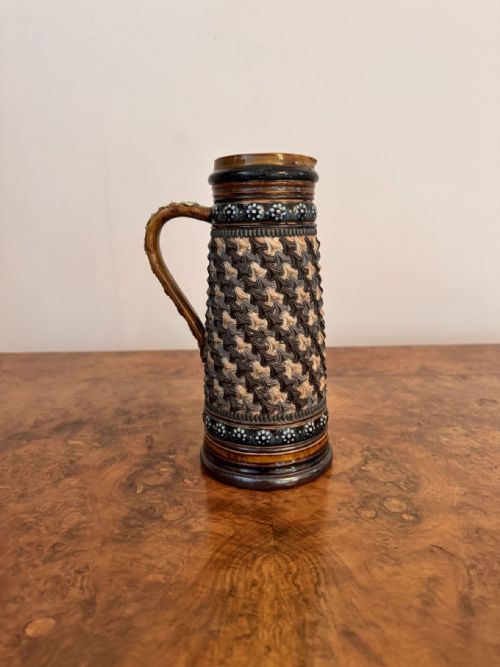
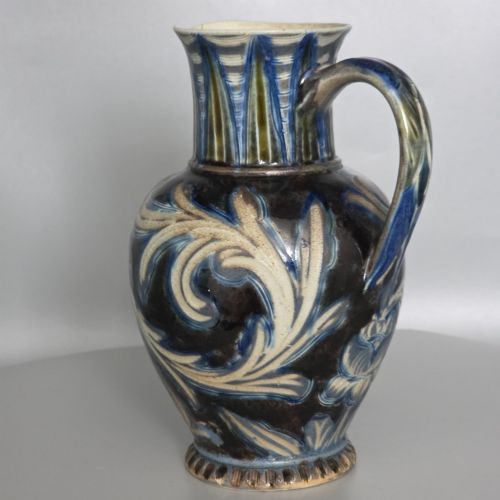
A victorian stoneware water pitcher serves as a sturdy vessel designed originally for holding and pouring water at the table. You will frequently encounter robust ceramic forms displaying salt glaze surfaces, relief moulding, or intricate incised decoration.
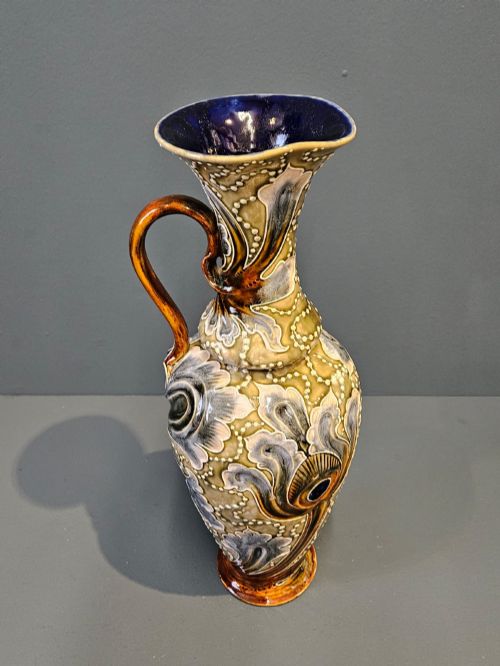
The pieces on this page span several decades of the nineteenth century, including notable examples from the eighteen-eighties and eighteen-nineties. Forms range from large exhibition jugs to practical water ewers and hotel ice water vessels.
Makers and potteries utilised distinct decorative vocabularies, moving from classical revival motifs and harvest scenes towards Arts and Crafts and Art Nouveau designs. Collectors find jugs catalogued under various historical object types, including water jugs, decorative ewers, and pitchers.
Materials and Techniques
Potters shaped these heavy vessels primarily from dense stoneware and ceramic bodies, frequently applying salt glaze treatments during firing to produce characteristic textured finishes. Certain makers also employed parian ware, earthenware, and ironstone to achieve different surface textures and colour tones.
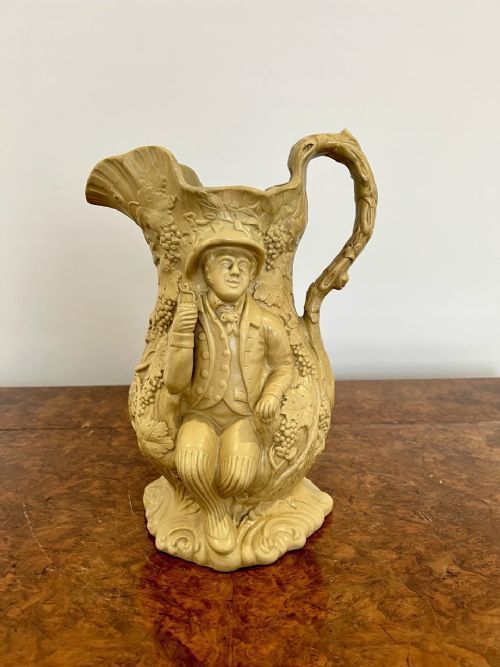
Relief moulding techniques allowed workshops to press intricate figural scenes, such as bacchanalian dances or harvest motifs, directly into the damp clay before firing. Other pieces display hand-incised patterns, applied cream sprigs, or specialised glaze applications including buff-coloured and blue and white finishes.
Hotel guests in the nineteenth century apparently required ice water served from pottery jugs stout enough to survive heavy luggage.
Judging Quality and Execution
Quality in a victorian stoneware water pitcher depends on the crispness of the relief moulding and the control evident in the glaze application. Sharply defined details on figural scenes and botanical motifs indicate superior handling by skilled modellers.
The reputation of the producing pottery and the presence of clear factory stamps or artist signatures elevate certain pieces above standard utilitarian ware. Balance in the handle, stability of the base, and evenness of the salt glaze further distinguish the finest examples.
Doulton Lambeth·Emma Shute·Ridgway and Sons·Charles Meigh·Jones and Walley·Mason·Dr Christopher Dresser·Minton·Royal Doulton·Copeland Spode
The Victorian Stoneware Water Pitcher Glossary
- Stoneware
- A heavy, dense type of pottery fired at high temperatures until vitrified, making it impermeable to liquids without requiring a traditional glaze. This durable material formed the foundation of many nineteenth-century utility jugs.
- Salt Glaze
- A glossy, slightly textured finish achieved by throwing common salt into the kiln during the high-temperature firing process. It produces a distinctive orange-peel texture on the ceramic surface.
- Relief Moulded
- A technique where decorative patterns and figures stand out in low relief from the background of the vessel. Moulds pressed these designs directly into the clay body during production.
- Parian Ware
- A fine-grained, unglazed porcelain biscuit developed in the nineteenth century to imitate white marble. It was frequently used for classical and decorative jugs.
- Sprigged
- A decorative method where separately moulded clay motifs are applied by hand to the surface of an unfired vessel using slip as an adhesive. These raised ornaments often appear in a contrasting colour.
Victorian Stoneware Water Pitcher: Frequently Asked Questions
What are victorian stoneware water pitchers?
These pieces are heavy ceramic vessels produced during the nineteenth century to hold and pour water at the table. They were made in various sizes, ranging from small table jugs to large exhibition pieces and hotel pitchers.
Potters shaped them using dense stoneware, earthenware, or parian ware, often decorating the surfaces with salt glazes, relief moulding, or hand-incised patterns.
How were these water pitchers used?
Households used them primarily for serving fresh water during meals or washing up in bedrooms before indoor plumbing became universal. Larger examples functioned as exhibition showpieces or heavy-duty hotel water servers.
Over time, many transitioned from purely utilitarian kitchen items into decorative mantelpiece or sideboard ornaments.
How do I date a victorian water jug?
Dating relies on stylistic clues, factory marks, and registration numbers stamped or impressed into the ceramic body. Pieces from the earlier nineteenth century often feature classical revival or relief-moulded harvest scenes.
Later Victorian examples from the eighteen-eighties and nineties commonly display Arts and Crafts, aesthetic, or Art Nouveau decorative tendencies.
How do I live with antique stoneware?
Stoneware and ironstone jugs are remarkably durable and tolerate everyday display well. Place them on sturdy sideboards or tables where their heavy bases remain stable.
Wash them gently by hand with warm water when needed, avoiding harsh scrubbing that might damage antique salt glazes or applied sprigged ornaments.