



Victorian Stone Carvings
Victorian stone carvings bring classical elegance and tactile weight into a room, offering everything from quiet alabaster figures to striking architectural capitals.
Victorian Stone Carvings
These Victorian stone carvings encompass a diverse range of decorative objects, sculptures, bookends, and architectural salvage shaped during the nineteenth century. Buyers seeking victorian stone carvings encounter works spanning from the middle decades up to the turn of the twentieth century, reflecting varied international influences.
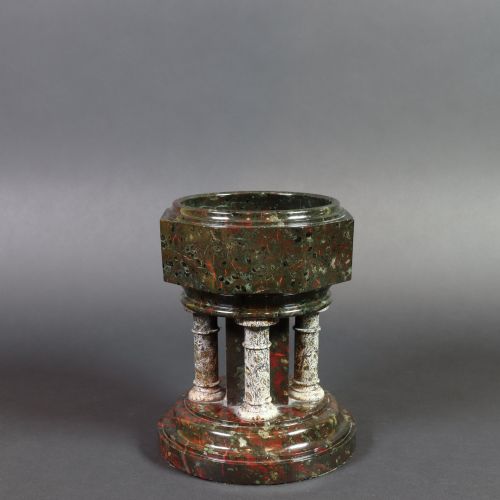
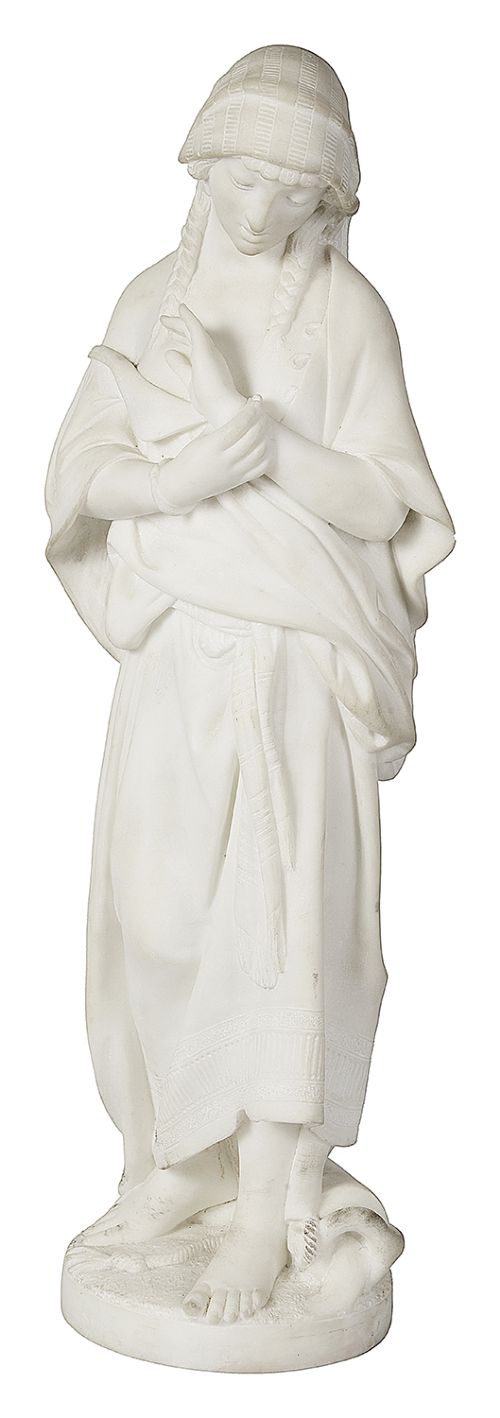
The selection on this page ranges from Italian alabaster figures and Carrara marble statues to Cornish serpentine models and Welsh slate plaques. Domestic interiors and grand studies alike accommodated these substantial pieces, which served as ornamental focal points or functional items such as bookends and tazzas.
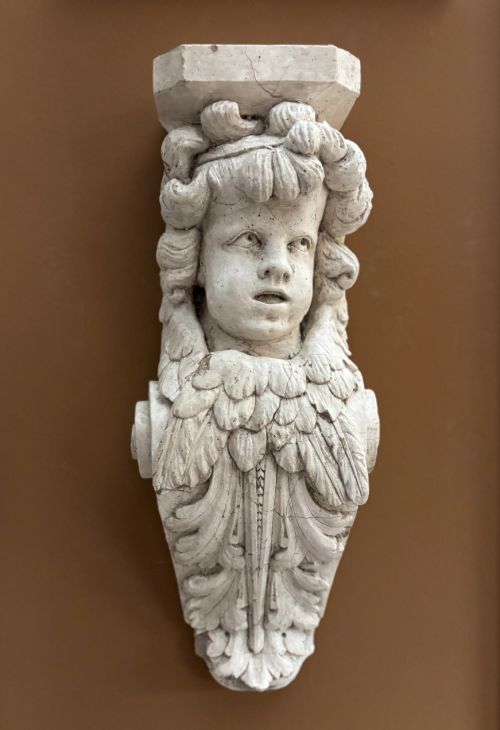
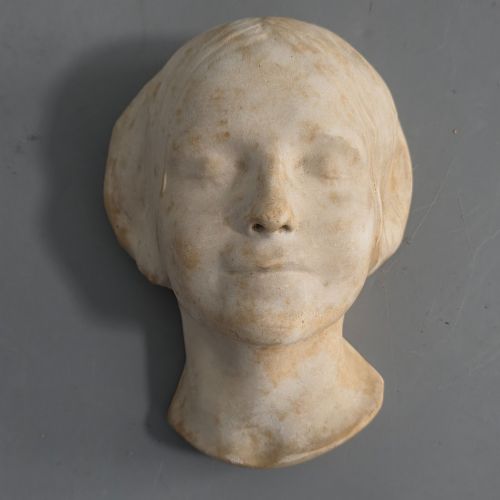
Continental ateliers supplied many figurative subjects, including classical reliefs, children with puppies, and death masks, alongside Oriental jade marble and soapstone carvings. Architectural capitals and Grand Tour souvenirs represent the structural and travel-inspired facets of the period's output.
Materials and Techniques
Sculptors and masons utilised a variety of soft and hard stones, most notably alabaster, white marble, veined Carrara marble, slate, soapstone, and Cornish serpentine stone. These materials demanded precise hand-carving and chiselling techniques to achieve smooth surfaces, intricate drapery, and detailed facial expressions.
Larger figurative groups and architectural elements often required assembly from multiple pieces or extraction from dense mineral blocks. Artisans applied polish, relief carving, and incised detailing to enhance the natural grain and colour variations inherent in each type of stone.
Victorian Stone Carvings Retail Price Guide 2026
Typical asking prices for victorian stone carvings among the pieces listed under this phrase on Sellingantiques today, from the lower quarter to the upper quarter. They describe what is for sale here now, not the wider market.
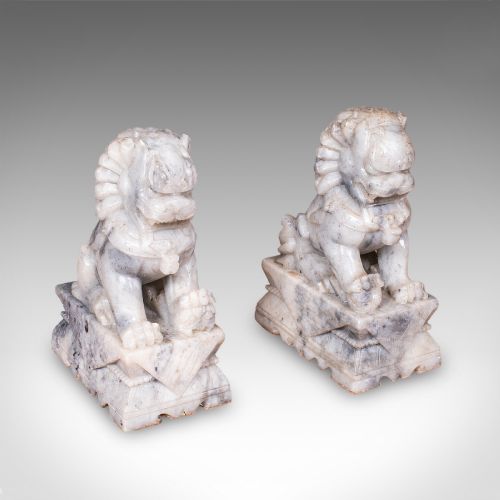
Victorian dog bookends carved from Chinese soapstone prove that dogs of fo make surprisingly stern librarians.
Judgements of Quality
Quality in these carvings rests upon the sensitivity of the hand-carving, particularly in the rendering of anatomical details, drapery folds, and facial expressions. Master carvers achieved a lifelike softness in alabaster and marble that lesser workshops missed, transforming rigid stone into fluid drapery and expressive forms.
The choice of material and the sophistication of the composition also separate standard decorative items from exceptional works of art. Signed pieces by established sculptors or documented Italian schools demonstrate a higher tier of craftsmanship and artistic ambition.
P E Fiaschi·Barranti Florence·Bright And Sons·Eduardo Giolli·Joseph Gott
The Victorian Stone Carvings Glossary
- Alabaster
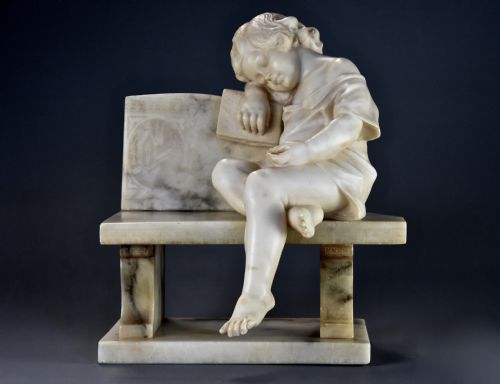
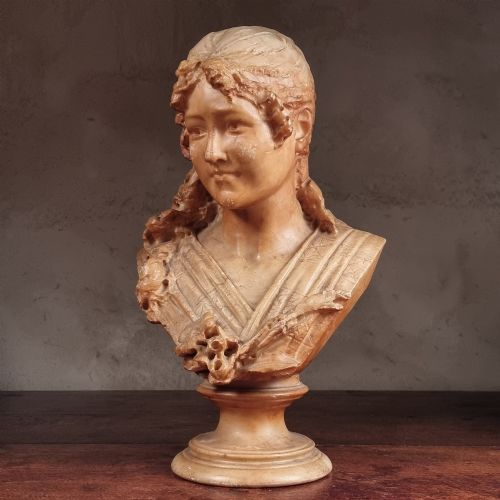
- A fine-grained, translucent stone that is soft enough to carve with delicate detail. Sculptors frequently utilised it for nineteenth-century figurative busts and sleeping children.
- Carrara Marble
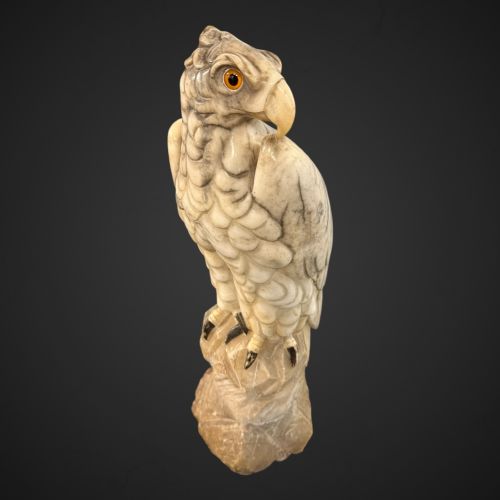
- A type of white or blue-grey marble quarried in the city of Carrara in Tuscany, Italy. It served as the primary material for classical statues and eagle sculptures.
- Cornish Serpentine
- A dark green, mottled rock quarried in Cornwall and turned on a lathe to create decorative models. Victorian craftsmen polished it to resemble exotic jade.
- Architectural Capital
- The topmost member of a column, carved to distribute loads and provide decoration. Nineteenth-century examples often appear as salvaged decorative fragments.
- Grand Tour
- A cultural trip undertaken by wealthy young Europeans to study classical antiquities. Tourists acquired miniature stone sarcophagi and malachite tazzas as souvenirs.
Victorian Stone Carvings: Frequently Asked Questions
What are victorian stone carvings?
These items are sculptural and decorative objects fashioned from materials like alabaster, marble, slate, and serpentine during the nineteenth century. They include figures, reliefs, bookends, and architectural fragments.
Craftsmen across Britain and continental Europe produced them to satisfy Victorian tastes for classical antiquity, naturalism, and domestic ornament.
How were these stone carvings used?
Victorian homes and libraries utilised these pieces primarily as mantel ornaments, cabinet displays, and functional items like bookends or tazzas. Architectural pieces were often incorporated directly into interior masonry or displayed as salvaged fragments.
Grand Tour souvenirs commemorated travels abroad and were displayed in studies and drawing rooms to signal the owner's cultural education.
How do I live with stone carvings?
Placing these heavy objects requires stable surfaces such as sideboards, heavy timber desks, or dedicated plinths capable of supporting substantial weight. Keep them away from direct heat sources and moisture to protect vulnerable stones like alabaster.
Dust them gently with a dry, soft cloth and avoid chemical cleaners that might etch or discolour the polished stone surfaces.
How can I tell periods apart?
Mid-nineteenth-century pieces often lean towards strict classical revivalism and Italian school portraiture, whilst later decades embraced Gothic revival motifs and Orientalist subjects. Examining the depth of the relief carving, tool marks, and signature styles helps narrow down the decade of production.
Documentation, signatures, and specific regional stones like Cornish serpentine or Welsh slate provide further clues to dating and origin.