


Victorian Sterling Silver Mug
A victorian sterling silver mug brings the weight and domestic ritual of the nineteenth century directly to the table.
Victorian Sterling Silver Mug
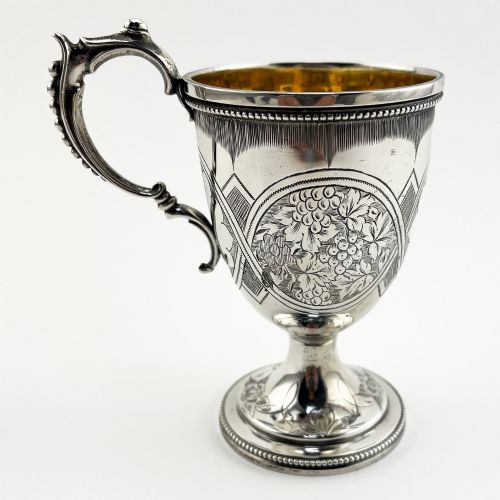
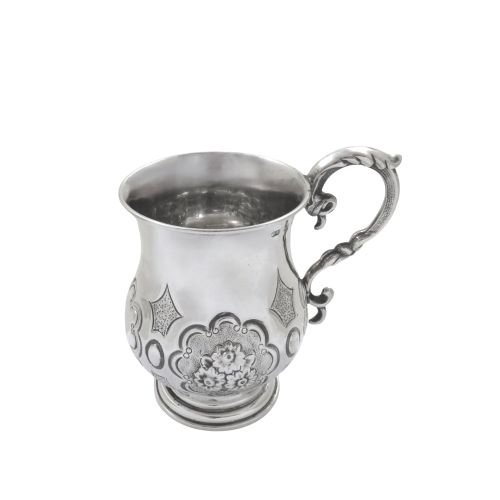
A victorian sterling silver mug encompasses domestic drinking vessels and smaller presentation pieces produced during the nineteenth century. These items frequently appear as christening mugs or small tankards intended to mark childhood milestones or family occasions.
The dominant forms span baluster shapes, octagonal profiles, and straight-sided vessels with applied scroll handles. Many examples record specific mid to late nineteenth-century assay years, aligning with periods of active regional silversmithing in London, Sheffield, Exeter, Newcastle, and further afield.
Beyond standard christening cups, the selection includes decorative novelty designs alongside larger pint tankards suited for everyday use or sporting presentation. Surface treatment shifts from plain polished surfaces to elaborate embossed motifs, floral engraving, and pictorial bird subjects.
How they were made
The primary material across the archive is sterling silver, occasionally augmented by gold gilt interiors or associated presentation cases lined with leather and velvet. Metal was shaped into cylindrical or baluster forms, sometimes utilising heavy gauges of silver that provided structural rigidity and substantial weight.
Decoration relied on manual techniques such as repoussé embossing, churing, and floral engraving to build textured surfaces across the body of the vessel. Applied handles, often styled with rococo scrolls, were soldered to the main body alongside distinct foot rings that stabilized the base.
Certain christening mugs feature charming fables and wildlife scenes, depicting cranes and birds caught mid-action across the silver bowl.
What varies in quality
Quality rests in the gauge of the silver and the crispness of the applied decoration, where heavier metal weight provides a more substantial feel in the hand. Pieces fashioned with thick walls resist denting and retain sharper lines in chased or embossed panels.
The precision of the maker's mark and the clarity of the assay office stamps contribute to the standing of an individual vessel. Well-executed handle attachment and balanced proportions between the rim, body, and foot separate standard production items from finer presentation examples.
Mappin & Webb
The Victorian Sterling Silver Mug Glossary
- Sterling silver
- A silver alloy containing 92.5 percent pure silver by mass, with the remainder composed of copper or other metals. This standard has governed British silver production for centuries.
- Baluster form
- A vertical architectural shape curving outward toward the lower section before tapering to a foot. This profile provides a stable base and a comfortable grip.
- Repoussé
- A metalworking technique where the artisan hammers the design from the reverse side to create a raised pattern in relief on the front. It allows for intricate pictorial scenes on thin metal sheets.
- Assay office
- An official body charged with testing the purity of precious metal items and applying appropriate hallmark stamps. Prominent British offices included London, Sheffield, Exeter, and Newcastle.
- Christening mug
- A small drinking vessel traditionally given as a gift to mark a child's baptism or naming ceremony. These items often feature engraved personal initials or dates alongside decorative motifs.
Victorian Sterling Silver Mug: Frequently Asked Questions
What were victorian sterling silver mugs used for?
These vessels served as functional drinking vessels for ale, water, or milk, as well as formal gifts presented during childhood milestones. Many functioned specifically as christening gifts designed to be kept as lifelong keepsakes.
Larger pint tankards also saw service in clubs and domestic settings for general beverage consumption, while decorated novelty variants leaned toward display rather than daily utility.
How can I tell the date of a mug?
British silver incorporates hallmark stamps that identify the assay office, the specific year letter, and the standard of the metal. Examining these small stamped marks against historical assay tables reveals the exact year of production.
Stylistic cues such as rococo scroll handles or aesthetic movement engraving can also offer a broad timeframe when hallmarks are rubbed or unclear.
How do I care for silver mugs?
Regular handling helps maintain a natural finish, though occasional cleaning with a soft cloth and proprietary silver polish removes tarnish. Avoid abrasive cleaners that can wear away fine engraved lines or thin embossed relief.
Storing pieces away from damp environments prevents rapid re-tarnishing, preserving the contrast between the polished highlights and recessed areas.
Are these mugs safe for drinking?
Sterling silver is non-toxic and historically served as a standard material for tableware and dining vessels. Most vintage pieces remain entirely suitable for holding cold beverages.
Owners should inspect the interior for any historic repairs or residue before use, ensuring the silver surface is clean and free of old solder alterations.