


Victorian Sterling Silver Candlestick
These pieces are a victorian sterling silver candlestick, offering solid silver weight and period ornamentation for a dining table or desk.
Victorian Sterling Silver Candlestick
A victorian sterling silver candlestick is a functional lighting accessory produced during the nineteenth and early twentieth centuries, spanning periods from early Victorian through Edwardian. These objects range from single examples to matched pairs, and extend to related forms such as chambersticks, multi-light candelabra, and table lamps.
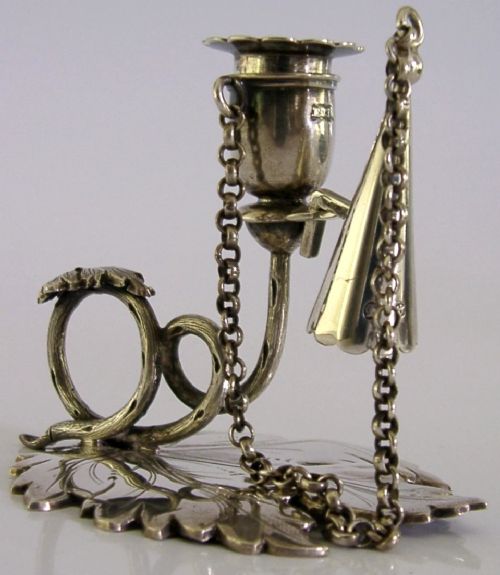
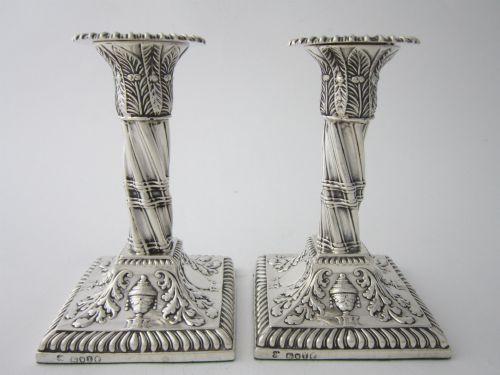
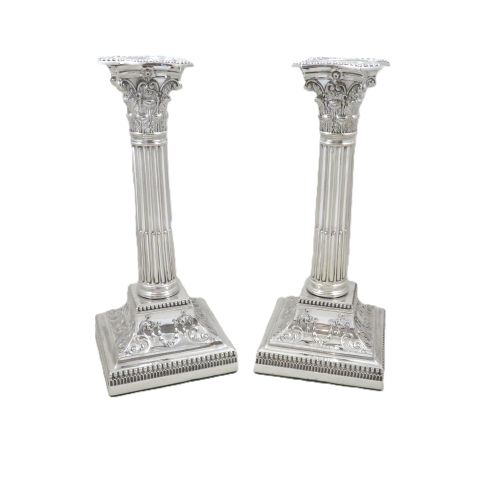
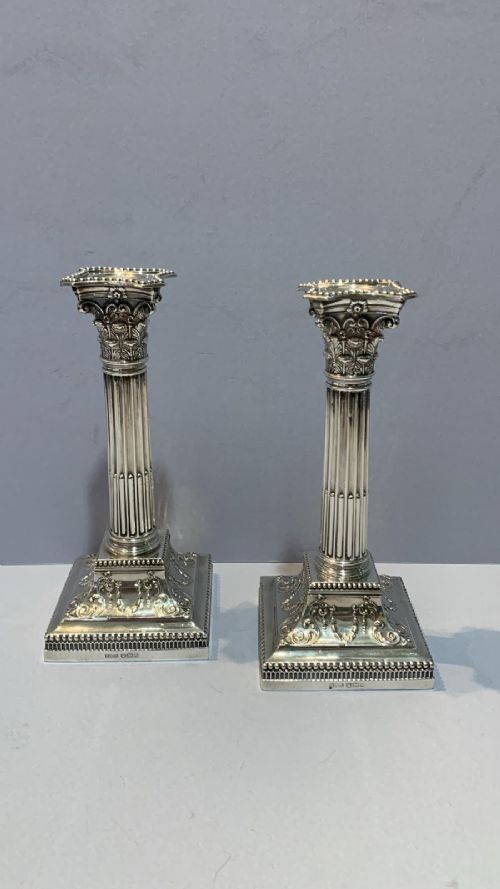
The most common form met on this page is the standard pair of candlesticks, often standing between six and eleven inches tall. Alongside these standard heights, collectors encounter specialised pieces including Corinthian column designs, figural models, and low chambersticks intended for bedroom use.
The aesthetic vocabulary draws upon various revival movements, showing Neoclassical, Rococo, and naturalistic influences applied to the metal. Many carry hallmarks from provincial and capital assay offices, dating the manufacture precisely to decades such as the eighteen-eighties and nineties.
How They Were Made
Makers utilised sterling silver and silver gilt, shaping the metal through casting and hammering techniques to achieve structural rigidity. Many columns and bases relied on weighted interiors to ensure stability while upright.
Decorative elements like rams heads, fluting, and trefoil motifs were often cast separately and soldered or assembled onto the main body. Surface finishes range from bright polished silver to gilt applications that added a rich yellow tone.
Piano candlesticks were built with exceptionally low profiles so musicians could read sheet music without the light blocking their view.
What Varies in Quality
Quality depends heavily on the crispness of the cast detail and the thickness of the silver sheet employed in construction. Pieces with sharp, well-defined Neoclassical fluting or naturalistic foliage represent superior manufacturing standards compared to worn or softly cast examples.
The presence of fully legible hallmarks across the components indicates careful preservation and original matching parts. Additionally, substantial weight and structural integrity without excessive interior filling distinguish finer workshop output from lighter commercial production.
Goldsmiths And Silversmiths Co·William Hutton And Sons·John Le Gallais·Garrard·Martin Hall And Co·Walker And Hall·Carrington And Co
The Victorian Sterling Silver Candlestick Glossary
- Sterling silver
- A silver alloy containing 92.5 percent pure silver by mass, with the remainder composed of copper or other metals to increase durability. This standard is guaranteed by official assay office hallmarks.
- Chamberstick
- A low candleholder fitted with a broad drip pan and a loop handle for carrying through a house at night. These often include a small conical snuffer resting in the tray.
- Candelabra
- A branched candlestick holding multiple candles on separate arms radiating from a central stem. They provide greater illumination than single stick formats.
- Corinthian column
- A classical architectural order featuring an ornate capital decorated with acanthus leaves. This style appeared frequently on Victorian column candlesticks.
- Silver gilt
- Sterling silver that has been coated with a thin layer of gold through a chemical or electrochemical process. This treatment imparts a warm golden sheen to the object.
Victorian Sterling Silver Candlestick: Frequently Asked Questions
How do I date a Victorian candlestick?
Dating relies primarily upon the official hallmarks stamped into the metal by assay offices in cities such as London, Sheffield, or Chester. These marks include date letters that correspond to specific years of manufacture.
Style also provides a general guide, as heavy neoclassical columns tend to appear towards the later decades while early Victorian pieces display different decorative proportions.
Why are silver candlesticks weighted?
Sterling silver is a relatively soft and expensive material, so solid construction throughout an entire candlestick would make the object excessively heavy and costly. To provide balance and stability, makers filled the hollow bases with a denser core material such as resin, plaster, or wood.
This weighted interior prevents the tall stick from tipping over easily when supporting a burning candle.
How should I clean antique silver candlesticks?
Maintenance requires gentle cleaning with a soft cloth and a reputable silver polish formulated to remove tarnish without stripping the underlying metal. Avoid abrasive pads or harsh chemical dips that can damage subtle cast details and erase faint hallmarks.
Regular, light dusting helps prevent heavy tarnish accumulation in the recessed areas of Rococo or naturalistic ornamentation.