
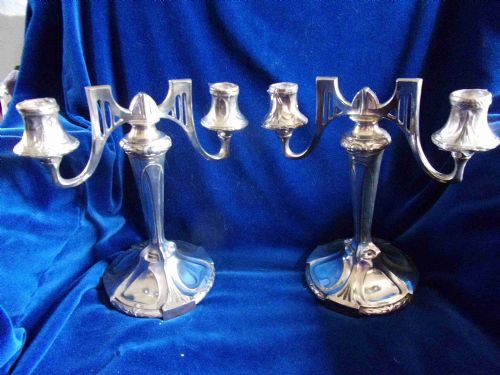


Silver Twin Branch Candlesticks
Silver twin branch candlesticks bring paired light to a dining table or mantelpiece, offering dual nozzles from a single base.
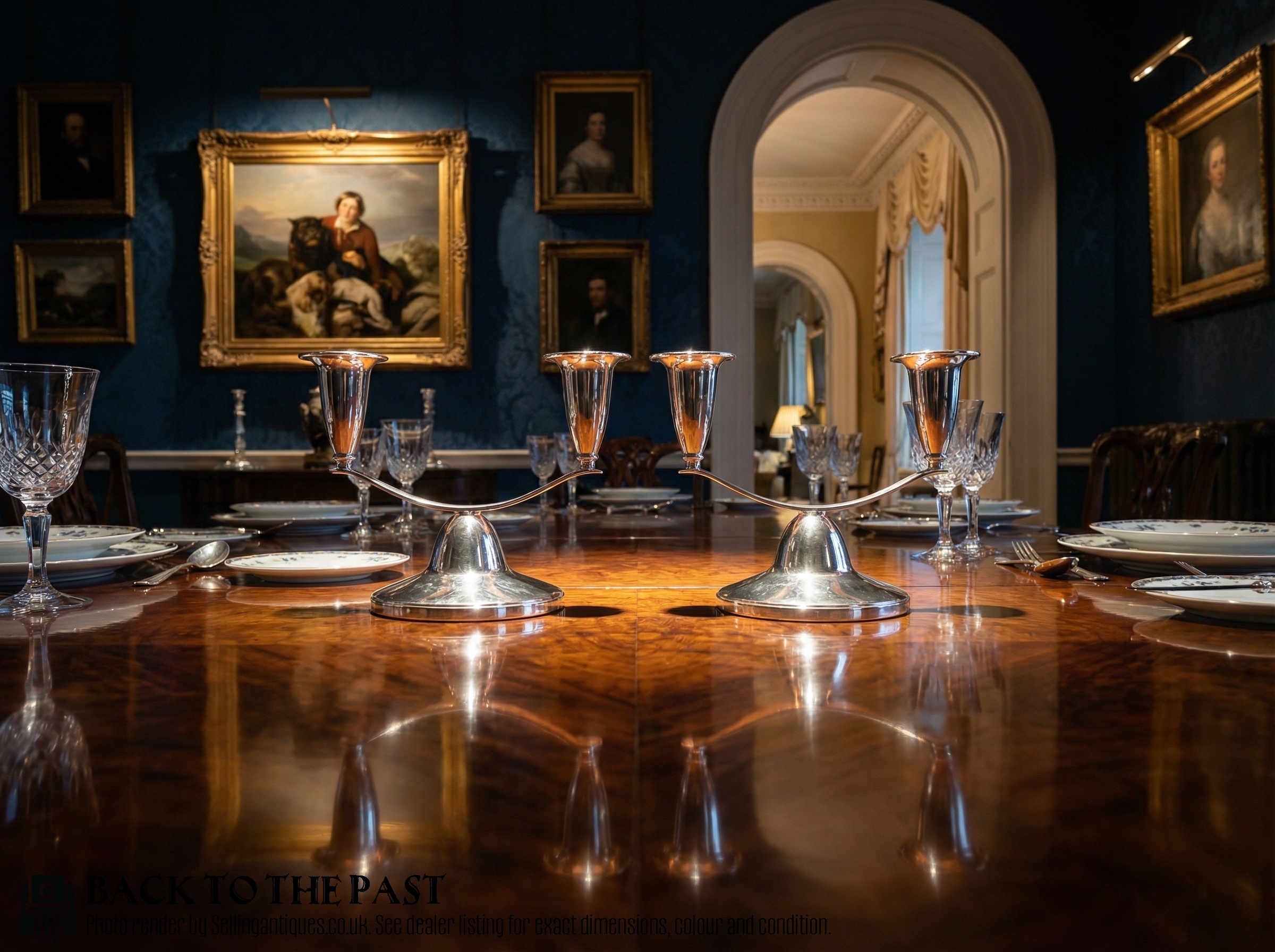
Silver Twin Branch Candlesticks
Silver twin branch candlesticks, also catalogued as two-light or two-arm candelabra, comprise matching pairs designed to hold multiple candles upon each base. These tablewares appear across several distinct periods spanning from the Victorian era through the mid-century modern movement.
The specimens encountered here bridge formal dining accessories and decorative lighting, utilising forms from the Victorian and Edwardian periods alongside later Art Deco and mid-century designs. Buyers commonly encounter silver plated and sterling silver examples, while base metal and nickel silver versions also emerge within the selection.
Materials and construction methods
Construction methods rely upon traditional metalworking techniques, incorporating hand wrought silver alongside electroplated nickel silver and standard silver plate over base metals. Certain pieces utilise alternative structural components such as spelter and onyx to form the figural bodies and decorative plinths.
Manufacturing approaches span commercial factory production by established silversmiths and individual hand-made creation. Surface finishes reflect the period of origin, from polished sterling silver bearing official hallmarks to silver plated and 916 silver compositions.
An Art Deco 'Hollywood' girl stands ready to hold your candles in cast spelter.
Assessing quality in dual-branch lighting
Quality distinctions rest upon the integrity of the materials and the precision of the construction, separating standard commercial wares from superior hand-made pieces. Sterling silver and heavier silver plated items demonstrate greater durability than base metal or spelter alternatives.
The execution of stylistic details - whether the strict geometry of Art Deco or the florid ornamentation of Victorian and Georgian revival pieces - dictates the refinement of the object. Weight, balance, and the crispness of casting or wrought work further distinguish the better examples.
Robert Edgar Stone·Elkington and Company
The Silver Twin Branch Candlesticks Glossary
- Sterling silver
- A silver alloy containing 92.5 percent pure silver by mass, with the remainder typically consisting of copper. This standard appears frequently in hallmarked antique and vintage tablewares.
- Silver plate
- A layer of silver applied to a base metal core such as copper, nickel silver, or brass. This method offered a durable alternative to solid silver.
- Candelabra
- A multi-branched candlestick holder designed to support several candles simultaneously from a single central stem and base.
- Jugendstil
- The continental European manifestation of Art Nouveau, flourishing around the turn of the twentieth century and characterised by flowing organic lines.
- Spelter
- A zinc alloy frequently utilised as a substitute for bronze or brass in decorative figures and bases, often painted or electroplated to resemble other metals.
Silver Twin Branch Candlesticks: Frequently Asked Questions
How do I clean silver plated branches?
Maintenance requires gentle cleaning with a specialised silver cloth to preserve the plated surface without wearing through to the base metal underneath.
Avoid harsh abrasive dips, particularly on antique pieces where the plating may be thin or delicate.
Are these suitable for dining tables?
Twin branch designs provide balanced illumination across a dining surface while maintaining a modest footprint compared to larger multi-light candelabra.
Their height generally permits conversation across the table without obstructing the view of guests.
What is the difference between sterling and plate?
Sterling silver consists of solid precious metal throughout, usually verified by official assay office hallmarks stamped into the metal.
Silver plate comprises a thin coating of silver bonded over a core of base metal, nickel silver, or spelter.
How do I date an Art Deco pair?
Art Deco pieces from the 1930s typically feature geometric motifs, stylised figures, or streamlined forms distinct from earlier Victorian ornamentation.
Materials from this era sometimes include spelter or onyx alongside traditional silver plate.