



Victorian Sterling Scent Bottle
A victorian sterling scent bottle offers a glimpse into personal grooming habits of the nineteenth century, combining precious metal mounts with colourful glass and intricate hinged lids.
Victorian Sterling Scent Bottle
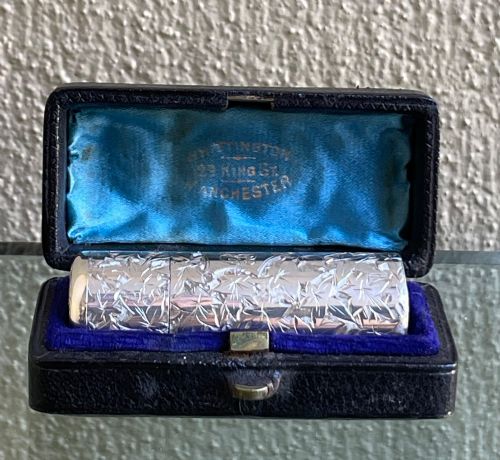
A victorian sterling scent bottle is a small portable container designed to hold liquid perfume or salts for personal use during the nineteenth century. These objects appear in various forms, including double-ended bottles, scent flasks, and vinaigrettes.
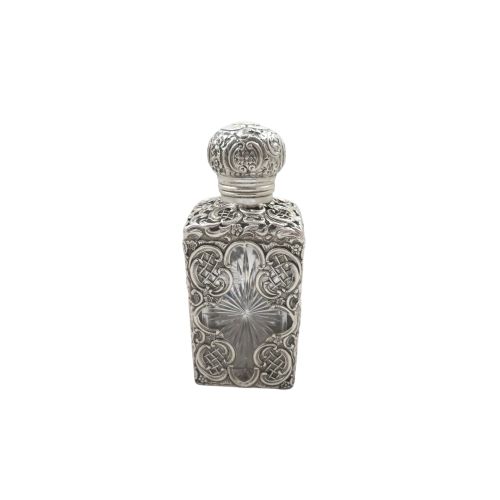
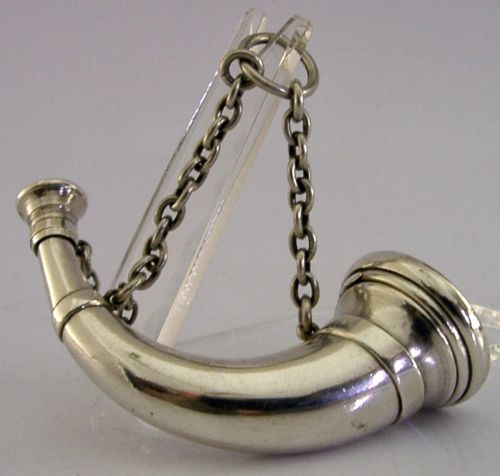
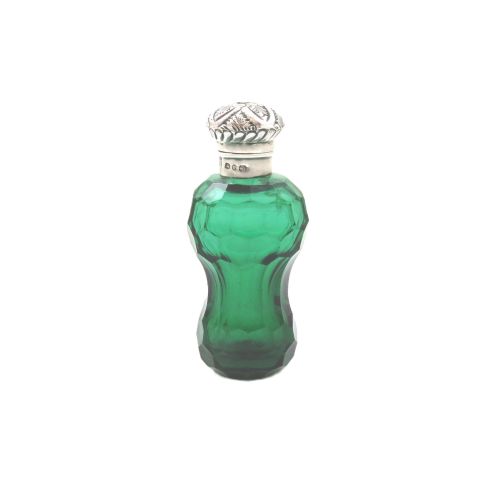
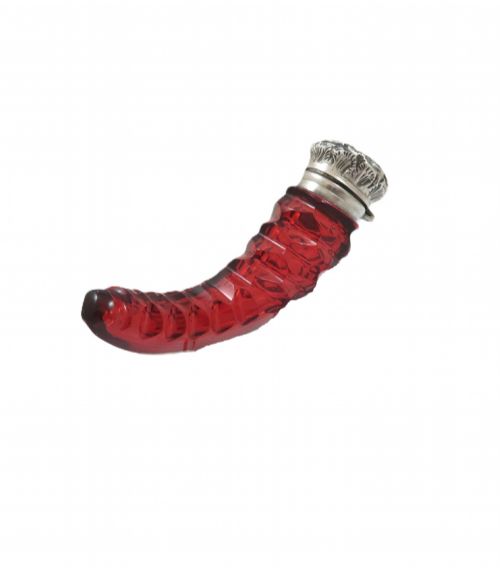
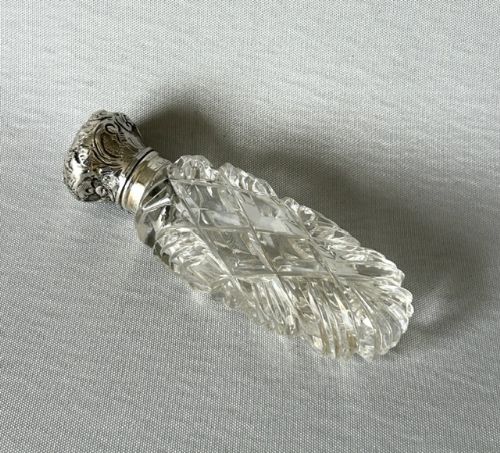
Many examples pair a sterling silver cap or casing with cut glass, opaline glass, or coloured glass bodies in shades like cranberry, green, blue, and ruby. Others feature figural designs such as owls or hunting horns, alongside leather or silk finishes.
Materials and Construction
Silversmiths shaped sterling silver into hinged caps, collars, and full outer cases, frequently applying repoussé decoration with cherubs, angels, or floral motifs. Glassmakers produced bodies through lead crystal cutting, glass blowing, and overlay techniques to create coloured vessels.
Internal stoppers of glass or cork provided a seal beneath the outer silver lid to prevent evaporation of volatile perfumes. Hinges and screw threads required precise metalworking to ensure a secure fit for daily use on a dressing table.
Listings feature sterling silver paired with cranberry, green, blue, ruby, and opaline glass forms.
Assessing Quality
Quality rests upon the weight and thickness of the sterling silver mounts, the depth and crispness of chased or embossed decorative details, and the integrity of the maker marks. Crisp hallmarks add documentary clarity to the piece.
The glass body contributes significantly to the overall merit, with deeply cut crystal facets or rich, unblemished coloured glass holding greater visual presence. Intact internal stoppers and smoothly functioning hinges also distinguish finer examples.
Horton & Allday·Sampson Mordan·Edward Smith
The Victorian Sterling Scent Bottle Glossary
- Sterling Silver
- An alloy containing 92.5 percent silver by weight, widely used for the lids, mounts, and casings of these bottles.
- Vinaigrette
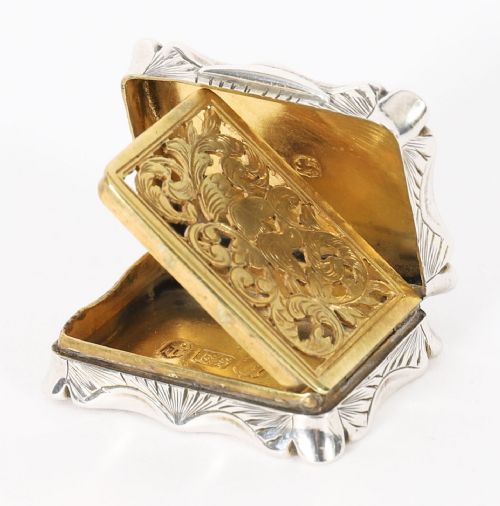
- A small ornamental box or bottle containing a sponge soaked in aromatic vinegar, fitted with an inner pierced grille.
- Double End
- A bottle design featuring compartments at both ends, allowing the user to carry two different scents or salts simultaneously.
- Repoussé
- A metalworking technique where the silversmith hammers and punches the design from the reverse side to form raised relief work on the surface.
- Cranberry Glass
- A rich red-pink transparent glass created by adding gold chloride to the molten batch, popular in Victorian dressing table accessories.
Victorian Sterling Scent Bottle: Frequently Asked Questions
What is a vinaigrette?
A vinaigrette is a specialised container equipped with an internal pierced metal grille that holds a sponge soaked in aromatic vinegar. These pieces were carried for relief from unpleasant odours or fainting.
They function differently from standard perfume bottles by dispensing scent through evaporation from the sponge rather than direct liquid pouring.
How do double end bottles work?
Double end bottles feature separate compartments at each end of the piece, usually capped with individual hinged or screw-on silver lids. This layout allowed Victorians to carry two distinct fragrances or a scent in one end and smelling salts in the other.
Makers balanced the proportions so the central body remained easy to grip despite the dual-ended design.
How do I date these bottles?
Dating relies heavily upon the sterling silver hallmarks stamped on the mounts, which typically include assay office symbols, date letters, and maker marks. These stamped details reveal the exact year and city of manufacture.
Stylistic shifts in the glass colour and decorative motifs like cherubs or overlay patterns also help narrow the production era.
Were they used daily?
Owners kept these items on dressing tables or carried them in reticules and pockets for social engagements. The robust combination of thick glass and silver mounts ensured durability during frequent transport.
Many survive today with their internal stoppers intact, showing they were actively utilised rather than kept strictly as ornaments.