


Victorian Stemware Set
A victorian stemware set brings gathered dining history to the table through matched drinking vessels from the nineteenth century.
Victorian Stemware Set
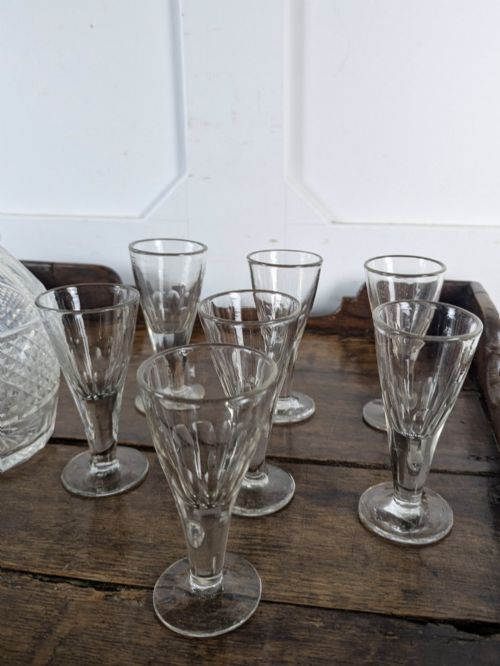
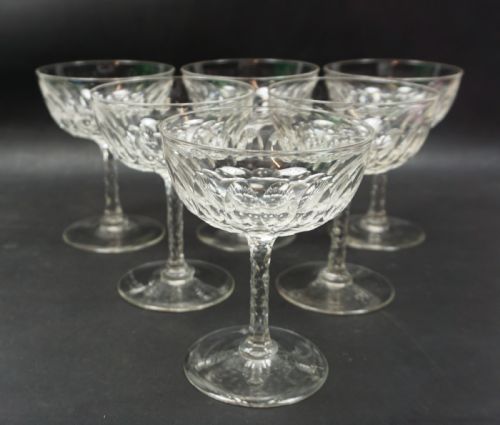
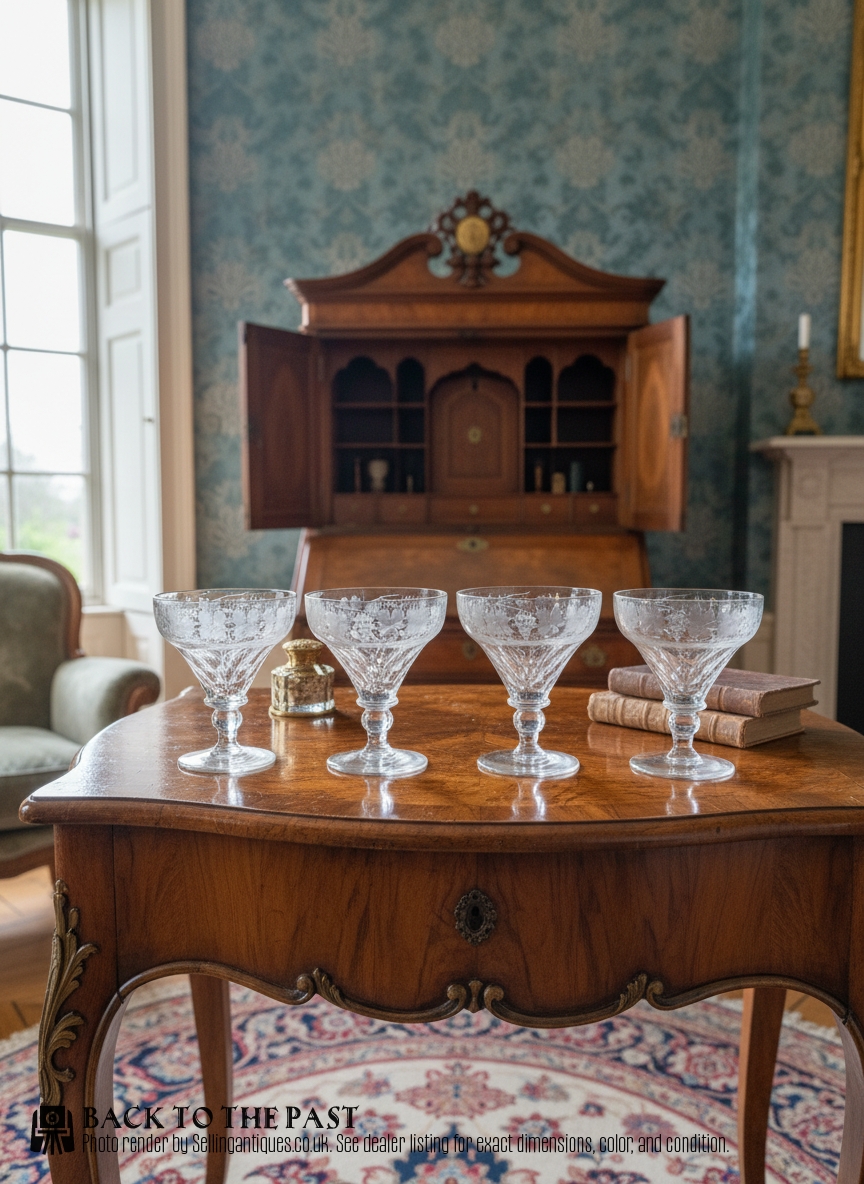
A victorian stemware set gathers drinking vessels created during the nineteenth century, most often appearing as groups of wine glasses, champagne coupes, or sherry flutes. These groupings span clear crystal, heavy cut lead crystal, and vibrant coloured glass ranging from cranberry to emerald green.
The sets on this page include harlequin collections and matched services of four, six, eight, or more pieces. Buyers will find pieces originating from English, Scottish, and Austrian workshops, dating from the Victorian era alongside related nineteenth century styles such as Biedermeier.
Materials and manufacture
Makers shaped these vessels using traditional glassblowing techniques, forming bowls and stems by hand before applying decorative cuts or etchings. Lead crystal and clear glass provided a heavy, refractive base, while coloured metal oxides produced deep shades of amethyst, amber, and cranberry.
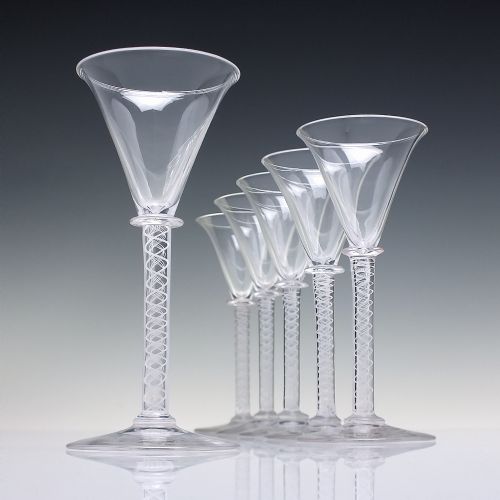
Decoration relied on skilled hand-cutting, thumb-cuts, and facet-cutting on stems to catch the light, alongside delicate surface engraving. Many pieces feature distinct structural details such as bobbin stems, opaque twists, or tulip-shaped bowls.
Some sets arrive as delightful harlequin groups, proving that mismatched nineteenth-century drinking companions found harmony long ago.
Judging quality and character
Quality rests upon the crispness of the hand-cutting and the consistent weight of the metal across every glass in the set. Finer pieces display precise facet work on the stems and clear, unblemished colour depth throughout the bowl.
The Victorian Stemware Set Glossary
- Stemware
- Drinking vessels raised on a stem above a footed base. This category covers wine glasses, champagne coupes, and cordial glasses.
- Cranberry Glass
- Transparent red glass produced by adding gold chloride to the molten batch. It is widely seen in nineteenth-century dining sets.
- Thumb-Cut
- A decorative concave depression ground into the surface of the glass. It provides a tactile grip and catches the light.
- Opaque Twist
- A decorative thread of white or coloured enamel glass spun within a clear stem. It is a traditional technique found in earlier pieces.
- Coupe
- A broad, shallow bowl on a slender stem originally designed for champagne. It is a frequent component of antique dining services.
Victorian Stemware Set: Frequently Asked Questions
How were these glasses used originally?
These vessels served formal nineteenth-century dining tables for courses ranging from wine and sherry to dessert drinks and cordials. Different bowl shapes matched specific beverages to enhance the dining ritual.
Larger services accommodated guests with matching glassware, while smaller sets suited intimate gatherings or specialised dessert courses at the end of a meal.
How do I care for antique stemware?
Wash each piece gently by hand in warm water using mild soap rather than placing them in a dishwasher. Sudden temperature changes can crack old glass, so avoid hot water rinses for cold pieces.
Store the sets upright on stable shelves with sufficient space between items to protect delicate rims and hand-cut stems from accidental chipping.
Can I use these glasses daily?
Many collectors enjoy using their nineteenth-century glassware for special occasions or quiet evening drinks. Hand-blown and cut glass remains robust if handled with care.
Keep in mind that older glass has thinner walls than modern equivalents, requiring a gentler touch when setting them down on hard dining surfaces.
How do I distinguish periods within the listings?
Dating relies on decorative techniques, manufacturing materials, and stylistic markers recorded across the pieces. Heavy cut crystal and specific colour palettes often signal distinct decades within the Victorian era.
Earlier nineteenth-century pieces may display regional characteristics such as opaque twists or simpler blown forms, while later Victorian sets favour elaborate etching and vibrant hues.