
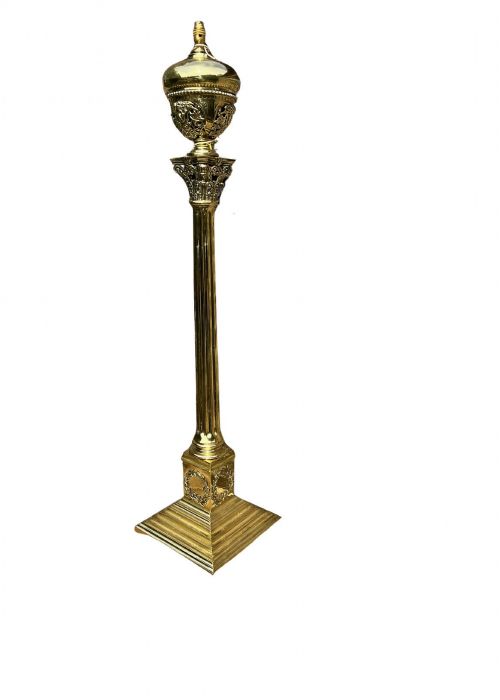


Victorian Standard Lamp Base
A victorian standard lamp base anchors a room with vertical presence, bringing period character and warm illumination to high ceilings.
Victorian Standard Lamp Base
A victorian standard lamp base comprises tall upright supports designed to elevate a light source above furniture level, shifting the focus of interior illumination downwards from the ceiling. When you search for a victorian standard lamp base, you encounter floor-standing vertical columns intended originally for oil, gas or early electric fittings.
The selections span the nineteenth century into the early twentieth century, showing periods from eighteen fifty to nineteen thirty alongside revival movements like William IV and Neoclassical styles. You meet column forms, telescopic adjustments and openwork botanical designs in diverse domestic formats.
Materials divide broadly between metals like brass, cast iron, bronze and gilt bronze, and timber constructions in mahogany and gilt wood. Floor lamps, standard lamps and floor candelabras dominate the object types, sometimes appearing in matched pairs.
How they were made
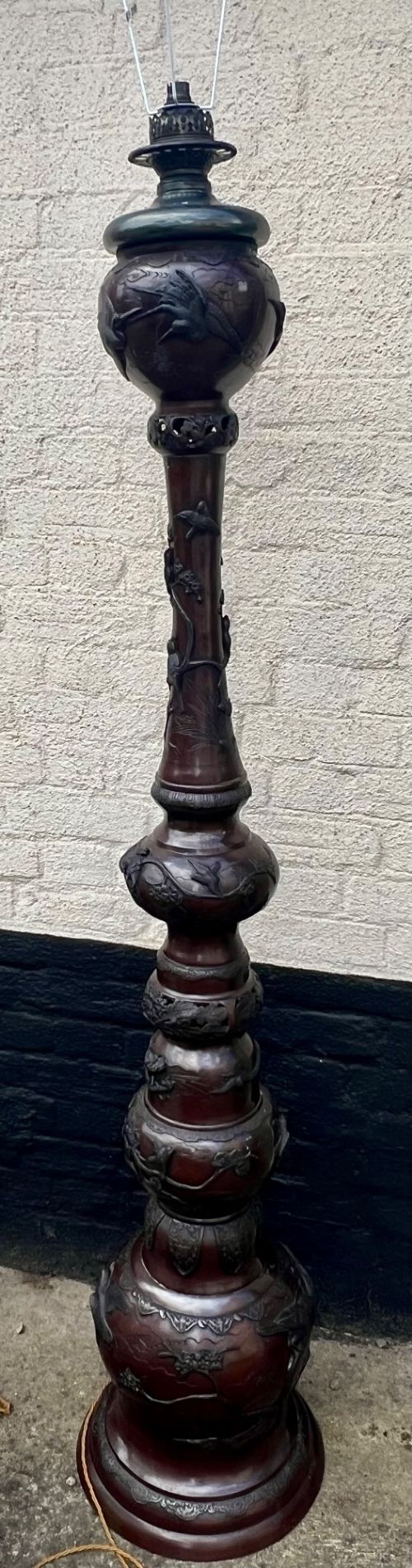
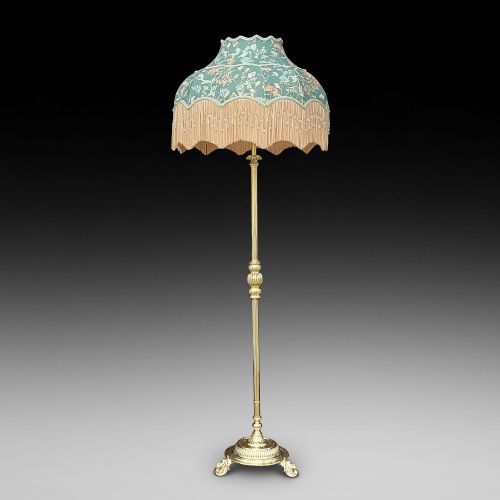
Foundries cast brass, bronze and iron into robust columns, heavy bases and ornate floral openwork, often utilising telescopic mechanisms for height adjustment. Metalworkers chased surfaces and combined copper with brass or incorporated marbleised treatments on timber structures.
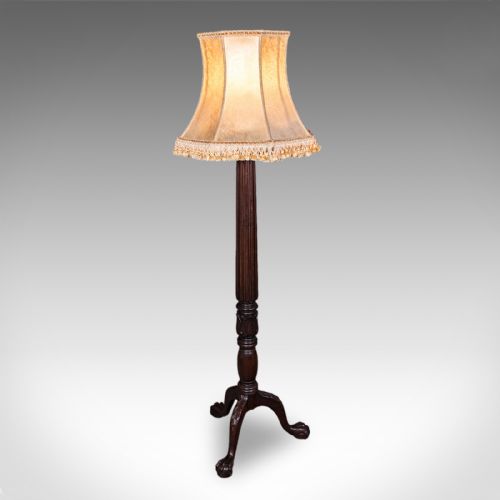
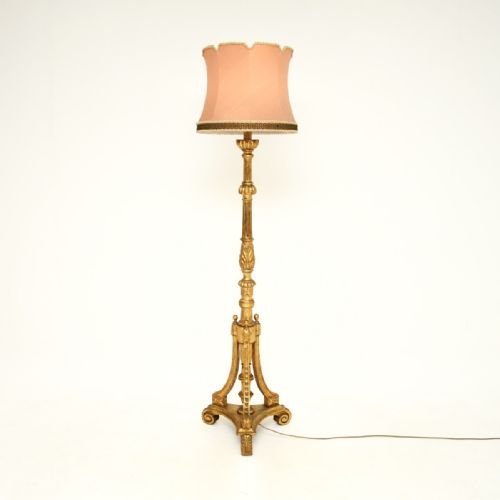
Woodworkers turned mahogany and gilt wood into substantial shafts, applying surface gilding and classical detailing such as Corinthian capitals. Heavy weighted bases ensured stability for tall floor-standing uprights carrying heavy fuel reservoirs or fittings.
Several heavy cast iron bases spent their early years illuminating Victorian streets as gas lights before moving indoors.
What varies in quality
Subtlety of cast ornamentation and weight distribution separate standard examples from finer commissions, particularly where floral openwork or Corinthian column capitals show crisp, deep relief rather than soft edges. Telescopic mechanisms that glide smoothly and lock securely indicate superior engineering in nineteenth century metalwork.
Material density and structural integrity define the upper tier, where substantial brass columns, heavy cast iron or genuine gilt bronze resist wobbling at full extension. The refinement of surface finishes, from retained original gilding to patinated bronze and polished copper, dictates visual distinction.
The Victorian Standard Lamp Base Glossary
- Telescopic
- A design featuring nested tubes allowing the height of the lamp standard to be adjusted vertically. This mechanism enabled users to raise or lower the light source depending on the room arrangement.
- Corinthian
- A classical architectural order characterised by ornate capitals decorated with acanthus leaves. This motif frequently appears on the tops of brass and metal columns.
- Gilt Bronze
- Bronze metal coated with a thin layer of gold or gold-coloured alloy for a rich decorative finish. It offers a warm metallic lustre that resists tarnishing.
- Floor Candelabra
- A tall standing branched support designed to hold multiple candles rather than a single oil or electric burner. These heavy iron or brass stands provided substantial illumination before widespread electrification.
Victorian Standard Lamp Base: Frequently Asked Questions
How do I convert one for modern electricity?
Wiring is typically routed down through the central hollow core of the brass or timber shaft, exiting near the weighted base. Modern lamp holders are attached to the existing top threaded fitting by a qualified electrician without altering the antique metalwork.
Original oil or gas burners are preserved or replaced with discreet converter fittings that hold contemporary bulbs safely. This approach maintains the historic character of the standard lamp while meeting current domestic safety standards.
How do I date a brass lamp base?
Dating relies on examining the manufacturing methods, such as sand-casting marks, threaded joinery and the style of classical revival motifs. Mid-nineteenth-century examples often favour sturdy Corinthian columns, whereas later turn-of-the-century pieces incorporate lighter brass tubing and simpler collars.
Patina, wear patterns on the weighted base and the specific alloy composition also guide attribution. Comparing the form to dated pieces from eighteen fifty through nineteen thirty helps narrow the era.
Where should I place a floor lamp?
These tall vertical stands suit corners, beside heavy armchairs or flanking fireplaces where their height fills empty vertical space. Their narrow footprint allows them to stand unobtrusively while projecting light downward over reading areas.
Pairing matching candelabras or columns on opposite sides of a sideboard creates architectural symmetry in larger rooms. The sturdy base ensures stability on wooden flooring or carpets.