
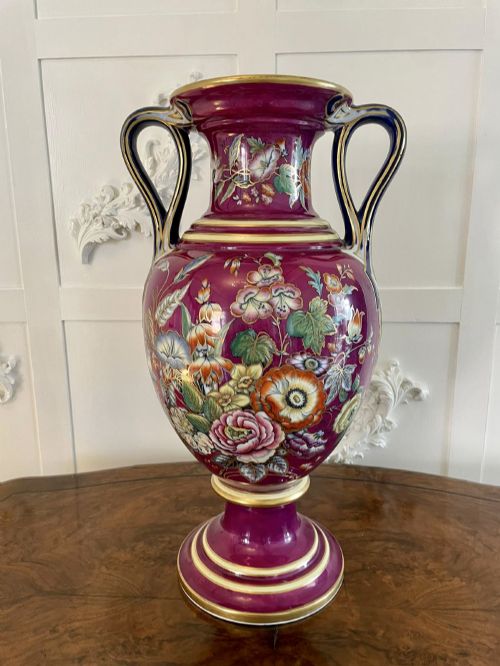
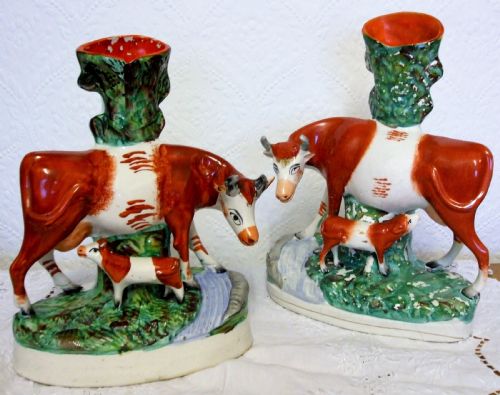
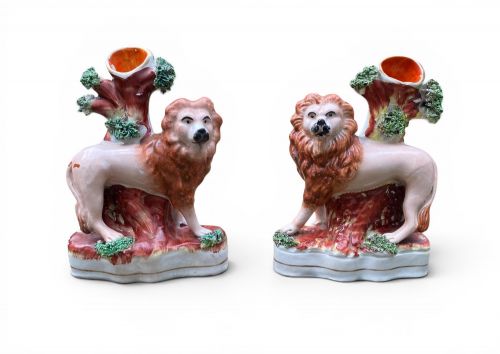


Victorian Staffordshire Pottery Vase
These Victorian Staffordshire pottery vase examples bring rustic charm to any shelf, uniting naive animal forms with practical nineteenth-century display vessels.
Victorian Staffordshire Pottery Vase
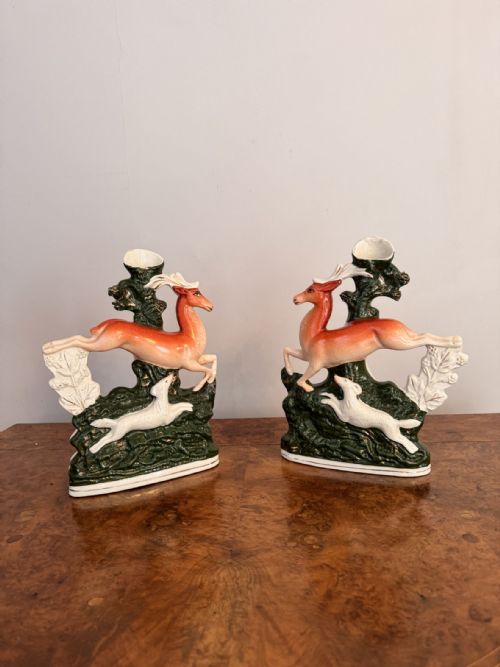
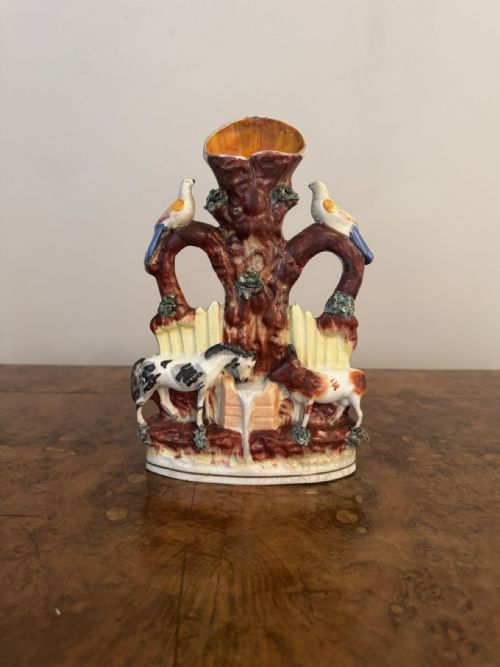
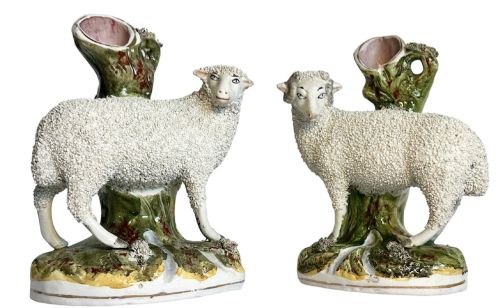
A victorian staffordshire pottery vase typically takes the form of spill vases, figures, and animal groups, often depicting sheep, deer, lions, cows, and swans alongside human subjects like Scots harvesters or flatback castles. These pieces span the nineteenth century, emerging from regional potteries during the Victorian era to serve as decorative mantelpiece ornaments.
Buyers will most frequently meet pairs of spill vases on this page, particularly featuring woodland animals, domestic livestock, or birds such as swans and cygnets. Figures and flatback groups also appear regularly, designed to be viewed from the front on narrow shelves.
Materials and methods
Potters constructed these objects using earthenware and ceramic, applying lead glaze to seal the porous clay bodies and provide a glossy finish. Artisans then added hand-painted enamel colours to bring life to the figures, livestock, and foliage.
Many better examples incorporated gold leaf or gilt highlights, applied to details such as collars, antlers, and rims to catch the flickering candlelight of nineteenth-century parlours.
Listings feature earthenware and ceramic bodies finished with lead glaze, enamel, and gilt.
Distinctions in quality
Scale and completeness also dictate standing, with large pairs and complex figure groups achieving greater presence than single, smaller vessels. The preservation of the original gilt and enamel without excessive rubbing marks the finer specimens.
Kent Staffordshire Pottery·Adams
The Victorian Staffordshire Pottery Vase Glossary
- Spill vase
- A hollow vessel designed to hold taper spills for lighting pipes, lamps, or fires. These often double as sculptural figures of animals or humans.
- Flatback
- A figure or vase moulded with a finished front and a largely unadorned, flat reverse. This design allowed makers to save material and let the piece sit flush against a wall.
- Earthenware
- A porous pottery body fired at lower temperatures, standard for nineteenth-century Staffordshire production. It requires a glaze to become watertight.
- Enamel
- Opaque glass-based pigments fused to the ceramic surface during a secondary low-temperature firing. This technique provides the bright greens, blues, and reds seen on the figures.
- Lead glaze
- A glossy coating containing lead oxide applied to ceramic bodies before firing. It gives these nineteenth-century pieces their characteristic shiny surface.
Victorian Staffordshire Pottery Vase: Frequently Asked Questions
What is a spill vase?
A spill vase is a hollow ceramic cylinder incorporated into a figure or group, specifically designed to hold wooden tapers used for lighting candles and hearth fires.
In nineteenth-century homes, these sat on mantelpieces where practicality met domestic decoration.
Why are they called flatbacks?
Flatbacks are moulded with detailed fronts and relatively plain, unglazed backs because they were intended to stand directly against a cottage or parlour wall.
This construction reduced weight and material costs while keeping the display stable on narrow shelves.
How do I date these pieces?
Dating relies on stylistic clues, modelling techniques, and the vibrancy of the enamel colours used across the Victorian period. Most examples date from the mid to late nineteenth century.
Comparative study of recorded animal groups and flatback subjects helps narrow down the decade of production.
Where were they displayed?
These decorative objects found homes on mantelpieces, chiffoniers, and parlour sideboards throughout nineteenth-century British households. Their colourful glazes brightened dark interior spaces.
Pairs were often arranged symmetrically to frame other mantel ornaments like clocks or mirrors.