





Victorian Splashback Table
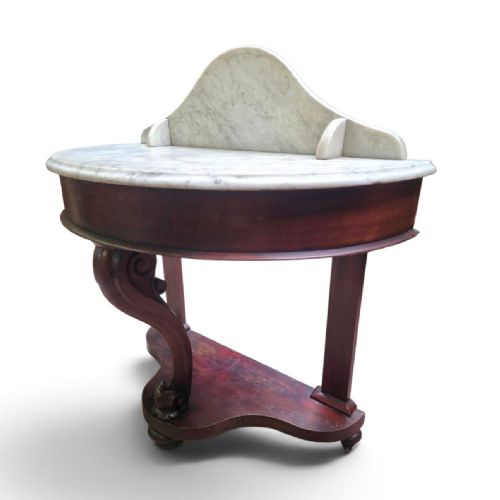
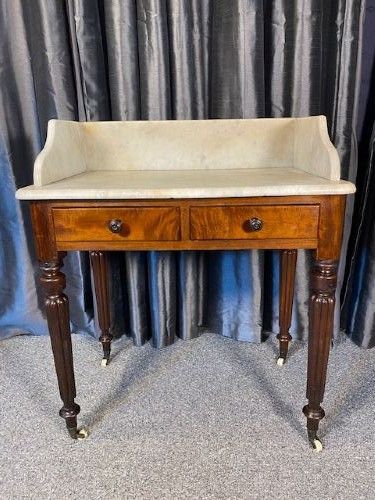
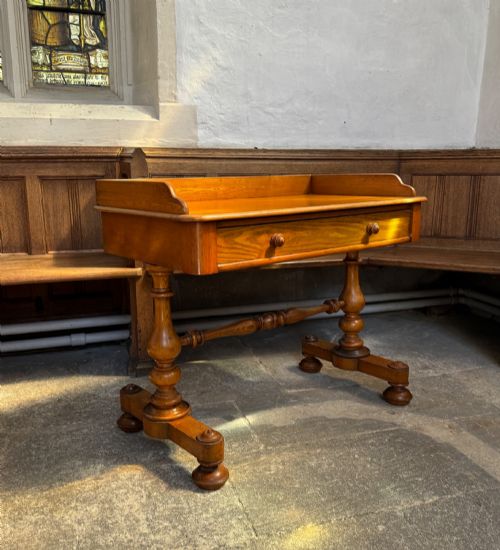
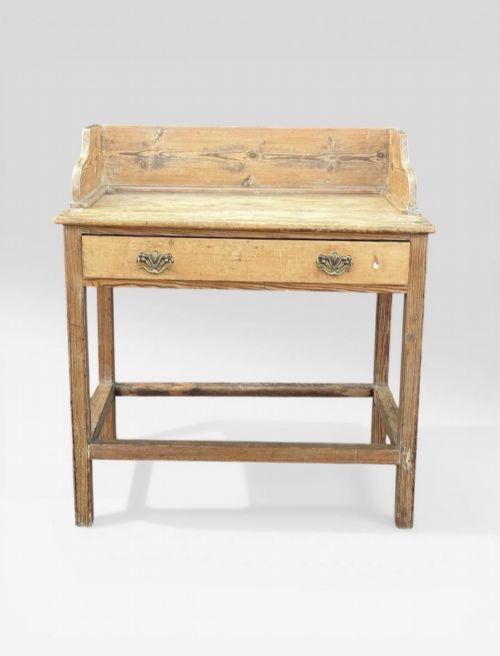
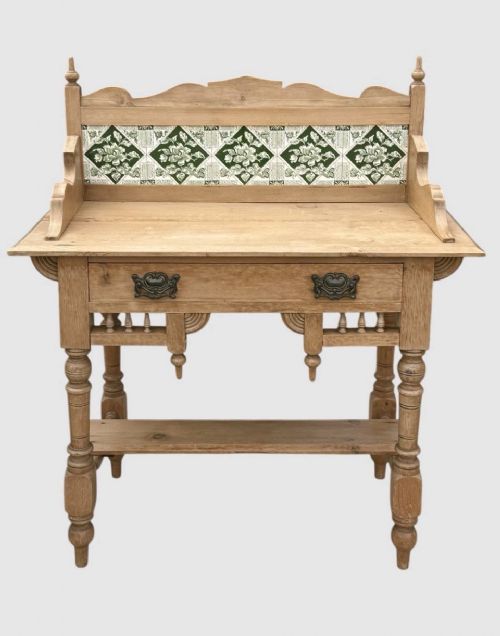
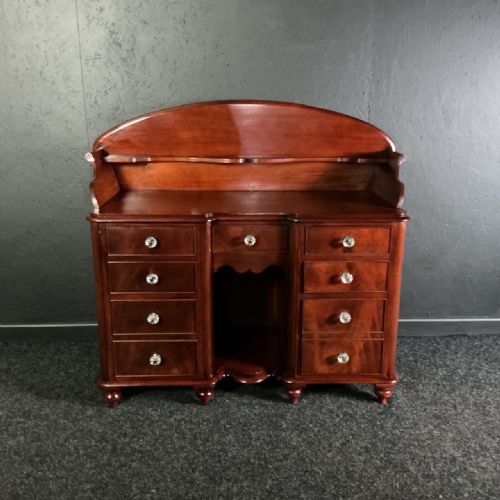
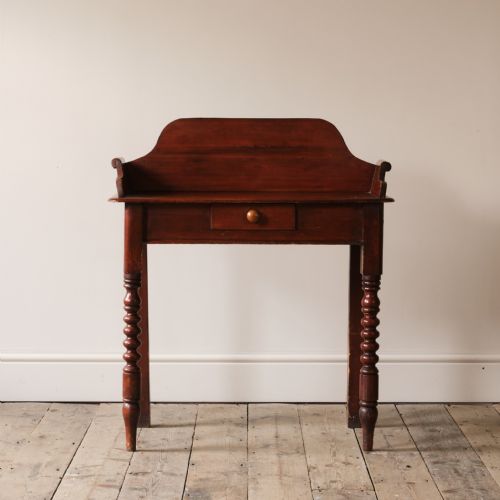
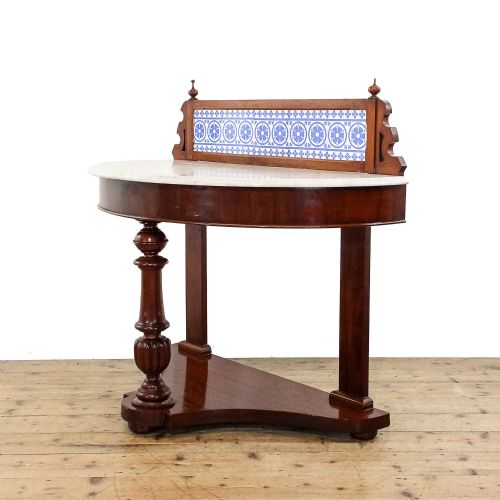
These Victorian splashback table pieces are practical nineteenth century washstands and console tables designed to protect bedroom walls with high timber or tile backs.
Victorian Splashback Table
A victorian splashback table typically manifests as a washstand or console table originating from the nineteenth century, including Victorian and Edwardian examples. These items combine functional bedroom furniture with decorative backboards designed to catch water splashes.
The pieces appearing on this page range from rustic pine and pitch pine washstands to refined mahogany and satinbirch models. Makers often incorporated marble tops, ceramic tiles, and brass details into the designs to serve domestic hygiene needs.
Buyers will encounter various forms, from simple painted pine units to elaborate Arts and Crafts and Aesthetic Movement tables. Washstands with marble tops and tile gallery backs represent the primary versions available in this selection.
Construction and Materials
Cabinet makers utilised solid timbers such as mahogany, pine, pitch pine, and satinwood to build the structural frames of these tables. Joinery relied on traditional carpentry methods suitable for daily domestic service.
Surfaces frequently feature fitted marble slabs or ceramic tiles to resist moisture from washing jugs and basins. Brass fittings and glass elements appear as decorative or functional additions across different styles.
Some washstands hide secret ceramic soap dishes that survived a century of frantic morning splashing.
Distinctions in Quality
Quality differences emerge through the selection of primary timbers and the integration of decorative elements like rouge marble or inlaid satinwood. Elaborate Aesthetic Movement and Arts and Crafts examples display more ambitious design execution than basic utility pine pieces.
The condition of fitted marble tops, ceramic tile galleries, and original brass hardware influences the overall standard of each piece. Superior examples retain their original painted finishes and structural integrity without heavy alterations.
The Victorian Splashback Table Glossary
- Splashback
- A raised timber, marble, or tiled backboard attached to the rear of a washstand to protect wallpaper and plaster from water marks.
- Washstand
- A piece of bedroom furniture designed to hold a basin, jug, and washing accessories during the nineteenth century.
- Pitch Pine
- A durable resinous softwood utilised extensively for nineteenth century furniture construction.
- Gallery Back
- A raised decorative surround framing the top surface of a table or cabinet.
Victorian Splashback Table: Frequently Asked Questions
What is a splashback table?
A splashback table is a nineteenth century washstand or console featuring a raised backboard to shield walls from water. These pieces served personal hygiene routines in period bedrooms.
Today they function effectively as side tables, hall consoles, or bathroom basin stands while retaining their original nineteenth century character.
How do I date these tables?
Dating relies on observing construction techniques, timber choices, and stylistic movements such as Arts and Crafts or the Aesthetic Movement. Victorian and Edwardian examples often display distinct design traits.
Examining secondary woods, fixings, and hardware helps narrow down the period of manufacture within the nineteenth or early twentieth century.
Are marble tops original?
Many tables feature fitted marble or tiled tops that were integrated during initial production to handle moisture from washing. Mahogany and walnut models frequently received high quality marble slabs.
Matching marble or tile splashbacks form an integral part of the washstand design and contribute to the piece's period authenticity.
How can I use one today?
These versatile tables adapt well to modern interiors as hallway consoles, bedroom side tables, or bathroom vanity units. Their compact proportions suit narrow spaces.
Placing them in living areas or hallways allows the decorative timber frames and marble surfaces to serve as display points for lamps and objects.