

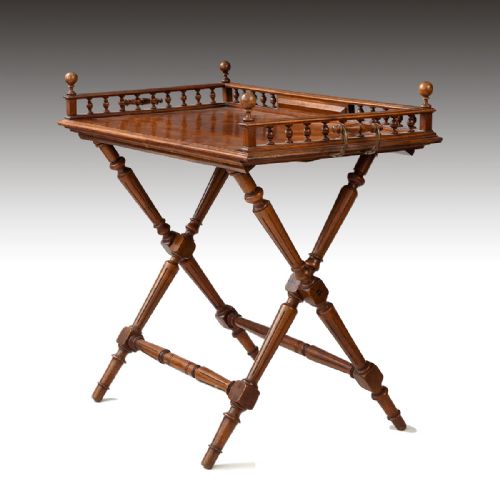

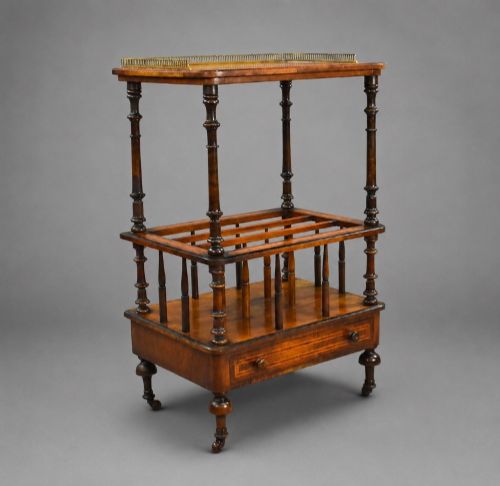
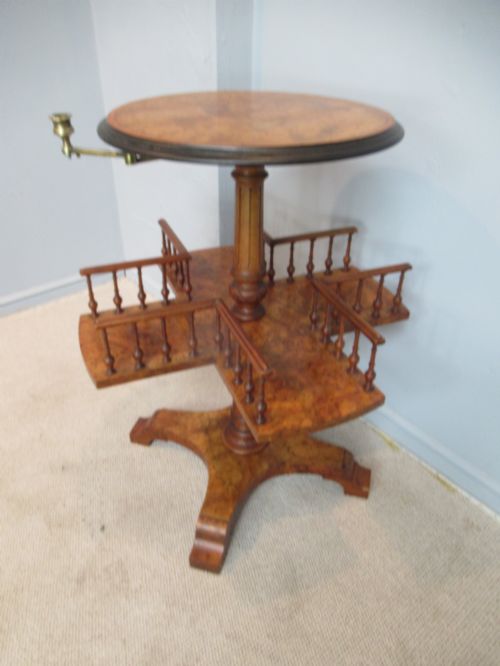


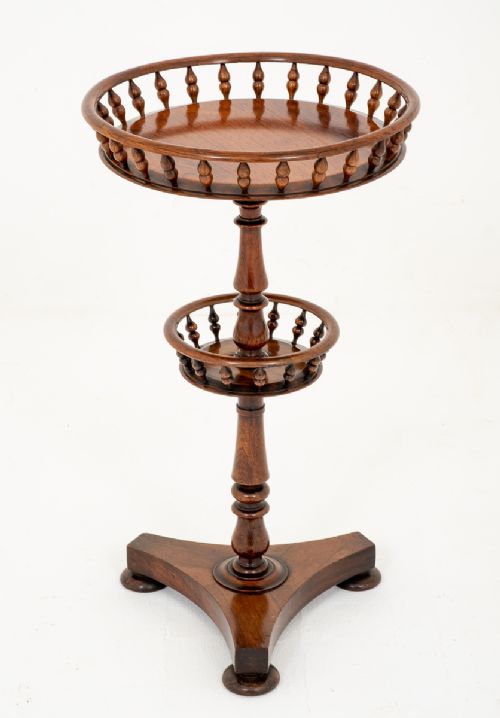


Victorian Spindled Gallery Table
These Victorian spindled gallery table pieces are compact occasional items defined by raised pierced railings, appearing here as rosewood wine tables.
Victorian Spindled Gallery Table
A victorian spindled gallery table is a small surface framed by a raised wooden or brass railing, designed for domestic display and convenience. When searching this phrase, buyers encounter various occasional items from the nineteenth century featuring raised rims and turned supports.
The selections available here span the nineteenth century, including specific dates from eighteen fifty to eighteen ninety alongside pieces from the broader Victorian and Aesthetic Movement periods. Forms range from circular wine tables and two-tier occasional tables to canterburys, console tables, and etageres.
Origin and material variations appear across the collection, such as a Scottish burr walnut revolving bookstand and oak rectangular tables from around eighteen eighty. Buyers are most likely to meet circular rosewood wine tables with gallery tops on this page.
How they were made
Construction relies heavily on dense hardwoods such as mahogany, walnut, burr walnut, rosewood, and ebonised wood, alongside occasional use of oak, ceramic, and brass details. Turnery creates the characteristic spindled galleries and slender legs that support these small tables and stands.
Inlay and tiered construction add complexity to pieces like the burr walnut canterbury and walnut etagere, utilising contrasting grains and structural levels. Ebonising transforms standard timbers into the dark, uniform surfaces favoured during the nineteenth century.
Victorian Spindled Gallery Table Retail Price Guide 2026
Typical asking prices for victorian spindled gallery table among the pieces listed under this phrase on Sellingantiques today, from the lower quarter to the upper quarter. They describe what is for sale here now, not the wider market.
Periods represented on this page span the nineteenth century, including specific years from eighteen fifty to eighteen ninety alongside the Victorian era.
What varies in quality
Quality rests in the selection of timber veneers, such as richly figured burr walnut or deep rosewood, paired with crispness in the turned spindles of the gallery. Superior examples demonstrate precise joinery in the tiered platforms and stability in the revolving mechanisms.
The refinement of the gallery railing and the integrity of the inlay distinguish finer occasional tables from simpler utilitarian stands. Makers like Heal's introduce a documented level of workshop provenance that elevates the standing of a piece.
The Victorian Spindled Gallery Table Glossary
- Gallery
- A raised miniature railing encircling the edge of a table top to prevent items from sliding off. It is frequently constructed from turned wooden spindles or pierced brass.
- Canterbury
- A low multi-tiered stand originally designed for holding sheet music, books, or portfolios. These pieces often incorporate vertical dividers and a drawer below.
- Etagere
- A set of open shelves or tiers used for displaying small ornaments and decorative objects. These delicate pieces became popular during the nineteenth century.
- Purdonium
- A specialised coal container or box designed for domestic hearths, often enclosed in a decorative wooden cabinet. They house a metal liner for carrying fuel.
- Aesthetic Movement
- A late nineteenth-century design style emphasising visual beauty and artistic expression over heavy historicism. It often favours ebonised finishes and clean structural lines.
Victorian Spindled Gallery Table: Frequently Asked Questions
What is a gallery table?
A gallery table is a small occasional surface featuring a raised railing around its perimeter. This rim was originally intended to keep glassware or reading materials secure.
These pieces were produced in various woods throughout the nineteenth century for drawing rooms and parlours.
How were these tables used?
These compact items served multiple domestic purposes, acting as stands for wine, lamps, books, or decorative ornaments. Their modest scale allowed them to be easily moved beside seating.
Some variations included revolving tops or multiple tiers to hold specific items like music sheets and periodicals.
How do I date a nineteenth-century table?
Dating relies on examining the timber species, construction methods, hardware, and stylistic influences such as the Aesthetic Movement. Specific dates or maker stamps occasionally provide direct evidence of origin.
Secondary woods and dovetailing techniques also offer clues to the manufacturing decade within the eighteen hundreds.
What is burr walnut?
Burr walnut is a highly decorative wood veneer taken from the knotted growths on walnut trees. It yields complex, swirling grain patterns highly prized by nineteenth-century cabinet makers.
This material is frequently found on the top surfaces of finer tables, canterburys, and revolving bookstands.
Can these tables support heavy items?
These tables are designed for light domestic use rather than heavy weight. Their slender turned legs and spindled galleries suit lamps, books, and small decorative objects.
Placing excessively heavy items on occasional tables can strain the joints and the delicate gallery railings.