


Victorian Spindle Turned Rocker
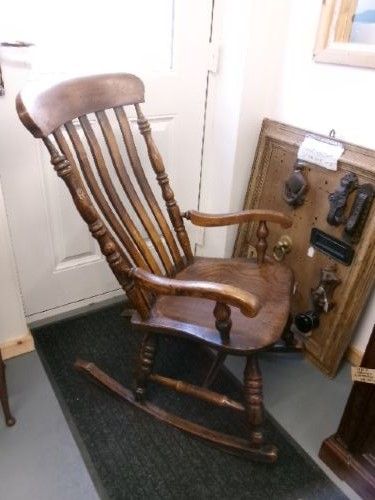
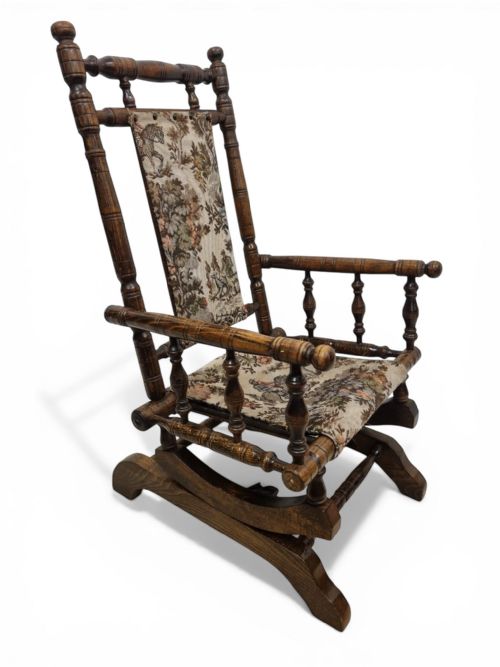
A victorian spindle turned rocker brings rhythmic grace to a fireside, combining upright turned members with gentle curved runners for steady motion.
Victorian Spindle Turned Rocker
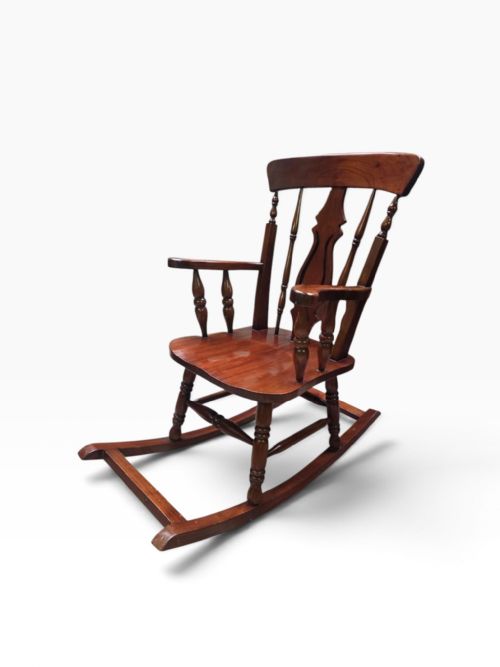
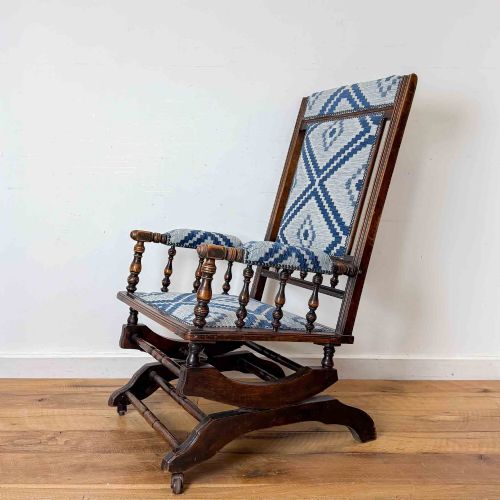
A victorian spindle turned rocker centres on the rhythmic repetition of turned timber uprights forming backs, arms, and underframes. These seats belong to the wider family of nineteenth-century rocking chairs, spanning regional vernacular traditions and refined farmhouse seating.
Most examples encountered on this page date from the Victorian period through to the early twentieth century. Forms range from high-backed Windsor variants and Yorkshire farmhouse types to low nursing chairs and compact children's versions.
Origins stretch across English country workshops, Scottish vernacular makers, and American influences interpreted by domestic cabinetmakers. Buyers find pieces designed for fireside repose, nursery use, or quiet parlours.
Materials and construction
Construction relies heavily on native hardwoods selected for strength and flexibility during turning. Beech, oak, elm, ash, and fruitwood form the structural frameworks, spindles, and bent parts.
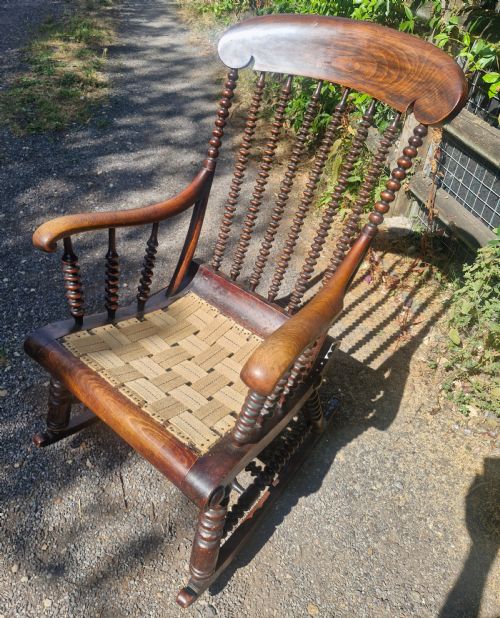
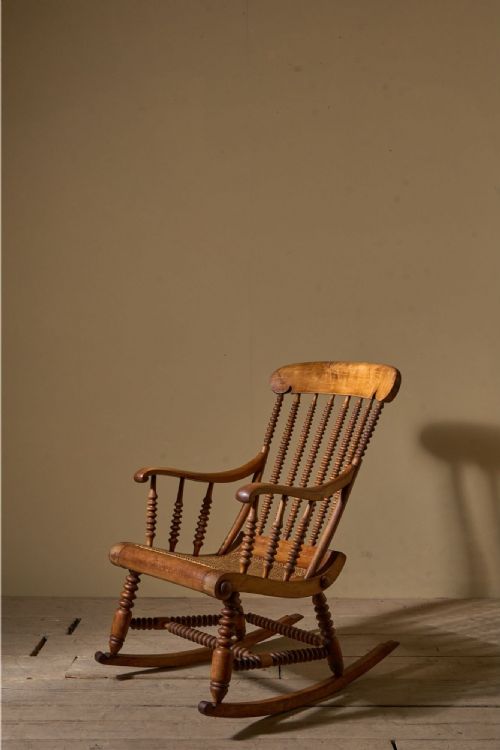
Turning lathes shape the repetitive spindles, bobbin profiles, and uprights that define the aesthetic. Seat platforms vary from solid moulded wood to woven cane, sea grass, leather, and tapestry upholstery.
Several miniature children's versions survive, proving that nineteenth-century toddlers took their fireside relaxation just as seriously as the adults.
Distinctions in standard
Quality reveals itself in the crispness of the turning on spindles and bobbin details, alongside the structural integrity of the joints. Tighter tolerances in mortise and tenon construction separate robust workshop output from simpler domestic repairs.
The choice of timber and seat material influences the overall weight and refinement. Selected hardwood frames with intact original woven seating or moulded panels represent the higher tiers of production.
The Victorian Spindle Turned Rocker Glossary
- Bobbin turning
- A method of lathe work creating a series of rounded spheres or discs along a wooden shaft, resembling a string of beads. This decorative detail provides texture and visual rhythm to the chair frame.
- Spindle back
- A chair back constructed from numerous slender turned wooden rods rather than solid wooden splats. This design lightens the visual load while offering resilient support.
- Vernacular
- Furniture made by local craftspeople following regional traditions rather than high-style metropolitan fashions. These pieces often utilise locally available timbers.
- Windsor
- A chair style featuring a wooden seat saddle into which the legs and back spindles are separately joined. The construction creates a sturdy, unified seating platform.
Victorian Spindle Turned Rocker: Frequently Asked Questions
How do I care for the wooden frame?
Dust the turned spindles regularly with a soft cloth to prevent grit buildup in the crevices. Apply traditional beeswax periodically to nourish the hardwood and maintain the surface sheen.
Keep the chair away from direct heat sources and dramatic humidity shifts. These precautions prevent the timber from drying out and loosening the joints.
Are these chairs comfortable for daily sitting?
Most nineteenth-century rockers offer a relaxed reclined posture suited to reading or resting near a hearth. Seat heights and back angles vary considerably between farmhouse and parlour variants.
Adding a small loose cushion can improve comfort on solid wood seats. Consider the seat depth and arm height relative to your own proportions.
How can I tell the regional origins apart?
Regional pieces often display characteristic turning patterns and timber choices specific to local workshops. Scottish vernacular examples and Yorkshire farmhouse chairs each carry distinct regional joinery traits.
Compare the stretcher arrangements and crest rails against documented vernacular styles. Local timber availability frequently dictates the primary wood used in the frame.
What is the difference between a nursing chair and a standard rocker?
Nursing chairs are typically built lower to the ground with open arms to accommodate voluminous nineteenth-century garments. Standard rocking chairs offer higher backs and a more upright seating position.
Both utilise rocking runners, but their intended domestic functions shape their proportions. Compact footprints make nursing chairs well-suited to smaller rooms.