


Victorian Slope Desk
A Victorian slope desk offers a portable or compact writing surface defined by hinged lids and fitted compartments for correspondence.
Victorian Slope Desk
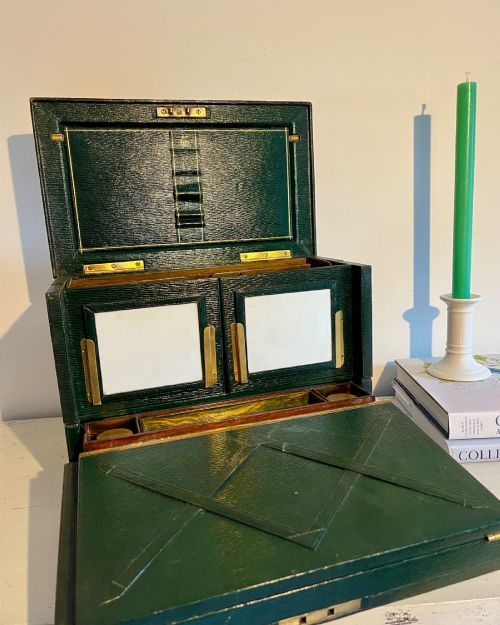
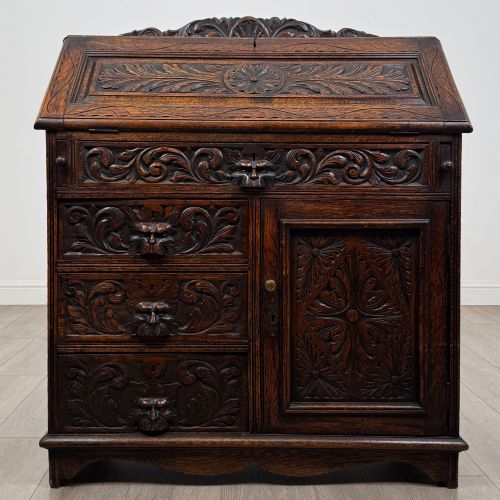
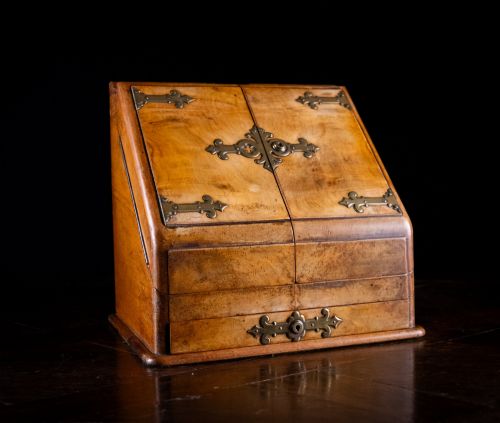
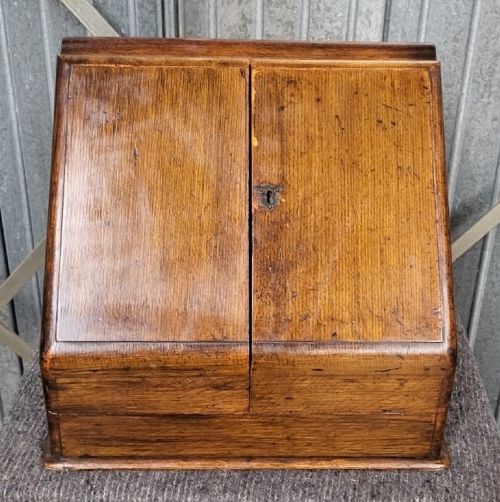
A victorian slope desk encompasses portable lap boxes, folding writing desks, and stationery cabinets designed for the nineteenth-century study. The selection frequently includes mahogany and walnut campaign writing slopes alongside freestanding Davenport desks and bureau forms from the Victorian era.
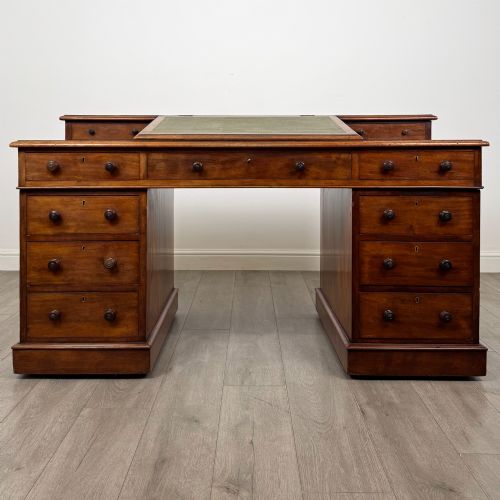
Buyers encounter items ranging from compact brass-bound travelling boxes intended for shipboard use to elaborate bureau de dame units and larger partners desks. These objects served the daily writing and correspondence needs of Victorian households, offices, and travellers.
The category spans items produced throughout the nineteenth century, with specific examples recorded from the eighteen-forties through to nineteen-hundred. Common variations include desktop correspondence boxes, stationery cabinets, and reading tables fitted with adjustable slopes.
How they were made
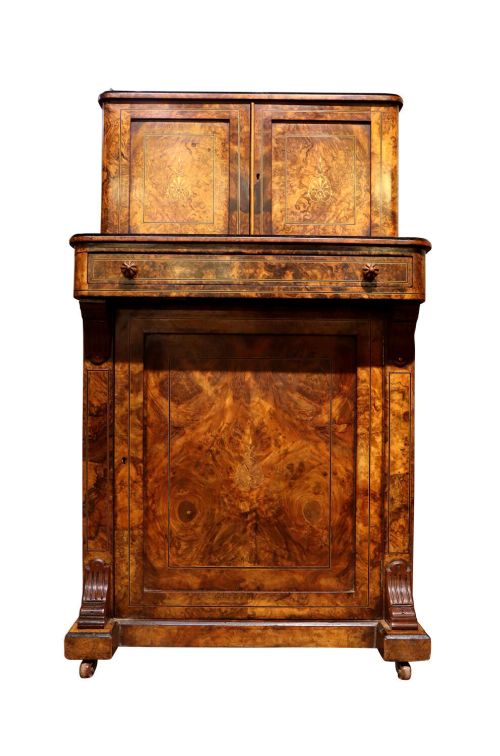
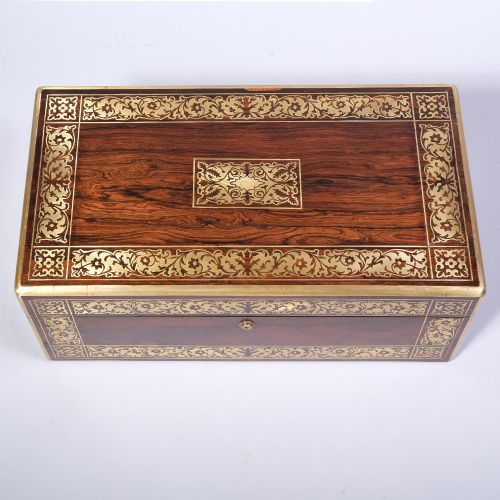
Cabinet makers utilised solid and veneered timbers including mahogany, walnut, burr walnut, oak, and rosewood over foundational structural woods. Surfaces often incorporate brass banding, inlay, marquetry, and parquetry work to ornament the exterior of the writing boxes and desks.
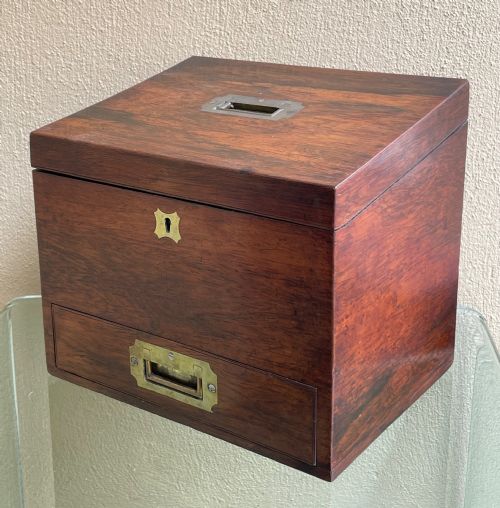
Interiors typically feature fitted compartments, pen trays, inkwells, and writing surfaces lined in leather. Many campaign and portable examples integrate flush brass handles, corner guards, and locking mechanisms requiring a working key to secure the folded slope.
What varies in quality
The calibre of a victorian slope desk depends upon the selection of timber veneers, such as burr walnut or amboyna, and the precision of the brass inlay and corner mounts. Superior pieces display meticulous cabinet work in the internal stationery compartments and secret drawers.
Construction methods and secondary woods also distinguish standard production items from workshop pieces bearing maker documentation or specific cabinet-making provenance.
Elkington·Wilkinson and Co·Gillows·Gillow and Co·Gillows of Lancaster
The Victorian Slope Desk Glossary
- Writing slope
- A portable box with a hinged, slanted lid that opens to reveal a writing surface and storage compartments. These units were placed on a table or used upon the lap during the nineteenth century.
- Campaign slope
- A portable writing desk built for travel, typically reinforced with brass corners, flush handles, and robust locking mechanisms to withstand movement. These pieces originate from military or maritime contexts.
- Davenport
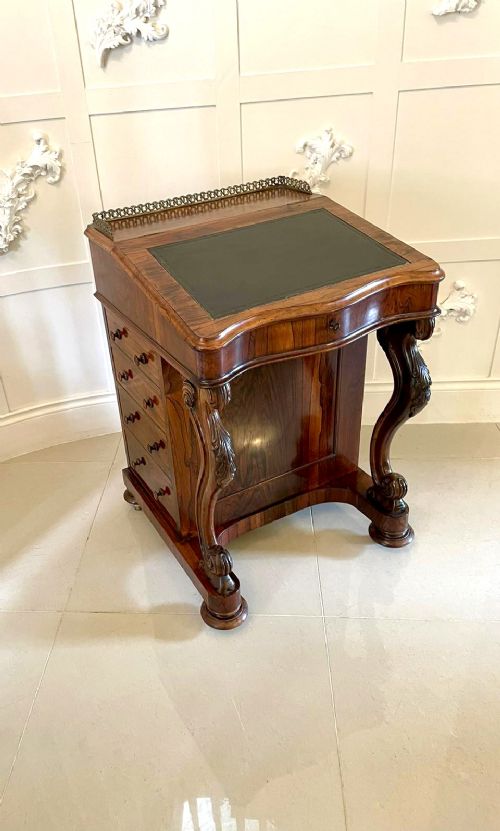
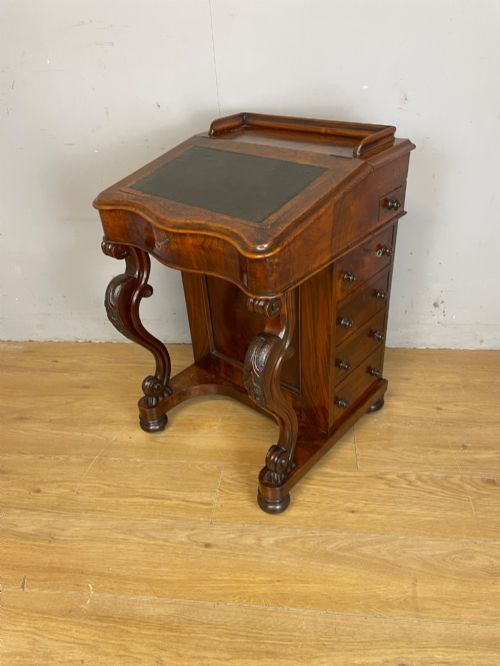
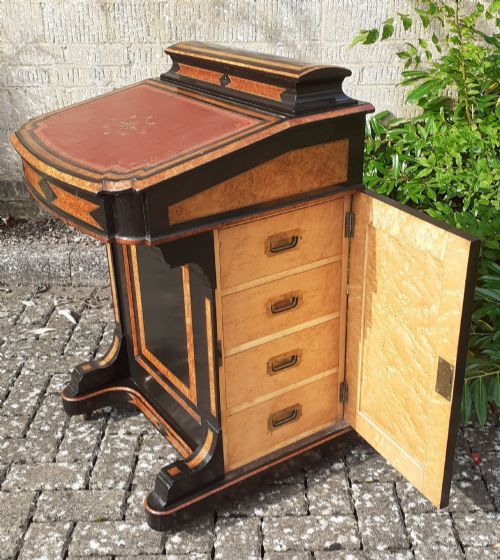
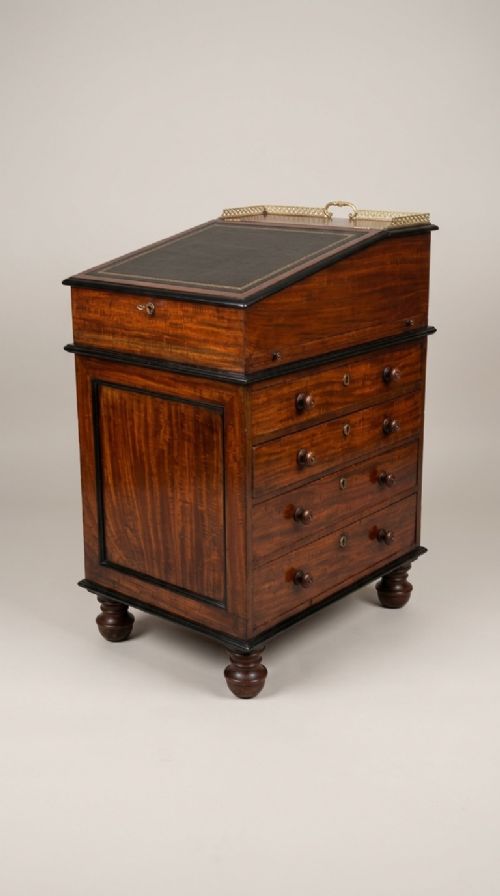
- A compact pedestal desk featuring a sloping writing top, often with drawers accessed from the side and a stationery compartment above. The form gained popularity during the Victorian period.
- Tunbridge ware
- Small mosaic woodwork decoration created from tiny wood blocks arranged to form geometric or pictorial motifs. This technique frequently ornamented the lids of Victorian writing boxes and slope desks.
- Stationery box
- A desktop cabinet designed to hold writing paper, envelopes, and correspondence accessories. These boxes frequently accompany writing slopes in nineteenth-century studies.
Victorian Slope Desk: Frequently Asked Questions
How were writing slopes used?
A writing slope provided a portable writing surface for nineteenth-century correspondence before the widespread use of flat-topped stationery desks. Users placed the closed box upon a table or lap, then opened the hinged lid to reveal angled writing boards and compartments for ink and paper.
Many portable versions served travellers and officers on the move, housing letters, documents, and writing implements securely inside during transit.
What is a Davenport desk?
A Davenport is a compact Victorian desk featuring a sloping, leather-lined writing surface above a set of drawers built into one side. The top often incorporates a stationary box or pen tray.
These pieces combined storage with a small footprint, making them suitable for drawing rooms and smaller studies where a full-sized partner desk was impractical.
How do I identify campaign pieces?
Campaign writing slopes and desks are distinguished by protective brass corners, strapwork, and recessed flush handles designed to prevent damage during travel. The construction prioritises portability and durability for use on military campaigns or shipboard journeys.
Internal compartments often include secure locking mechanisms to keep contents intact while moving between locations.
What is Tunbridge ware?
Tunbridge ware describes decorative woodwork made from thousands of tiny tinted wood squares assembled to create intricate mosaic patterns. These designs often depict geometric motifs, butterflies, or buildings on the lids of Victorian writing boxes.
This craftwork originated in Kent and adds a detailed decorative element to the exterior of antique lap desks and correspondence boxes.