

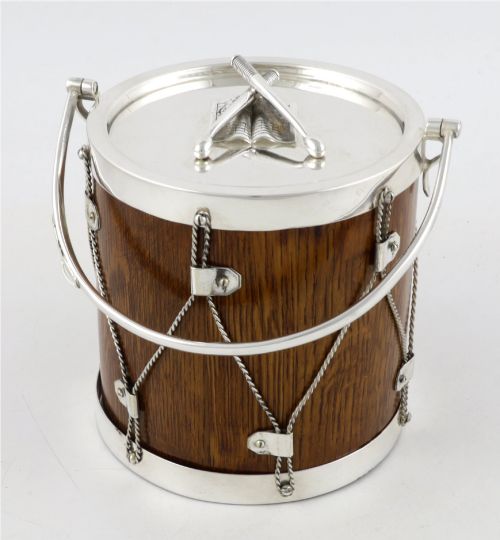
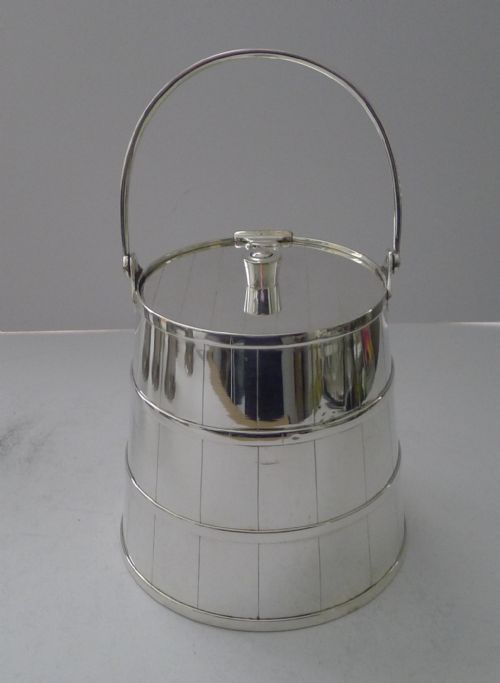
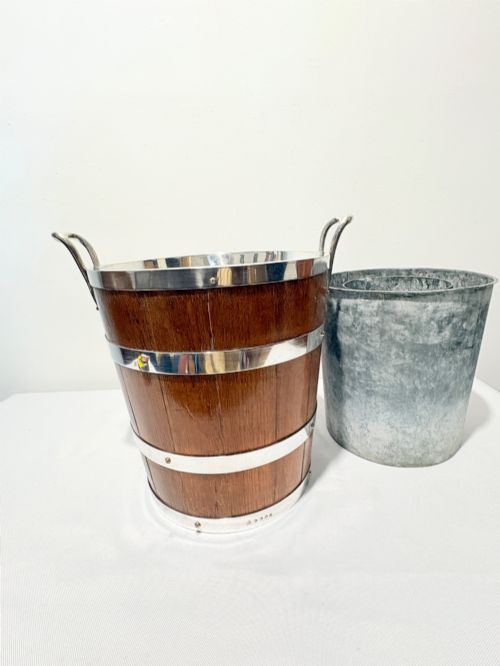
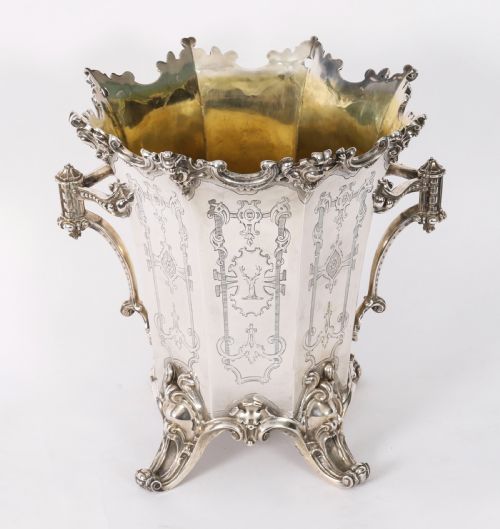
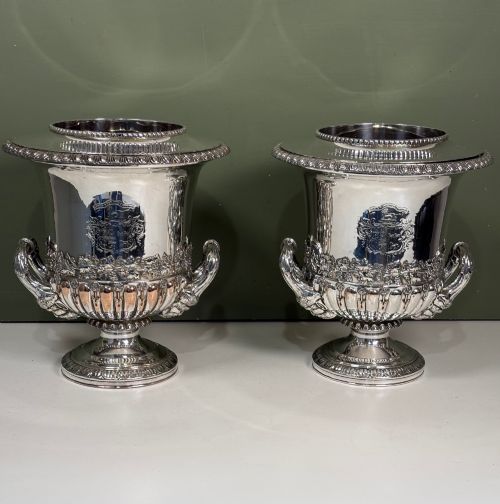


Victorian Silver Wine Bucket
These Victorian silver wine bucket examples bring substance to the table, offering heavy silver plate and oak for proper bottle chilling.
Victorian Silver Wine Bucket
A victorian silver wine bucket brings substantial metalwork and oak construction to the dining table, serving primarily as a wine cooler, champagne bucket, or ice bucket. These pieces span the nineteenth century and into the Edwardian era, taking the form of twin-handled vessels, bottle holders, and novelty biscuit boxes.
The objects listed here include large magnum holders alongside pairs of silver plated coolers and punch bowls. Makers employ styles ranging from plain Victorian forms to elaborate Rococo Revival ornamentation.
Most items rely on a silver plated surface over copper or base metal, though sterling silver examples also appear. Liners in ceramic creamware or glass support the practical function of holding ice and bottles.
Materials and construction
Silversmiths and manufacturers built these vessels using heavy base metals coated with silver plate, or occasionally solid sterling silver. Electroplated nickel silver and silver plate on copper appear frequently across the nineteenth century items.
Stave-built oak forms bound with metal bands provide a robust wooden alternative to all-metal vessels. Cast applied mounts, chased foliage, and applied crests decorate the exterior surfaces.
Interior containment relies on fitted glass inserts or ceramic creamware liners to protect the metal structure from moisture and ice.
Victorian Silver Wine Bucket Retail Price Guide 2026
Typical asking prices for victorian silver wine bucket among the pieces listed under this phrase on Sellingantiques today, from the lower quarter to the upper quarter. They describe what is for sale here now, not the wider market.
Listings feature nineteenth century and Edwardian pieces, combining silver plate, sterling silver, oak, and ceramic creamware liners.
Judging quality and execution
Quality rests in the weight of the metal and the depth of the plating. Substantial gauge silver plate or heavy sterling silver provides lasting durability compared to thinner coatings.
The crispness of chased decoration and the security of cast handles separate standard production from superior work. Makers who executed careful hand-chasing and robust structural joints produced pieces that endure.
Original components matter. Retaining the matching ceramic creamware or glass liner elevates the integrity of an ice bucket or wine cooler.
Elkington, Mason & Co·Hawksworth, Eyre & Co
The Victorian Silver Wine Bucket Glossary
- Silver Plate
- A layer of silver bonded to a base metal such as copper or nickel silver. This technique allowed makers to achieve the appearance of solid silver at a lower cost.
- Electroplated Nickel Silver
- A copper, nickel, and zinc alloy coated with silver using an electrical current. It became a standard manufacturing method during the nineteenth century.
- Rococo Revival
- A design style characterised by asymmetrical scrolls, naturalistic shell motifs, and flowing floral curves. It heavily influenced Victorian silver and tableware.
- Creamware
- A fine earthenware developed in England during the eighteenth century, distinguished by its pale yellowish glaze. It serves as a durable liner material in ice buckets.
Victorian Silver Wine Bucket: Frequently Asked Questions
How do I clean a silver plated wine bucket?
Use a soft cloth and a gentle cream polish formulated specifically for silver plate. Avoid harsh abrasives that can wear away the thin silver layer over the base metal.
Wash liners separately in warm soapy water and dry thoroughly before replacing them inside the bucket.
Can these buckets hold ice for long periods?
These vessels handle ice and chilled bottles well during a meal, particularly those fitted with ceramic or glass liners. The insulation depends on the thickness of the metal and wood staves.
Empty and dry the interior after use to prevent moisture damage to the plating or wooden framing.
What is the difference between a wine cooler and an ice bucket?
Wine coolers generally feature deeper proportions designed to hold wine or champagne bottles alongside water and ice. Ice buckets often have slightly wider mouths and frequently include dedicated liners for holding ice cubes.
Many nineteenth century examples served both functions interchangeably depending on the dining requirements.
How do I identify a Victorian piece from a later copy?
Examine the weight, construction methods, and any touchmarks or plating stamps on the base. Nineteenth century items often display specific maker marks and heavier gauge metalwork.
Look for signs of genuine age in the wear patterns on the underside and the patina within the chased decoration.