


Victorian Silver Tea Canister
These victorian silver tea canister pieces are solid vessels made to store dry leaf safely, bringing period weight and ornament to a modern room.
Victorian Silver Tea Canister
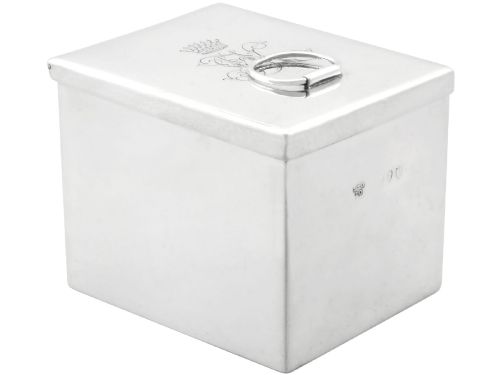
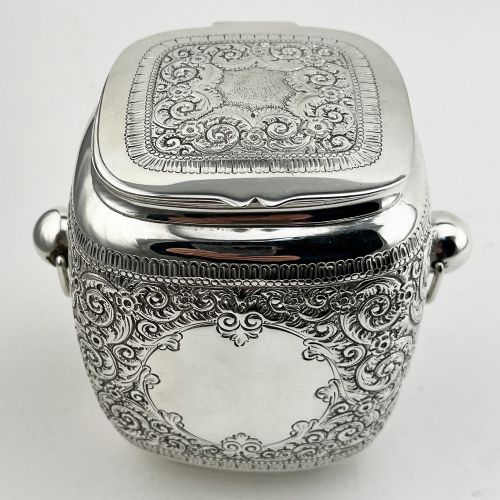
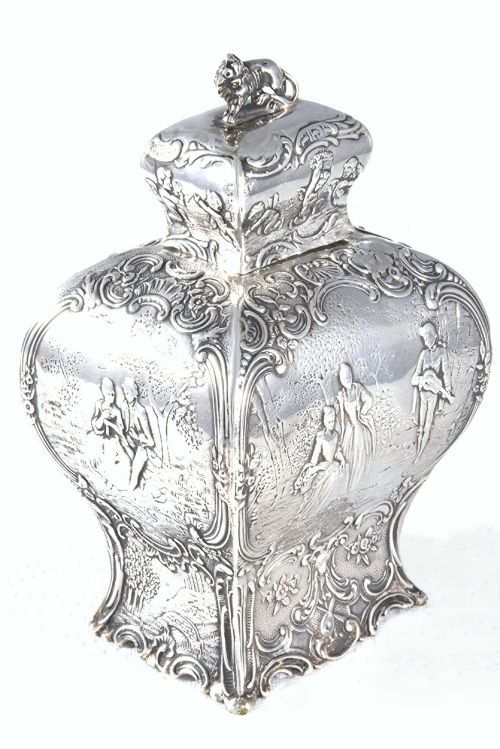
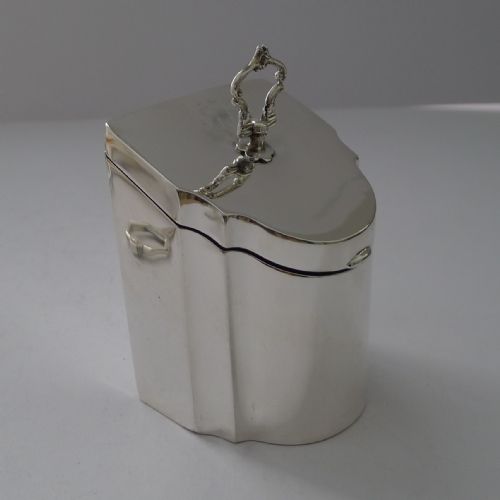
A victorian silver tea canister is a domestic container designed for storing loose tea leaves, appearing in forms such as boxes, knife boxes, bombe shapes and oval cylinders. These vessels date principally from the nineteenth century, with examples spanning from the Georgian era through to the Edwardian period.
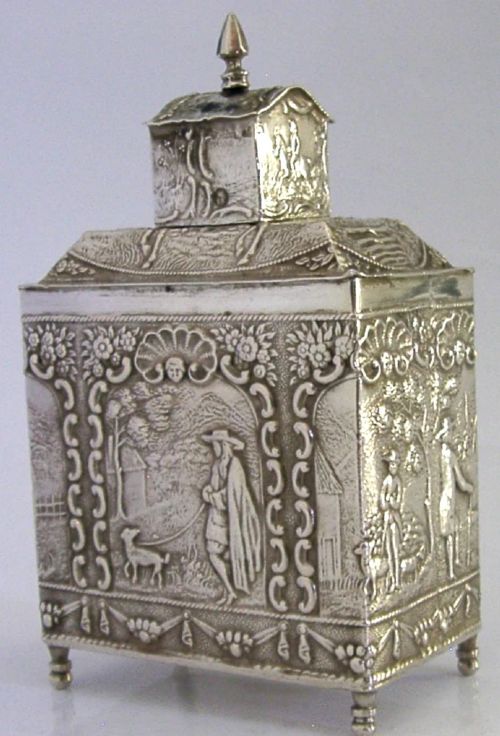
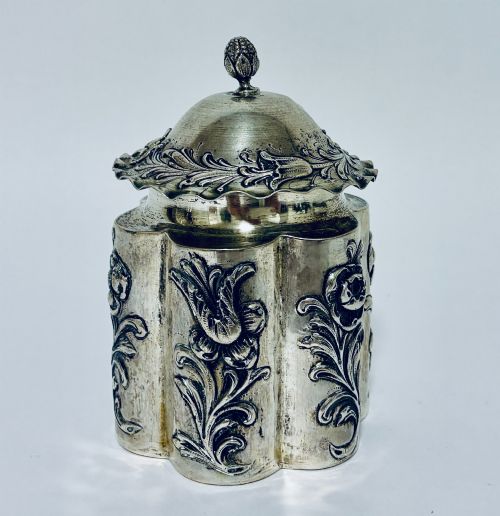
The pieces on this page include sterling silver, solid silver and silver plate, alongside variations incorporating cut crystal, ebonised wood and burr maple. Makers and styles range from plain English sterling to Dutch Rococo Revival, Ottoman Turkish pieces and repoussé work bearing embossed roses or green man motifs.
How they were made
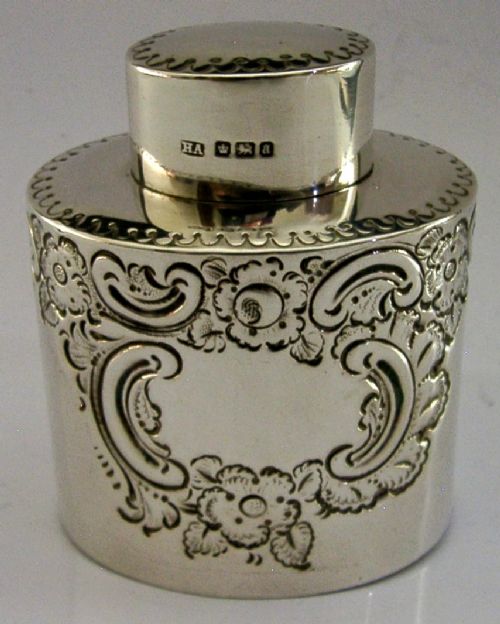
Makers utilised sterling silver and silver plate, shaping metal through techniques like repoussé embossing to create detailed surface ornamentation such as scrolls and floral motifs. Other examples combine heavy silver bodies with cut crystal glass or incorporate wooden elements like burr maple and ebonised wood.
Construction methods involved forming square, oval or bombe bodies fitted with tight lids to preserve the aroma of the dry leaf inside. Assay office marks stamped into the metal record the year and town of origin for pieces produced across Birmingham, Sheffield and London.
Some nineteenth-century canisters sport an unexpected green man face emerging from the embossed foliage, watching over your tea leaves.
What varies in quality
Quality rests upon the weight of the metal gauge and the crispness of the hand-embossed repoussé work, where deeper relief and sharper detail separate superior boxes from simpler ones. Thicker silver gauge provides a more substantial feel in the hand and ensures structural integrity over centuries of use.
The integration of materials also defines the tier of a piece, from plain geometric sterling boxes to those featuring cut crystal bodies with fitted silver collars, or specialised forms like the knife box shape.
Martin Hall & Co·Atkin Brothers·William Hutton·William Comyns·Deakin & Francis
The Victorian Silver Tea Canister Glossary
- Repoussé
- A metalworking technique where the silver is hammered from the reverse side to form raised decorative patterns on the front. This method was widely used on nineteenth-century caddies to depict flowers, scrolls and figurative motifs.
- Sterling silver
- An alloy consisting of pure silver and other metals, usually copper, to add durability while maintaining a high standard of purity. British pieces of this grade typically bear the lion passant hallmark.
- Bombe
- A swollen, rounded contour found on the sides of certain caddy boxes, bulging outward before curving back in toward the base. This French-derived form adds sculptural weight to the object.
- Sheffield plate
- An early form of composite material produced by fusing a thin sheet of silver to a thicker copper base before rolling them together. It predates modern electroplating and has its own distinct visual character.
Victorian Silver Tea Canister: Frequently Asked Questions
How were these canisters used?
These vessels were kept in the drawing room or parlour to store precious dry tea leaves securely under lock or a tight lid. Because tea was an expensive commodity in the nineteenth century, the container protected the leaf from moisture and light.
Servants or the lady of the house would measure out the leaves using spoons kept alongside the tea equipage. Once emptied, many found a second life serving as trinket boxes on dressing tables.
How do I live with one?
Place your silver canister on a sideboard, mantelpiece or open shelf where its polished surface and embossed details catch the ambient light. They mix well with modern interiors, bringing historical weight and texture to a room.
Keep them away from direct heat sources and clean them only with a soft cloth to preserve the patina accumulated over the centuries. There is no need to polish them to a mirror finish unless you prefer a bright appearance.
How do I tell periods apart?
Examine the hallmarks stamped onto the silver, which record the assay office, date letter and maker's mark for pieces made in Britain. Georgian and early Victorian examples often display restrained lines, while late Victorian items lean heavily into Rococo Revival scrolls and repoussé flowers.
Edwardian pieces from the turn of the twentieth century can introduce cut crystal bodies or simpler neoclassical motifs. Stylistic markers like Art Nouveau faces or Dutch revival elements help date the specific manufacture.
Are all these pieces solid silver?
No, the selection includes a mix of sterling silver, solid silver, silver plate and Old Sheffield plate alongside non-metal materials. Some pieces pair sterling silver collars and lids with cut crystal bodies, while others use wooden panels like burr maple.
Checking the marks or the interior will reveal whether a piece is solid metal throughout or plated over a base metal. Each material brings a different weight and tactile quality to the object.