


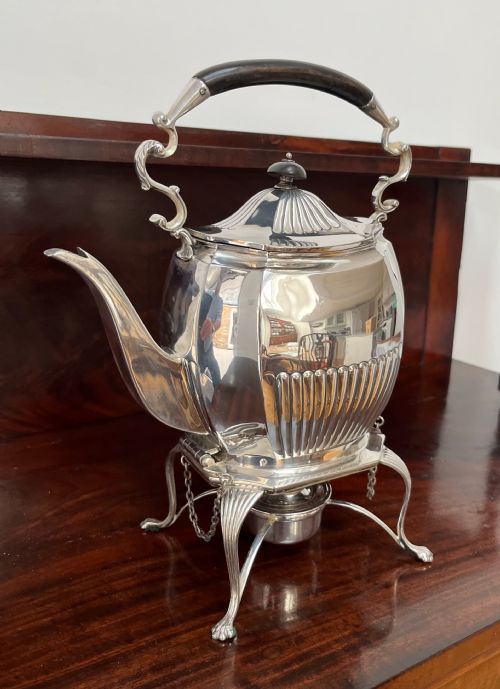

Victorian Silver Service
When you search for a victorian silver service, you uncover a rich array of dining and tea sets crafted during the nineteenth century.
Victorian Silver Service
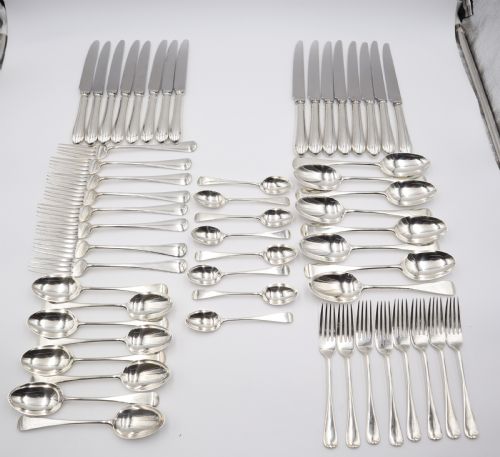
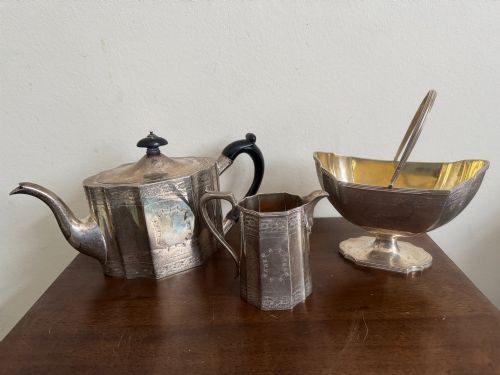
A victorian silver service encompasses a broad range of matching tableware designed for tea, coffee, and dessert dining. Pieces frequently found on this page include multi-piece tea sets, cruet sets, and canteens of cutlery created across the Victorian and Edwardian eras.
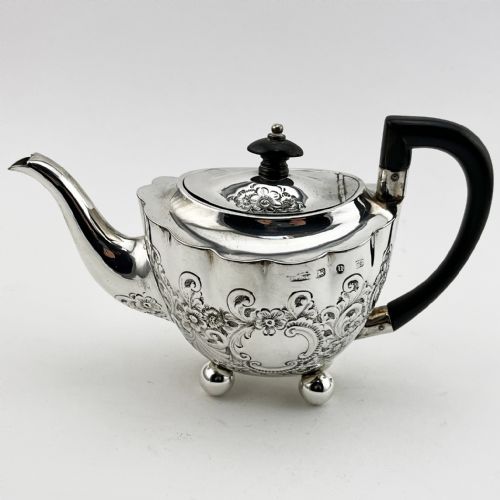
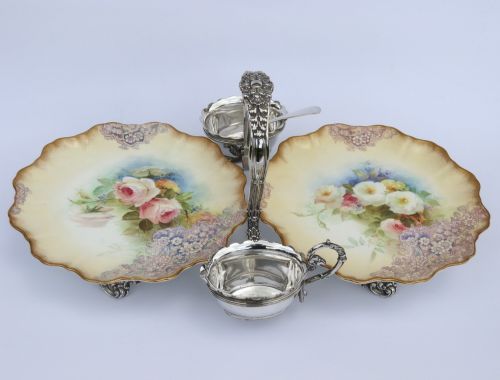
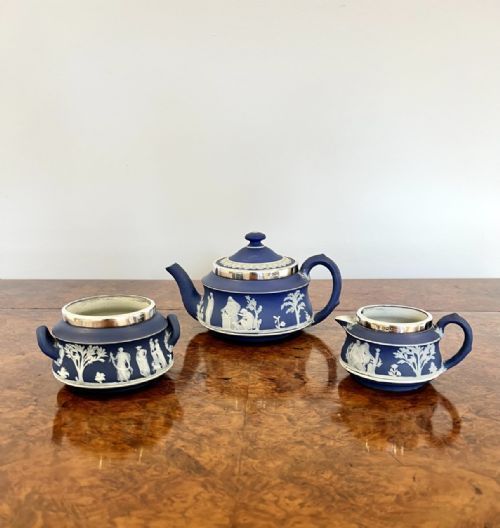
Makers produced these functional items in sterling silver and silver plate, often pairing the metal with glass liners, ceramic plates, or wooden handles. The selection ranges from intimate bachelor teapots for one to large multi-person services intended for formal dining rooms.
Materials and construction
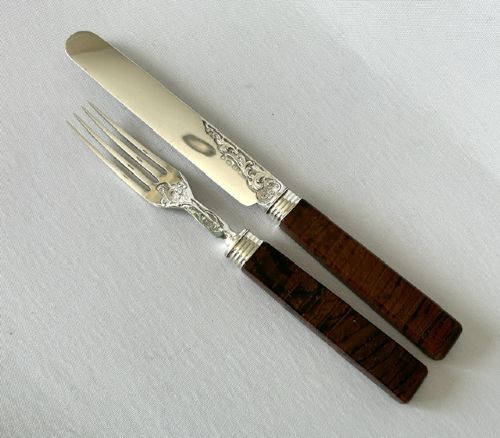
Silversmiths utilised sterling silver or plated base metals over copper, shaping bodies through hammering, casting, or spinning. Many hollowware pieces feature chased or engraved surface decoration, whilst cutlery and butter dishes frequently incorporate mother of pearl, ivory, or glass inserts.
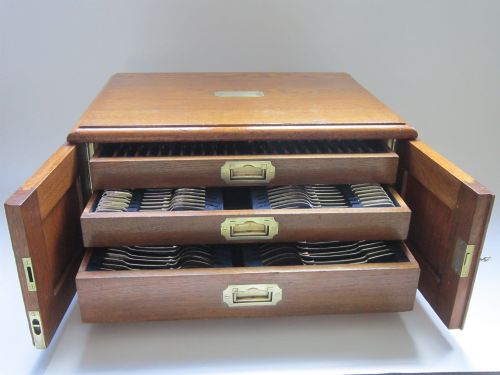
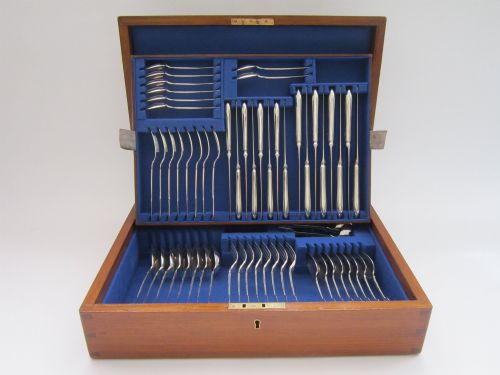
Structural elements such as handles and spouts were securely soldered, and components like spirit kettles relied on fitted stands with functioning burners. Canteens and presentation sets often came housed in fitted wooden boxes lined with velvet to protect the polished surfaces.
Markers of distinction
The standard of a victorian silver service depends upon the crispness of the chased or engraved ornamentation and the structural integrity of joints and hinges. Weight and gauge of the metal also dictate quality, separating substantial solid silver vessels from lighter plated alternatives.
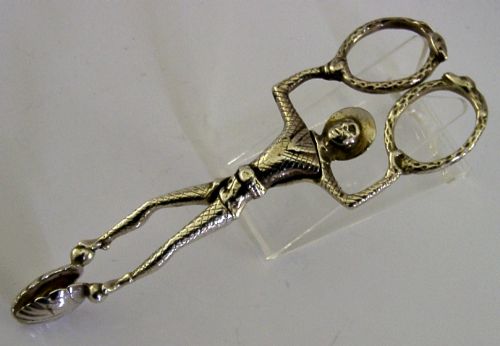
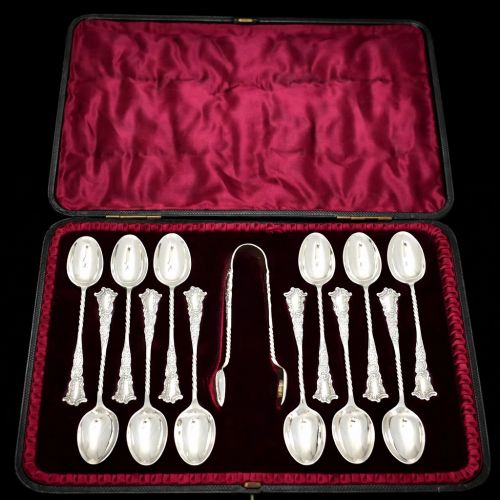
Complete sets that retain their original fitted cases, matching sugar tongs, and undamaged glass liners command closer attention than pieced-together collections. The reputation of the silversmith or manufacturer stamped into the metal further establishes the standing of each piece.
Walker and Hall·Doulton Burslem·Wedgwood·John Rawlings·Elkington Mason·Elkington·Barnard·A B Savory Sons·William Smiley·Thomas Latham·Atkin Brothers·John Round and Sons·Henry Holland
The Victorian Silver Service Glossary
- Sterling silver
- A silver alloy containing 92.5 percent pure silver by mass, combined with other metals for durability. British pieces typically bear a lion passant hallmark confirming this standard.
- Silver plate
- A layer of silver fused to a base metal core such as copper or nickel brass. This technique allowed makers to produce domestic services at a lower cost than solid silver.
- Spirit kettle
- A water kettle mounted on a metal stand above a small spirit burner. These were used at the dining or tea table to keep water hot.
- Cruet set
- A matched group of bottles or containers holding condiments such as oil, vinegar, salt, and pepper. They usually sit within a dedicated metal frame or stand with a central handle.
- Fiddle pattern
- A traditional nineteenth century flatware design featuring a slender stem that broadens symmetrically near the base. It remains one of the most common styles seen on antique cutlery sets.
Victorian Silver Service: Frequently Asked Questions
How do I care for silver plated tableware?
Silver plated items require gentle cleaning with specialised silver polish and a soft cloth to remove tarnish without wearing away the thin silver layer. Avoid abrasive pads or harsh chemical dips that can damage underlying base metals or delicate surface chasing.
Store pieces in dry environments away from direct sunlight, and utilise fitted velvet-lined boxes where available to prevent accidental scratches.
Were these services used every day?
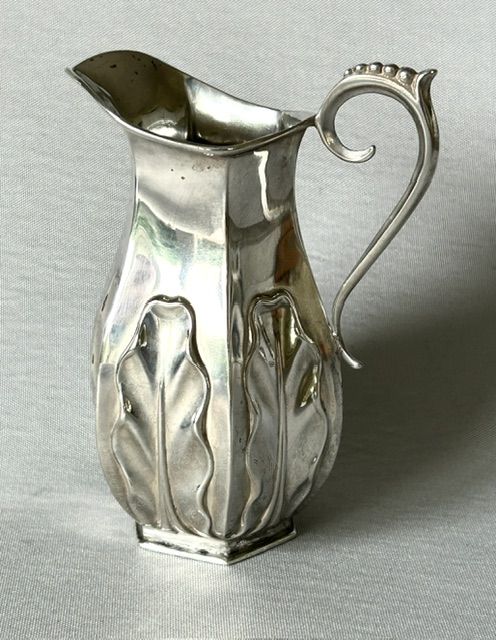
Most substantial tea sets, cruet frames, and canteens of cutlery were reserved for formal entertaining, dinner parties, and Sunday gatherings. Lighter bachelor sets and single cream jugs saw more regular domestic use for smaller households.
Their robust construction in sterling silver or durable silver plate meant they could withstand frequent handling during social rituals.
How do I identify the date of a piece?
British items usually feature a series of hallmarks stamped directly into the metal, including a date letter, a maker's mark, and assay office symbols. Consulting standard reference tables for these punches allows you to pinpoint the exact year and location of manufacture.
Stylistic cues such as Victorian rococo revival curves or Edwardian restraint also help narrow down the production period when hallmarks are rubbed or absent.