



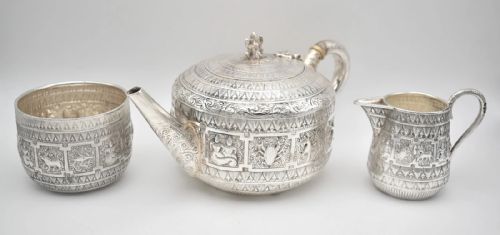
English Sterling Tea Service
An english sterling tea service gathers silver teapots, cream jugs, and sugar bowls for the table.
English Sterling Tea Service
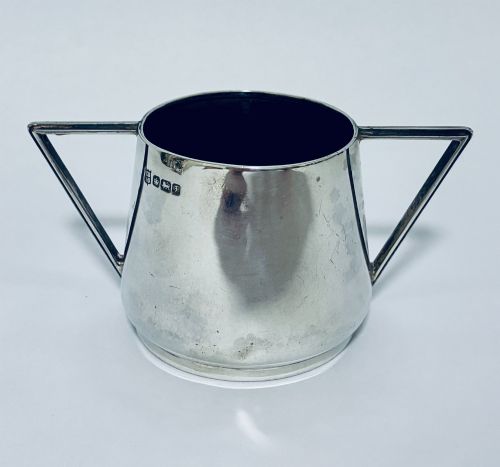
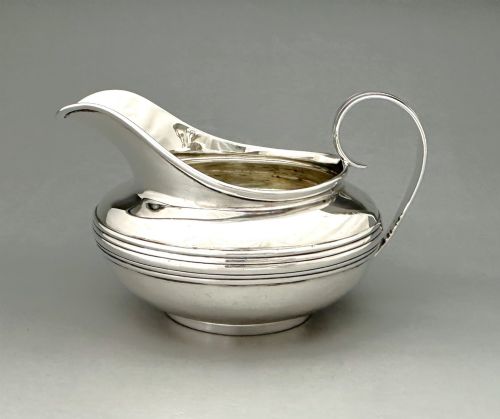
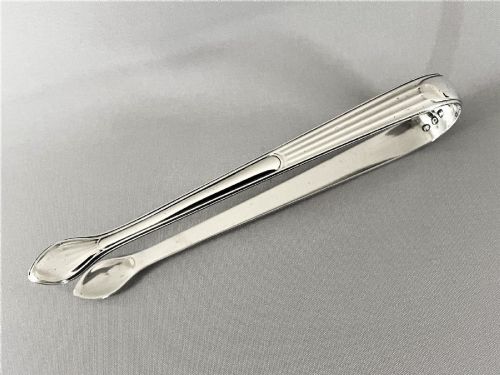
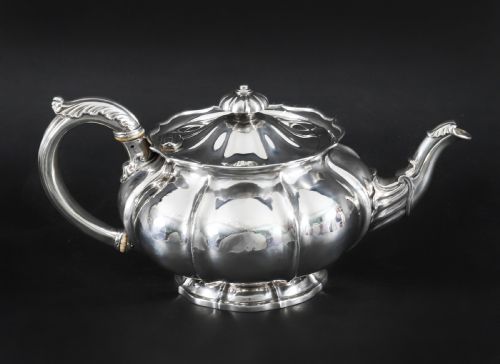
An english sterling tea service brings together coordinated silver vessels designed for serving tea, frequently including teapots, cream jugs, and sugar bowls alongside matching sugar tongs. These sets emerge across the Georgian, Regency, and Victorian periods, as well as the nineteen-twenties.
Buyers encounter distinct configurations on this page, ranging from individual cream jugs and sugar tongs to three-piece teasets and complete tea services. Forms span from George III and George IV styles to Art Deco and Victorian Anglo-Indian designs.
Origin points vary from provincial makers in Newcastle to workshops in London, showing how silversmiths across England shaped the daily ritual of tea over successive centuries.
How they were made
Makers fashioned an english sterling tea service from solid silver, often applying gold gilt to the interior surfaces of bowls and jugs. Handles incorporate materials such as wood and bone to insulate against heat.
Silversmiths employed techniques ranging from plain neoclassical shaping to naturalistic foliate designs, zodiac motifs, and Indianesque ornamentation. Guildhall marks and provincial hallmarks stamped directly into the silver record the assay office, date, and maker.
Listings feature sterling silver, wood, and bone across Georgian, Victorian, Regency, and Art Deco styles.
What varies in quality
The distinction between standard domestic silver and exceptional works rests upon the reputation of the silversmith and the crispness of the chased or engraved ornamentation. Pieces originating from notable makers command attention for their heavy gauge silver and balanced proportions.
The cohesion of a set and the presence of clear hallmarks significantly affect the standing of a service. Integrated decorative schemes, whether naturalistic foliate designs or severe Art Deco lines, demonstrate the ambition of the original commission.
Bateman Family·Paul Storr·Benjamin Smith·Francis Higgins·George Fox
The English Sterling Tea Service Glossary
- Sterling silver
- A silver alloy containing 92.5 percent pure silver and 7.5 percent other metals, typically copper, chosen for durability in tableware. This standard has governed British silver for centuries.
- Hallmark
- A series of official marks stamped onto precious metal items to guarantee the purity of the silver, the maker, and the year of assay. Provincial offices maintained distinct symbols alongside London marks.
- Gilt
- A thin layer of gold applied to the interior of silver cream jugs and sugar bowls. This treatment protects the silver from the corrosive effects of salt and sugar.
- Foliate
- Ornamentation shaped like leaves or foliage, frequently chased or engraved onto nineteenth-century silver tongs and teapots. This style reflects a broader taste for naturalistic forms.
- Provincial silver
- Silver manufactured outside London in regional assay offices such as Newcastle. These pieces often exhibit distinct local characteristics and maker marks.
English Sterling Tea Service: Frequently Asked Questions
How do I date an antique silver set?
Dating relies upon the hallmarks stamped directly into the silver by official assay offices. These marks record specific date letters corresponding to the year of manufacture.
Stylistic markers such as Georgian neoclassical lines or Art Deco geometry further narrow the period of creation.
Why do some teapots have wooden handles?
Silversmiths incorporated wood and bone into handle construction to prevent heat transfer from boiling water to the hand. These organic materials were shaped to fit the grip while offering thermal insulation.
They provide a contrasting texture against the polished silver body of the pot.
What does silver gilt mean?
Silver gilt describes solid silver objects that have been coated with a thin layer of gold on specific surfaces. In tea services, this treatment was commonly applied inside sugar bowls and cream jugs.
The gold layer prevented the silver from tarnishing when exposed to acidic contents.