




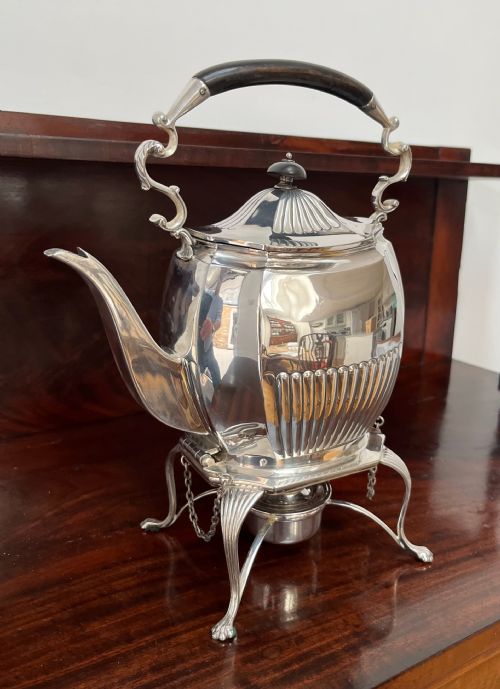


Victorian Silver Plated Urn
A victorian silver plated urn brings grand metalwork to the table, offering practical service and period presence.
Victorian Silver Plated Urn
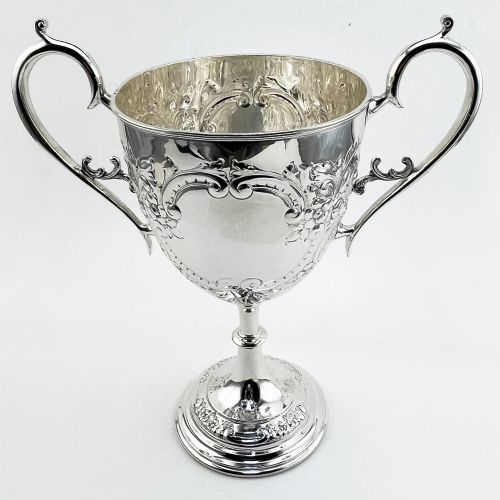
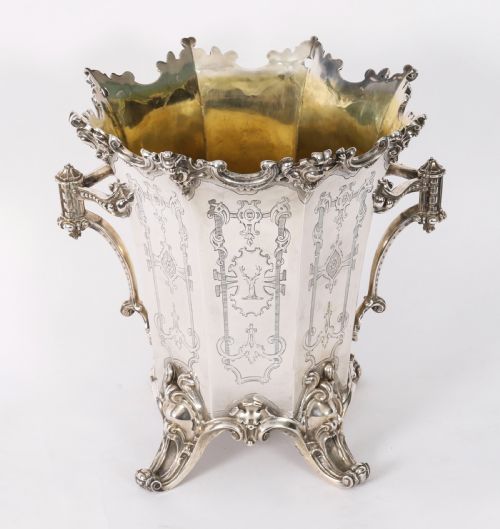
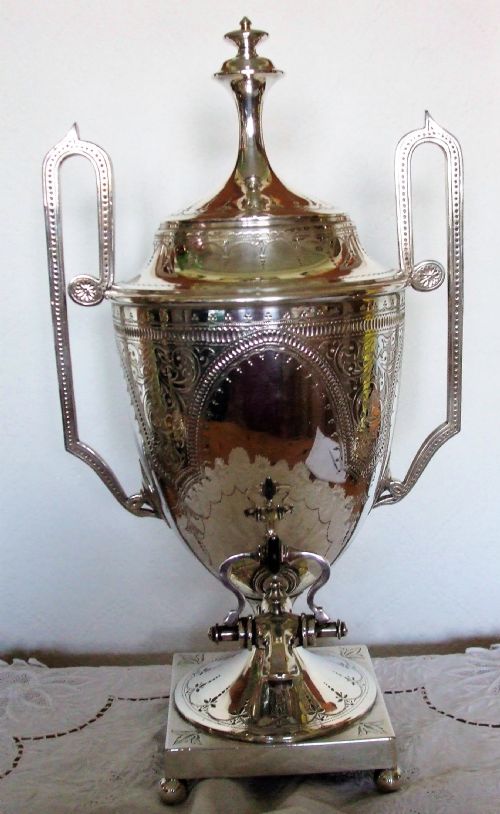
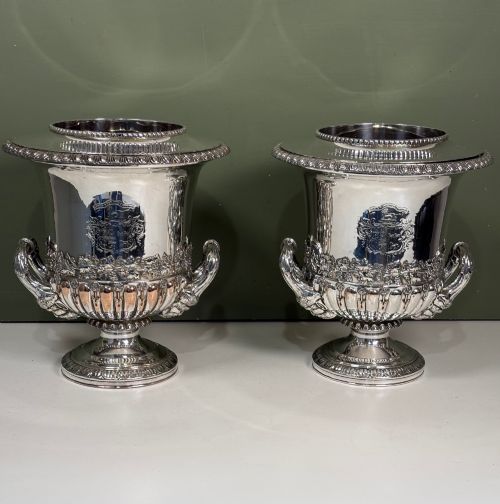
A victorian silver plated urn encompasses large tea samovars, wine coolers, spirit kettles on stands, and table lamps designed for formal entertaining. These vessels reflect the domestic routines of the nineteenth century and the Edwardian era, functioning as centrepieces for beverage service or dining rooms.
The pieces appearing on this page range from heavy tea urns with taps to compact spirit kettles with burners and champagne buckets. Origins span Victorian, Edwardian, and Georgian revivals, with makers utilising silver plate on copper or nickel silver bases.
How they were made
Craftsmen built these vessels using electroplated nickel silver or silver plate over base metals, often incorporating wooden, bone, or ebony handles and finials to insulate heat. Many incorporate spirit burners, taps, and stands.
Decoration relies on engraving, crests, engine turned mounts, and Revival styles such as Rococo and Neoclassical, reflecting period manufacturing methods in Sheffield and Paris.
Victorian Silver Plated Urn Retail Price Guide 2026
Typical asking prices for victorian silver plated urn among the pieces listed under this phrase on Sellingantiques today, from the lower quarter to the upper quarter. They describe what is for sale here now, not the wider market.
Several vessels disguise themselves as everyday items, including a milk churn pepper mill and an oak barrel ice pail.
What varies in quality
The standard of a victorian silver plated urn rests on the crispness of its chased or engraved ornament and the structural integrity of its mounts, taps, and handles. Finer examples retain their original gilding inside tea urns and show substantial metal weight.
Maker attribution elevates certain pieces, particularly those bearing marks from established firms like Elkington or Walker & Hall. The thickness of the silver plate over the underlying metal also dictates long term durability.
Elkington, Mason & Co·Walker & Hall·Harrison Brothers & Howson·Risler and Carré Paris·Fenton Brothers
The Victorian Silver Plated Urn Glossary
- Samovar
- A heated metal container traditionally used to boil and heat water for tea. These large urns often feature an internal vertical tube and a spigot.
- Spirit Kettle
- A small water kettle mounted on a metal stand above a spirit burner. They provide hot water at the tea table.
- Electroplated Nickel Silver
- A copper alloy containing nickel and zinc that is coated with a layer of silver via an electrolytic process. This technique became widespread during the nineteenth century.
- Argyle
- A vessel used for keeping gravy or water warm via an internal heated cylinder. They share the upright form of tea urns.
Victorian Silver Plated Urn: Frequently Asked Questions
How do I use a spirit kettle?
Fill the kettle with water and place it on its stand above the burner. Light the spirit burner to maintain the water temperature during tea service.
Ensure the burner is extinguished safely using its cap once service concludes. Empty any remaining water to prevent mineral buildup inside the vessel.
Were tea urns used for daily tea?
These vessels served formal household dining and large gatherings rather than casual daily meals. Water was kept hot at the table for guests.
Servants typically filled the urn in the kitchen before bringing it to the dining room or drawing room for the host to dispense.
What is the difference between a samovar and an urn?
A samovar specifically incorporates an internal heating chamber or pipe for charcoal or a heating element. Many Victorian tea urns adopted this name regardless of internal construction.
Standard urns simply hold hot water heated externally, whereas true samovars function as self contained boiling units.
How do I clean silver plate?
Use a soft cloth and a specialised silver polish designed for plated items. Avoid harsh abrasives that can wear through the thin silver layer.
Wash the piece gently in warm soapy water and dry thoroughly after polishing to protect the metal finish.