





Victorian Silver Hot Water
These pieces of victorian silver hot water equipment bring formal tea and coffee service to the table in silver, silver plate and metal.
Victorian Silver Hot Water
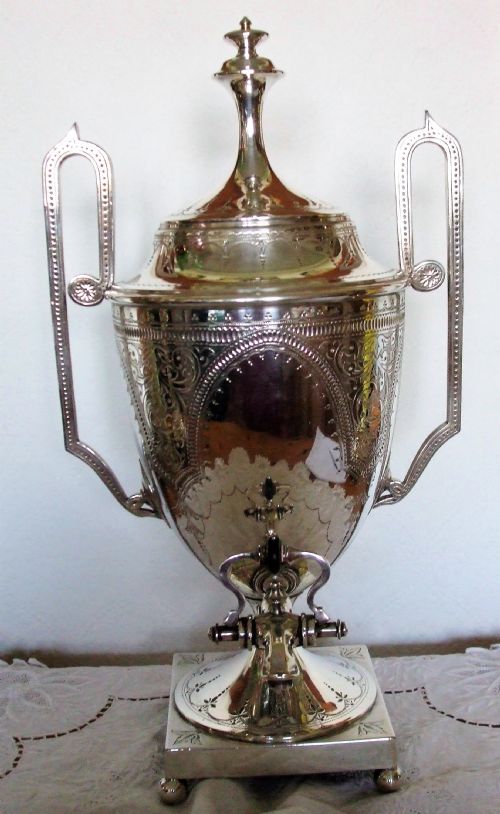
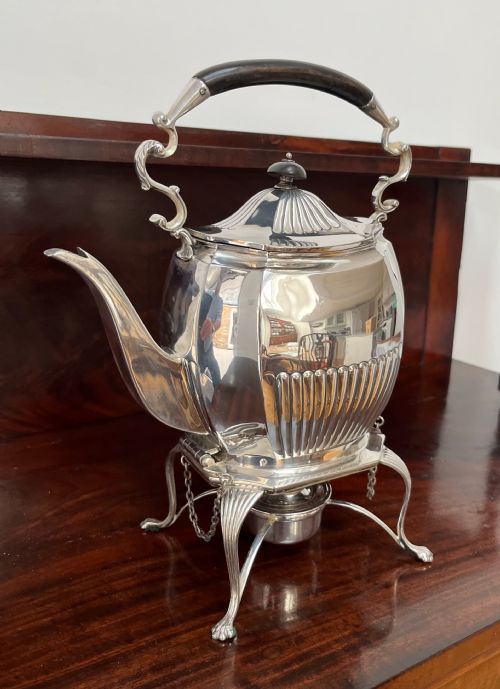
When you search for victorian silver hot water, you encounter substantial vessels designed to heat and serve water for tea and coffee. The selection on this page centres on spirit kettles on stands, large samovars, and tea urns.
The objects span periods from the Georgian era through the Victorian and Edwardian years up to 1930. Forms include spirit kettles with burners, hand-engraved jugs, coffee pots, and ornate four-piece tea and coffee sets.
Makers from Sheffield and London produced these items in silver and silver plate, often incorporating wooden handles and stands. You find both monumental tea urns with taps and portable kettles equipped with spirit burners.
How they were made
Makers utilised silver and silver plate over base metal, alongside nickel silver, to construct these large vessels and stands. Many pieces incorporate organic materials for insulation, featuring bone, ebony, cane, and wood on handles and knobs.
Construction techniques involved hand-engraving floral designs on bodies and casting ornate mounts for stands and burners. Several items feature integrated taps, spirit burners, and woven handles suited to daily domestic service.
Victorian Silver Hot Water Retail Price Guide 2026
Typical asking prices for victorian silver hot water among the pieces listed under this phrase on Sellingantiques today, from the lower quarter to the upper quarter. They describe what is for sale here now, not the wider market.
One unexpected item is an unusual Victorian spoon warmer featuring a built-in hot water tank.
What varies in quality
The distinction between standard domestic production and exceptional output lies in the weight of the metal and the complexity of the cast ornament. Finer pieces display crisp hand-engraved floral motifs and substantial frames rather than light stamped mounts.
Makers such as Walker & Hall, Risler and Carré Paris, and Boardman Glossop & Co brought different levels of design ambition to their work. Complete sets with matching stands, burners, and integrated crests command attention for their unified appearance.
Walker & Hall·Risler and Carré Paris·Frederik Ellis Tim & Co·Boardman Glossop & Co
The Victorian Silver Hot Water Glossary
- Samovar
- A large heated urn traditionally used to boil and heat water for tea. These vessels typically feature a spigot or tap near the base.
- Spirit kettle
- A kettle mounted on a metal stand with an underlying spirit burner to keep water hot at the table. They frequently date from the Edwardian period.
- Silver plate
- A thin layer of silver fused to a base metal core, such as nickel silver or copper. This technique allowed makers to produce large decorative items affordably.
- Tea urn
- A large standing vessel utilised for holding and dispensing hot water during large gatherings. They appear in both Georgian and Victorian styles.
- Crest
- An engraved or applied heraldic device denoting the family ownership of a piece. They appear on mid-nineteenth-century coffee pots and jugs.
Victorian Silver Hot Water: Frequently Asked Questions
What is a spirit kettle used for?
A spirit kettle sits on a dedicated metal stand above a small burner fueled by methylated spirit. It kept water at boiling point during tea service.
These pieces were kept directly on the dining or drawing-room table for convenience.
Are these pieces made of solid silver?
The majority of pieces listed are silver plated over metals like nickel silver rather than solid silver. Solid silver hot water jugs and smaller items do occur alongside plated tea urns and kettles.
Hallmarks or maker marks generally indicate whether a piece is solid silver or plate.
How do I care for silver plated hot water vessels?
Clean silver plate gently using non-abrasive polishes formulated specifically for plated items to avoid wearing through the thin silver layer. Wash wooden or bone handles by hand without submerging them in water.
Regular dusting and careful storage prevent tarnish buildup on ornate surfaces and engraved floral designs.