
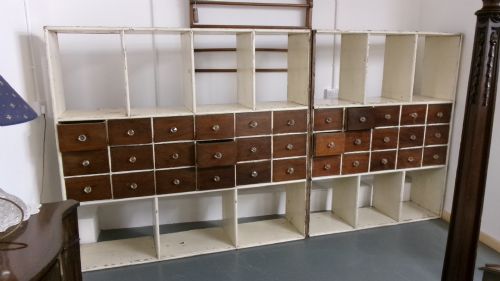
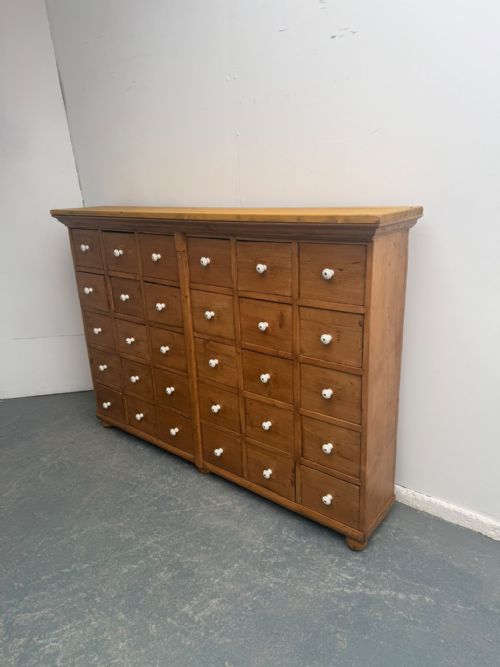


Victorian Shop Fitting Cabinet
A victorian shop fitting cabinet is a robust commercial storage piece built for trade, offering deep utility and period presence to a modern interior.
Victorian Shop Fitting Cabinet
A victorian shop fitting cabinet encompasses heavy trade furniture built for commercial display and stock management during the nineteenth and early twentieth centuries. These pieces originate from chemist shops, drapers, jewellers and general merchants, designed to showcase and organise goods for public retail.
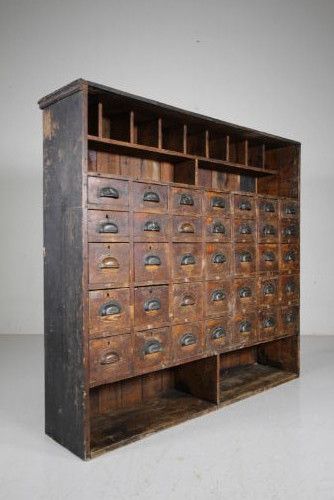
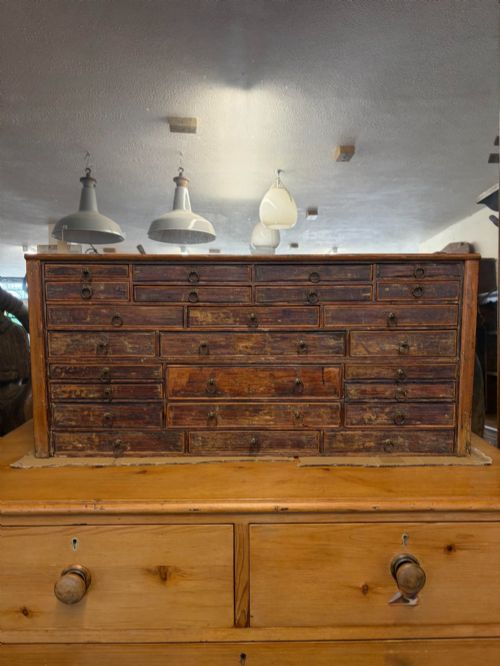
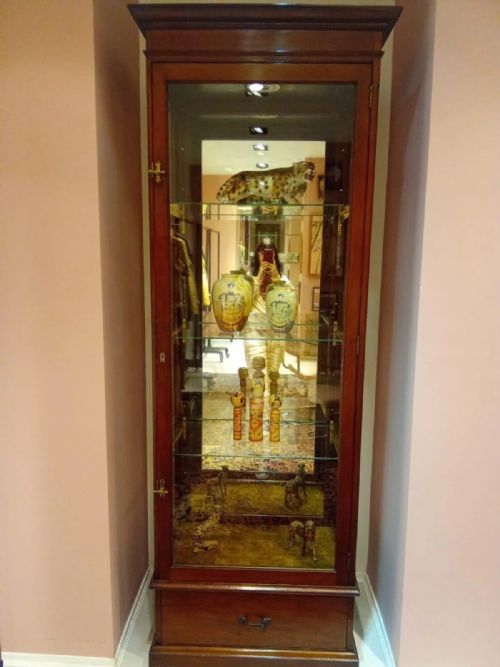
The selection ranges from tall glass-fronted display cases and glazed vitrines to large multi-drawer banks and counter-top cabinets. Mahogany, oak and walnut versions sit alongside painted pine pieces imported from European workshops.
Most examples date from the Victorian and Edwardian eras, reflecting the expansion of high street retail and specialised trade fixtures. Buyers select them for domestic storage, kitchen organisation and retail display, valuing their utilitarian capacity.
How they were made
Makers utilised dense timbers such as mahogany, oak, walnut and fruitwood for structural integrity and repeated daily use in busy shops. Glass panels provided maximum visibility for stock while protecting merchandise from dust and handling.
Drawer units incorporated numerous internal compartments tailored for haberdashery, spices or medical supplies, frequently joined with traditional hand-cut dovetails. Exterior surfaces often received hand-painted finishes, gold leaf lettering or polished French polish finishes to attract customers.
Fittings included brass handles, iron brackets and adjustable wooden or glass shelving designed to accommodate varied retail inventories. Counter tops and base sections utilised sturdy pine and metal hardware to withstand heavy commercial loads.
Materials recorded in current items include mahogany, pine, oak, walnut, brass, glass and painted wood.
What varies in quality
Quality rests in the original commercial purpose and the integrity of the surviving joinery, glass and hardware. Pieces retaining their original maker markings, period hand-painted signage or specialised interior dividers demonstrate superior provenance.
Timber selection dictates the finish and weight, with solid mahogany and figured walnut commanding higher regard than utility pine. The complexity of the drawer configurations, such as banks exceeding twenty-five drawers, reflects higher manufacturing investment.
The survival of original glazed doors, working brass locks and adjustable shelving determines the functional preservation of the cabinet. Alterations to paint layers or replaced hardware shift a piece away from its primary commercial condition.
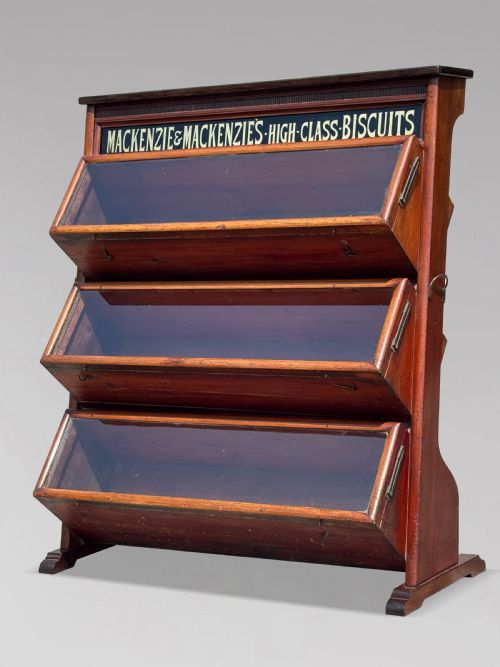
Luxmore's of Ilfracombe·Mackenzie's Biscuits·Robert West Gunsmith·John Stow Ltd of Bradford·Chadwick’s Sewing Cottons
The Victorian Shop Fitting Cabinet Glossary
- Haberdashery cabinet
- A specialised multi-drawer storage unit originally used for selling sewing threads, buttons and textiles. These typically feature banks of shallow drawers with glass fronts.
- Chemist shop fitting
- Commercial furniture designed for apothecaries and pharmacies, often incorporating labelled drawers for herbs, powders and medicines. They demonstrate precise interior organisation.
- Vitrine
- A glass-fronted display cabinet or showcase designed specifically to exhibit precious items or delicate merchandise. The glass panels permit all-round visibility.
- Bank of drawers
- A large assembly of numerous storage drawers built into a single housing unit. They provide extensive compartmentalized storage for retail stock.
- Sign written
- Hand-painted lettering applied directly to wood or glass to advertise a specific merchant business or brand. This decorative technique often identifies the original commercial context.
Victorian Shop Fitting Cabinet: Frequently Asked Questions
What were victorian shop fitting cabinets used for?
These cabinets served merchants as secure display cases and stock storage units in nineteenth-century retail premises. Drapers, chemists and grocers utilised them to organise merchandise and present goods to customers.
In modern spaces, buyers repurpose them as kitchen larders, bookcase displays or distinctive storage furniture for collections.
How do I identify the period of a shop cabinet?
Dating relies on timber choices, construction techniques and hardware styles. Victorian examples often feature dense mahogany or solid oak with hand-cut dovetails and brass pulls.
Edwardian and later pieces may incorporate lighter oak, mirrored interiors or machine-cut components while retaining traditional commercial proportions.
Are painted finishes on shop fittings original?
Many trade cabinets received protective coats of paint or decorative finishes to suit particular shop interiors. Layers of original paint often show authentic wear from decades of commercial use.
Later sign writing or commercial lettering can be added for specific trade applications, which forms part of the functional history.
How do I care for a wood and glass cabinet?
Maintenance involves regular dusting with a soft, dry cloth and avoiding direct sunlight to protect polished wood surfaces. Glass panels require standard non-abrasive cleaners applied carefully away from timber edges.
Keeping the environment stable prevents timber movement and protects original joints and hardware.