



Victorian Sheraton Desk
These victorian sheraton desks bring together satinwood, mahogany, and delicate marquetry in pieces built for writing and study.
Victorian Sheraton Desk
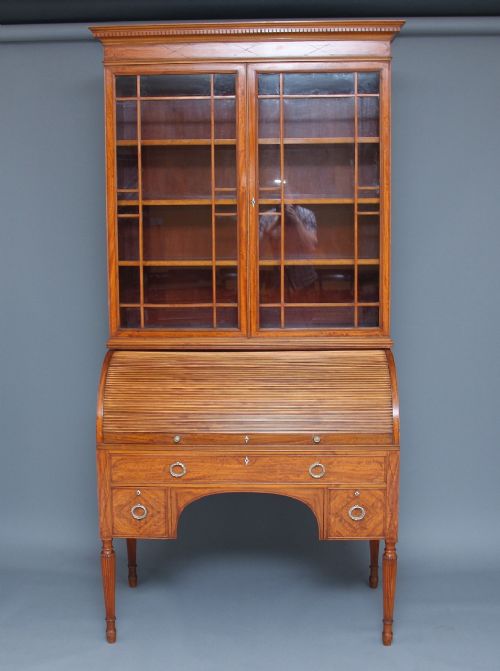
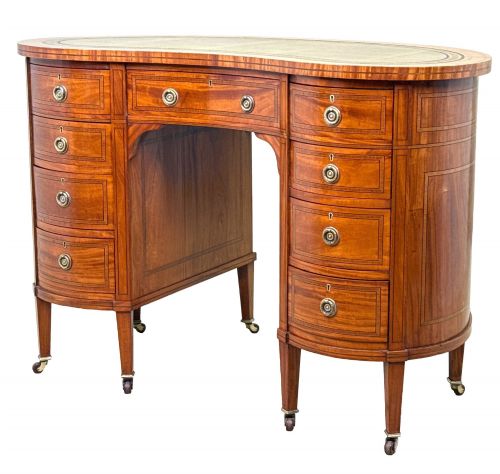
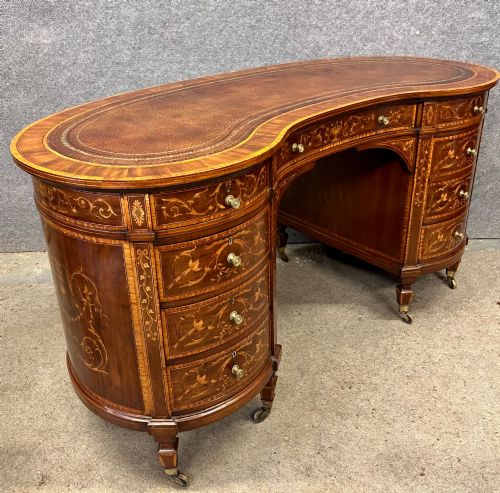
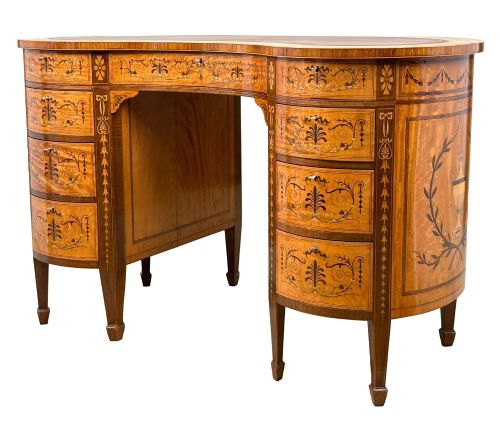
A victorian sheraton desk draws on eighteenth-century lightness, emerging across the nineteenth century in forms like the kidney-shaped writing table, the cylinder desk, and the compact Davenport. Makers of this period favoured graceful proportions, often pairing figured timbers with contrasting stringing and classical motifs.
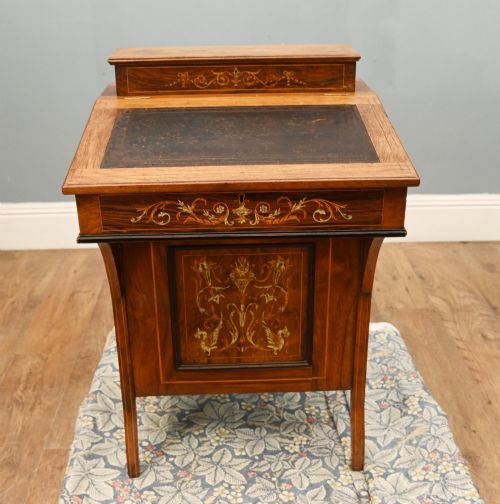
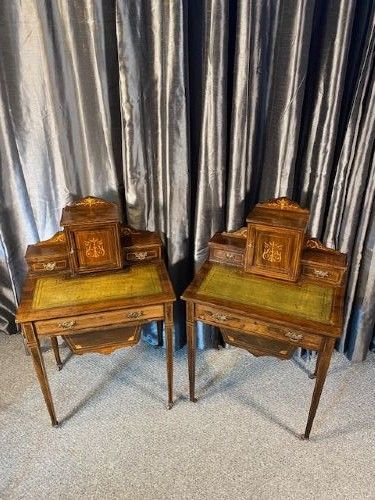
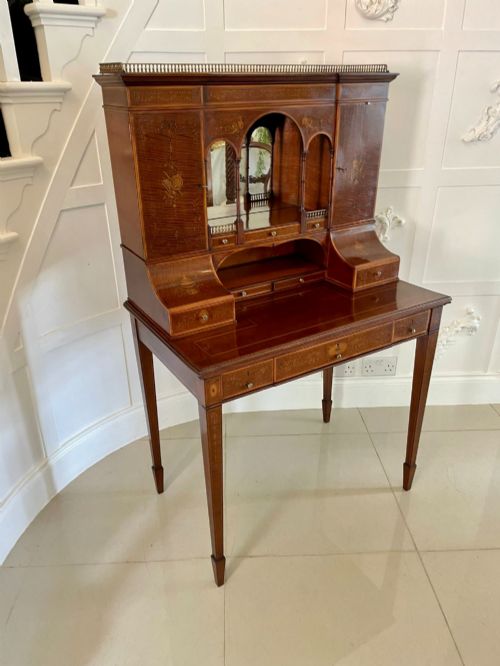
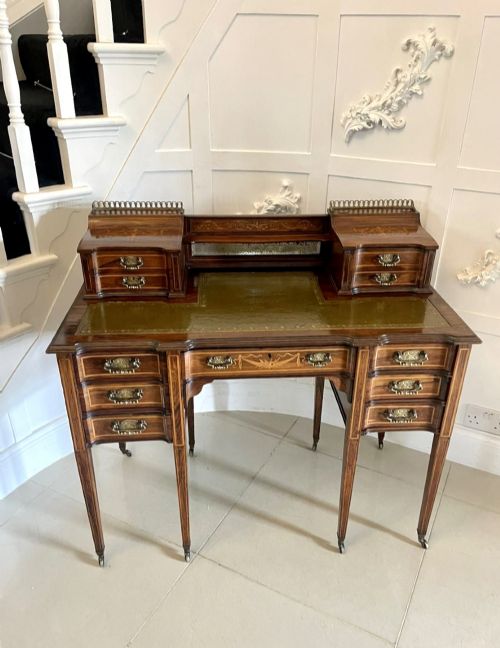
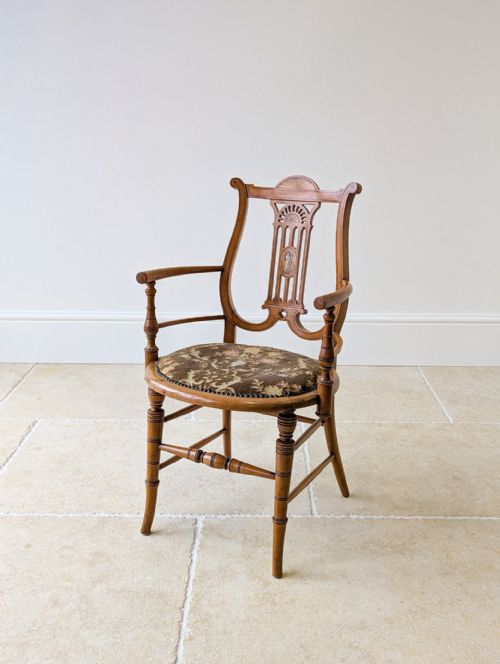
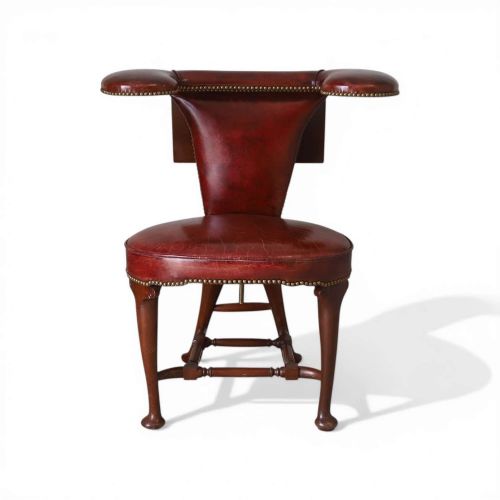
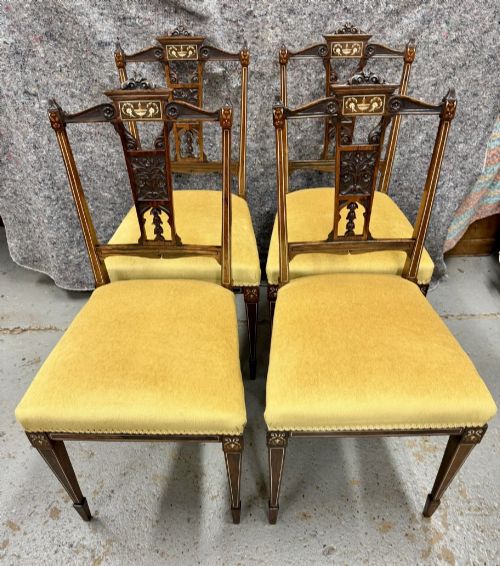
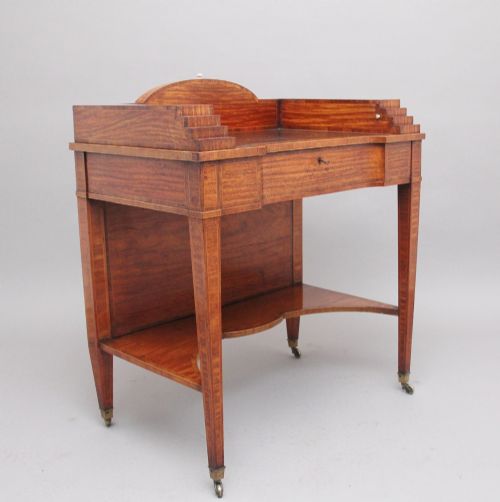
Most examples found here date from the later nineteenth century, particularly the 1880s and 1890s, sitting within the Victorian and Edwardian eras. Alongside standard writing tables and kneehole desks, the selection encompasses Carlton House desks, bonheur du jour writing cabinets, and associated seating such as lyre-back desk chairs.
The aesthetic leans heavily on the Sheraton Revival style, translating earlier classical restraint into late-Victorian craftsmanship. These pieces served as private writing surfaces for drawing rooms and boudoirs, combining practical drawers with refined decorative details.
Materials and construction
Makers constructed carcass frames primarily from sturdy mahogany or rich rosewood, frequently applying smooth veneers of pale satinwood to create striking colour contrasts on writing surfaces and drawer fronts. Detailed marquetry inlay, often featuring boxwood stringing and floral motifs, decorates the primary panels.
Writing surfaces typically feature inset panels of tooled leather, providing a durable and tactile surface for daily correspondence. Brass handles, escutcheons, and occasional glass elements complete the structural components of these nineteenth-century desks.
Victorian Sheraton Desk Retail Price Guide 2026
Typical asking prices for victorian sheraton desk among the pieces listed under this phrase on Sellingantiques today, from the lower quarter to the upper quarter. They describe what is for sale here now, not the wider market.
Listings feature nineteenth-century materials including satinwood, mahogany, rosewood, and brass.
Distinctions in quality
Quality rests on the precision of the inlay work, the choice of timber veneers, and the reputation of the workshop responsible for the piece. Finer examples display crisp boxwood stringing and balanced marquetry panels that remain securely bonded to the primary timber.
Structural integrity in drawers, hinges, and writing slides separates standard production items from masterworks by prominent makers. The complexity of form, such as a kidney-shaped top or a fitted cylinder interior, also influences the standing of an individual piece.
Maple And Co·Edwards And Roberts·Gillows
The Victorian Sheraton Desk Glossary
- Satinwood
- A lustrous, fine-grained timber with a yellowish sheen used extensively for veneers and decorative banding.
- Marquetry
- The art of forming decorative patterns using thin pieces of wood veneer applied to a timber carcass.
- Carlton House Desk
- A Davenport-style desk featuring a fitted superstructure of small drawers and pigeonholes curving around the rear of the writing surface.
- Bonheur du Jour
- A light lady's writing desk equipped with a small cabinet or set of drawers on the upper surface.
- Stringing
- Thin lines of contrasting wood inlay used to outline drawers, panels, and borders on period furniture.
Victorian Sheraton Desk: Frequently Asked Questions
What is a victorian sheraton desk?
A victorian sheraton desk is a nineteenth-century writing table influenced by the lighter, neoclassical designs of Thomas Sheraton. These pieces frequently feature satinwood veneers, marquetry inlay, and tapered legs.
They reflect the late-Victorian revival of eighteenth-century styles, combining formal elegance with practical drawers and compartments for correspondence.
How do I identify Sheraton Revival furniture?
Sheraton Revival pieces display classical motifs such as urns, swags, and bellflowers executed in contrasting wood veneers like boxwood and satinwood. The forms remain slender and upright rather than heavy.
Most items bearing this style date from the late nineteenth century, distinguishing them from the original eighteenth-century productions.
Where were these desks placed?
These desks were designed for principal rooms such as drawing rooms, libraries, and private boudoirs rather than utilitarian offices. Freestanding versions allowed them to sit away from walls.
Their decorative backs and finished sides meant they looked presentable from any angle within a furnished interior.
How do I care for a satinwood surface?
Protect satinwood and marquetry surfaces from direct sunlight and excessive heat to prevent the delicate veneers from fading or lifting. Dust gently with a dry, soft cloth.
Avoid liquid polishes and heavy cleaning agents, relying instead on traditional wax applied sparingly when the timber appears dry.